


RD-800CD-W 80 GHz FMCW Radar Level Gauge
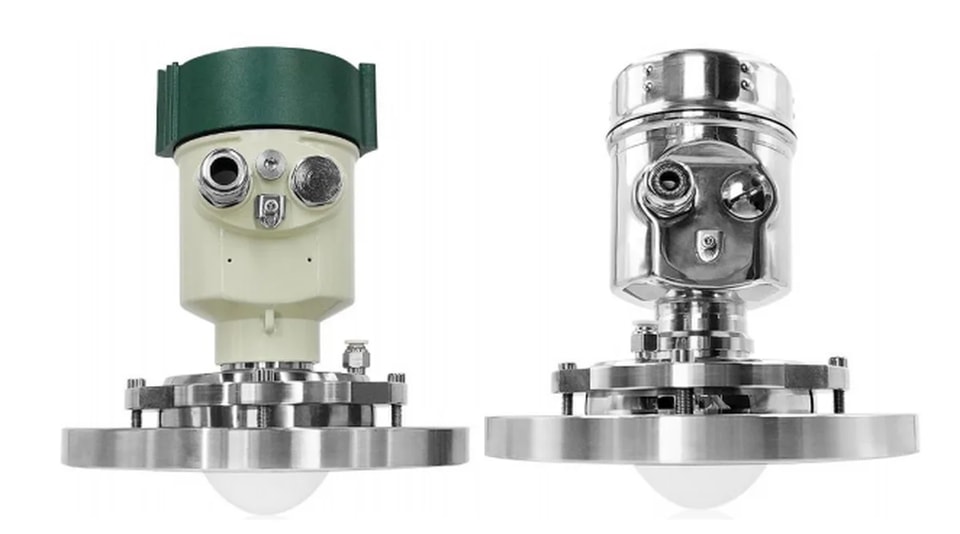
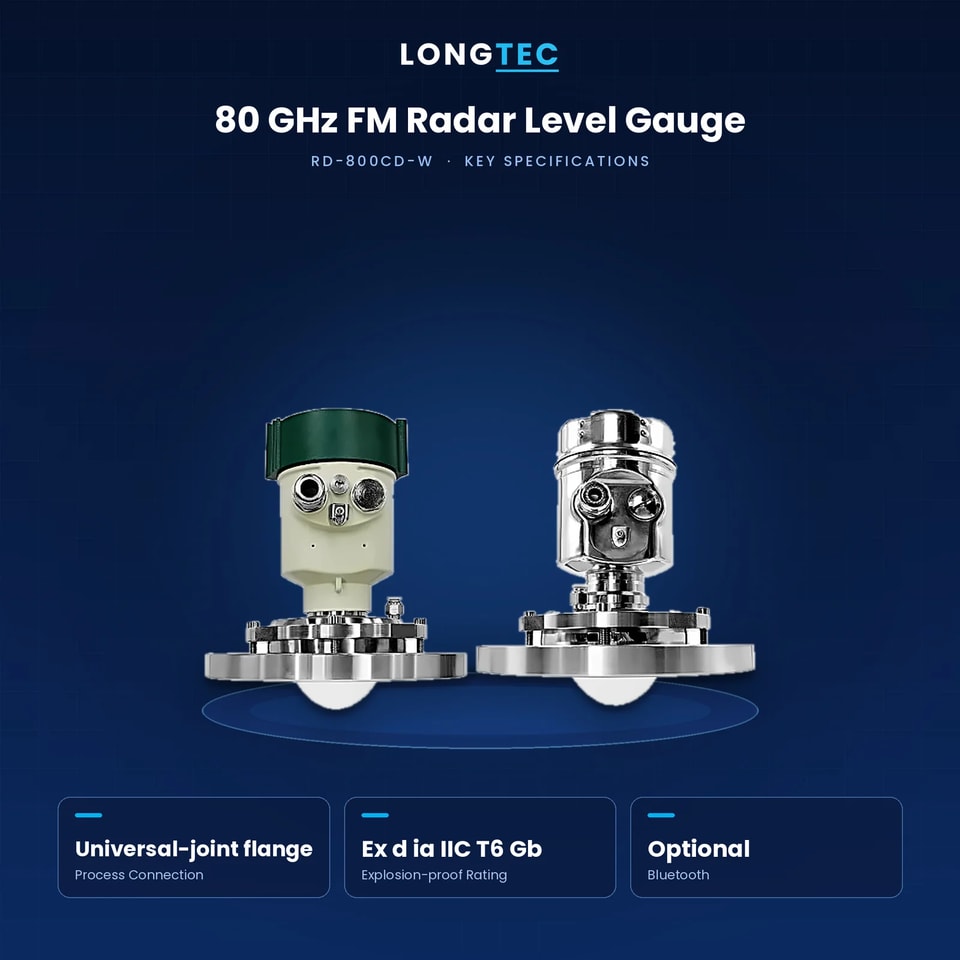
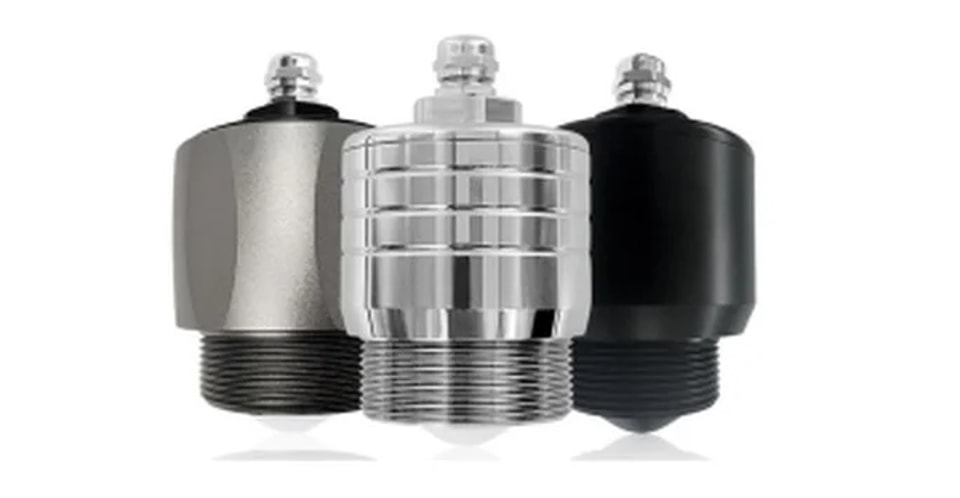
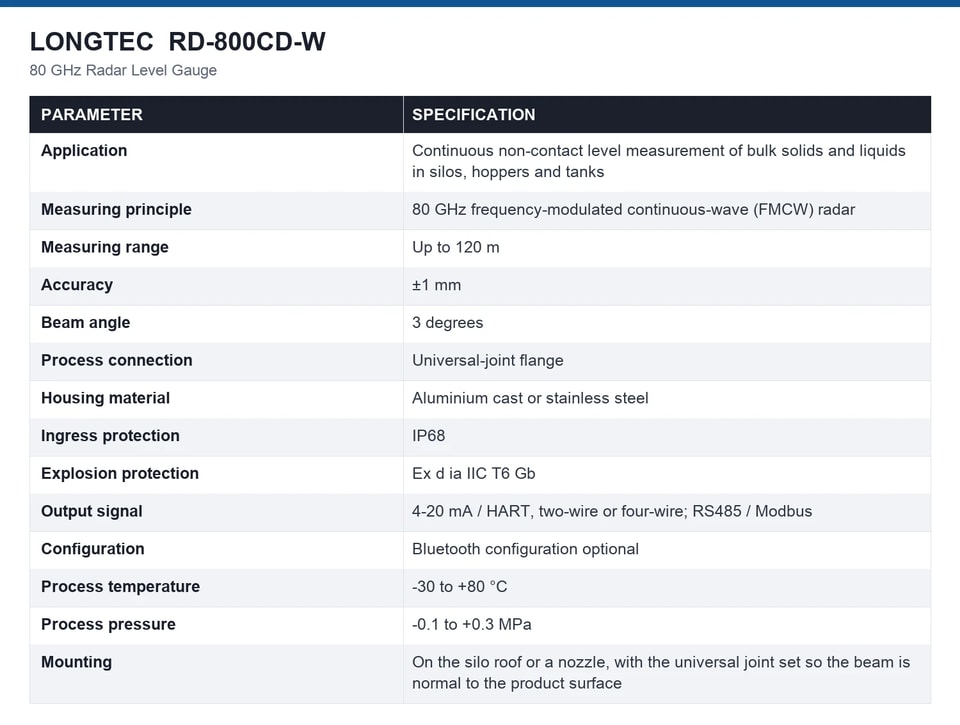
The RD-800CD-W is an 80 GHz frequency-modulated continuous-wave radar level gauge with a universal-joint flange, part of the RD-800 series. The higher frequency gives a 3 degree beam, so the radar can be aimed down a narrow silo, past internal structures and through a small nozzle, and it still returns a strong echo from a low-dielectric product such as plastic pellets or cement. Accuracy is ±1 mm over a range up to 120 m, which is a measurement rather than an indication and is good enough to use for inventory. The universal-joint flange allows the antenna to be tilted on an angled or uneven silo top so the beam hits the product surface squarely instead of the wall. The housing is aluminium cast or stainless steel sealed to IP68, the instrument is rated Ex d ia IIC T6 Gb, and outputs are 4-20 mA with HART in two or four wire plus RS485 Modbus, with Bluetooth configuration as an option.
· 80 GHz FMCW radar with a 3 degree beam, so the antenna can be aimed past internal structures and through a small nozzle.
· ±1 mm accuracy over a range up to 120 m, which is good enough for inventory rather than indication only.
· Universal-joint flange lets the antenna be tilted to suit an angled or uneven silo top and still hit the product squarely.
· Aluminium cast or stainless steel housing sealed to IP68, for outdoor silos and wash-down areas.
· Explosion-proof rating Ex d ia IIC T6 Gb for classified dust and gas areas.
· 4-20 mA with HART in two or four wire, plus RS485 Modbus, and optional Bluetooth configuration from a phone.
The RD-800CD-W measures powders, granules and bulk solids in silos and hoppers, and liquids in tanks and vessels, without contact. Typical duties are cement, clinker, lime, fly ash and coal in the power and building-materials industry, ore and concentrate in mining, grain, oilseed and feed in agriculture, plastic pellets and powder in chemicals, and water, slurry and chemicals in tanks. It is chosen where a narrow beam, high accuracy and a hygienic or hazardous-area rating are needed together, and where the silo has internal structures that a wide-beam radar would see as false echoes.
Why 80 GHz instead of 26 GHz?
The shorter wavelength gives a much narrower beam for the same antenna size, here 3 degrees. A narrow beam misses internal ladders, stiffeners and filling pipes, and it can be aimed through a small nozzle, which is what makes the instrument usable on a tall silo with a crowded roof.
Is ±1 mm realistic in a silo?
It is the accuracy of the radar measurement itself. Over 120 m that is far better than any inventory requirement, and the practical limit is usually how well the empty distance and the silo geometry are surveyed, not the instrument. For custody transfer, the reference height should be measured once with a tape.
What does the universal-joint flange do?
It lets the antenna be tilted in two axes after the flange is bolted down. On an angled roof, or where the product surface is not parallel to the flange face, the antenna can be aimed normal to the surface, which keeps the echo strong and avoids the wall reflection.
Will it work on a low-dielectric product like plastic pellets?
Yes. The 80 GHz signal and the 3 degree beam give a strong return from low-dielectric materials, and the instrument is specified for powders, granules and bulk solids as well as liquids. For extremely low-dielectric products, tell us the material so the antenna and the echo processing can be matched.
How is it connected and configured?
Power and signal are 4-20 mA with HART, in two-wire or four-wire form, and RS485 Modbus is also provided. Configuration is done from the local display or over HART, and Bluetooth is available as an option for setup from a phone without opening the housing.
Solutions & Support
We go the extra mile to thoroughly analyze each project and deliver tailored business solutions that meet your specific requirements.
Contact US
×