
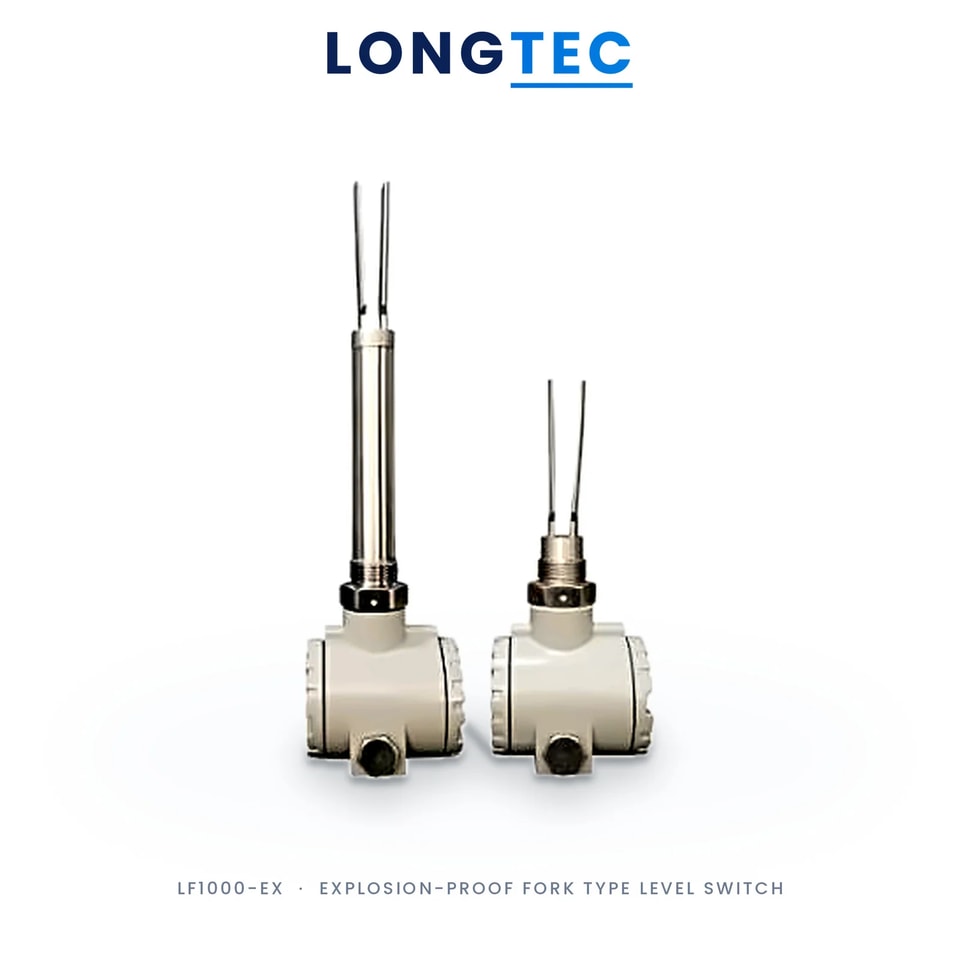
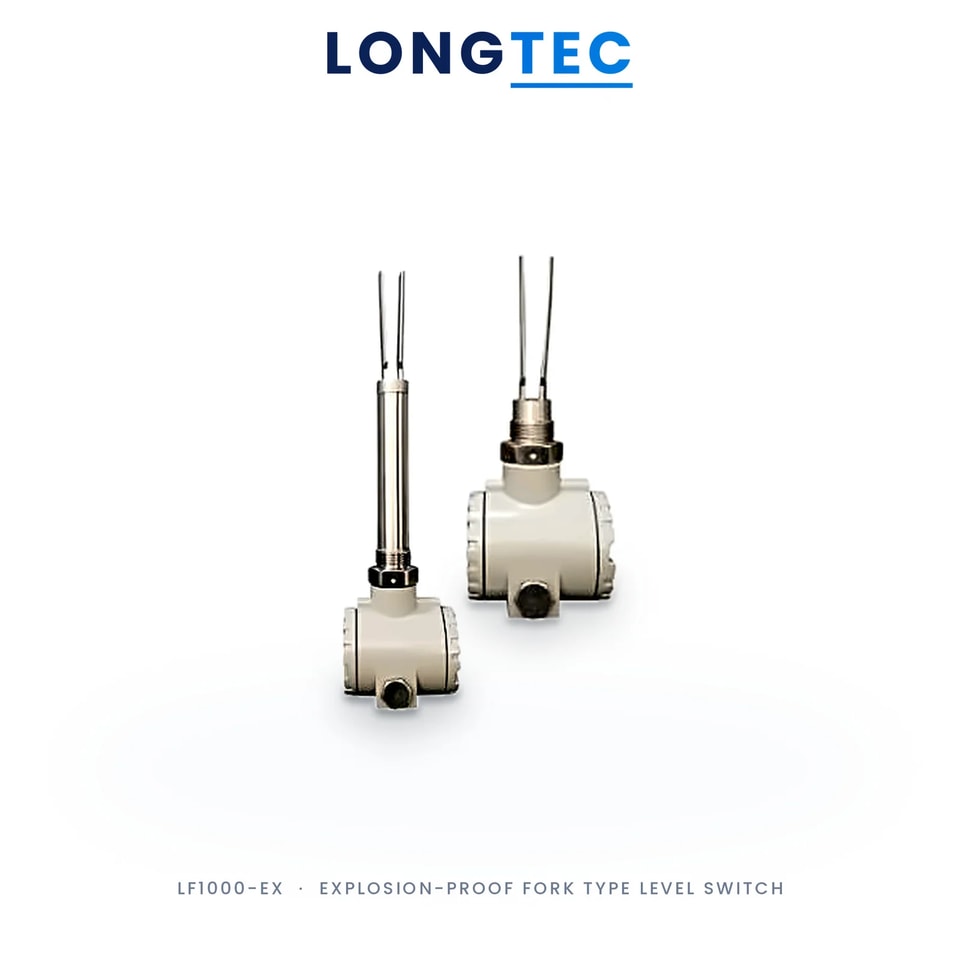
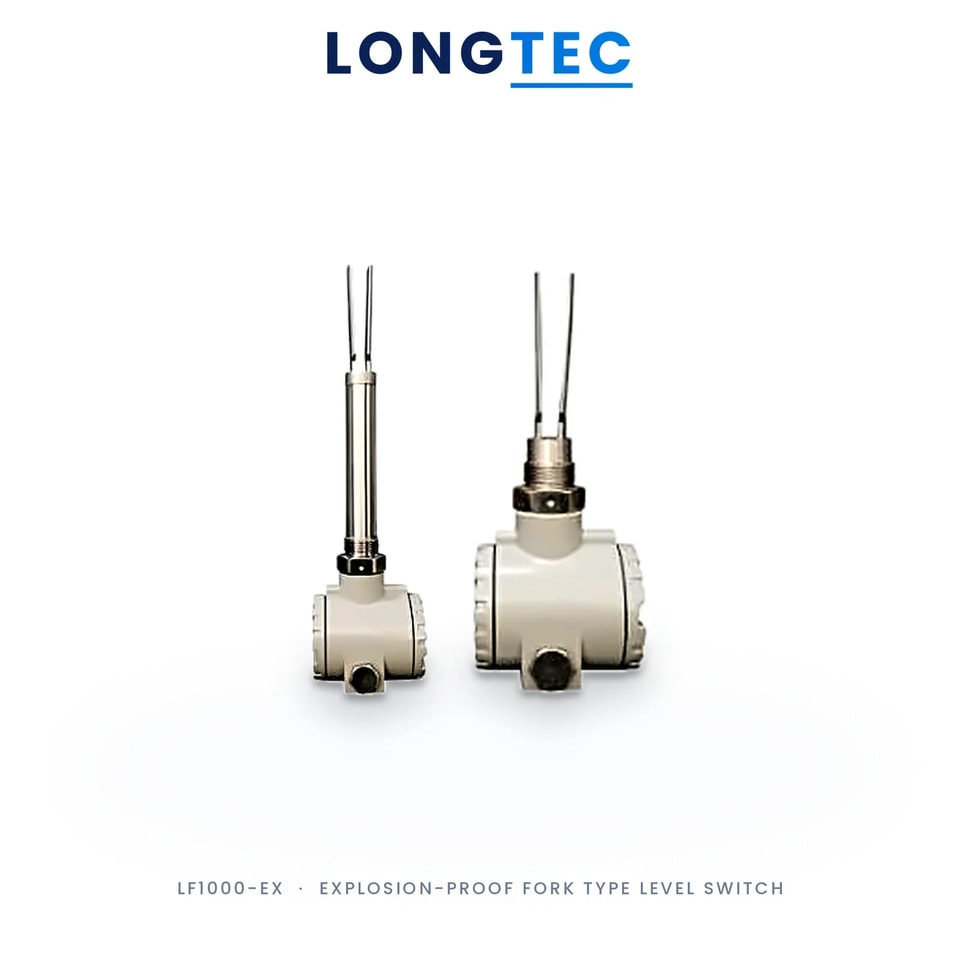
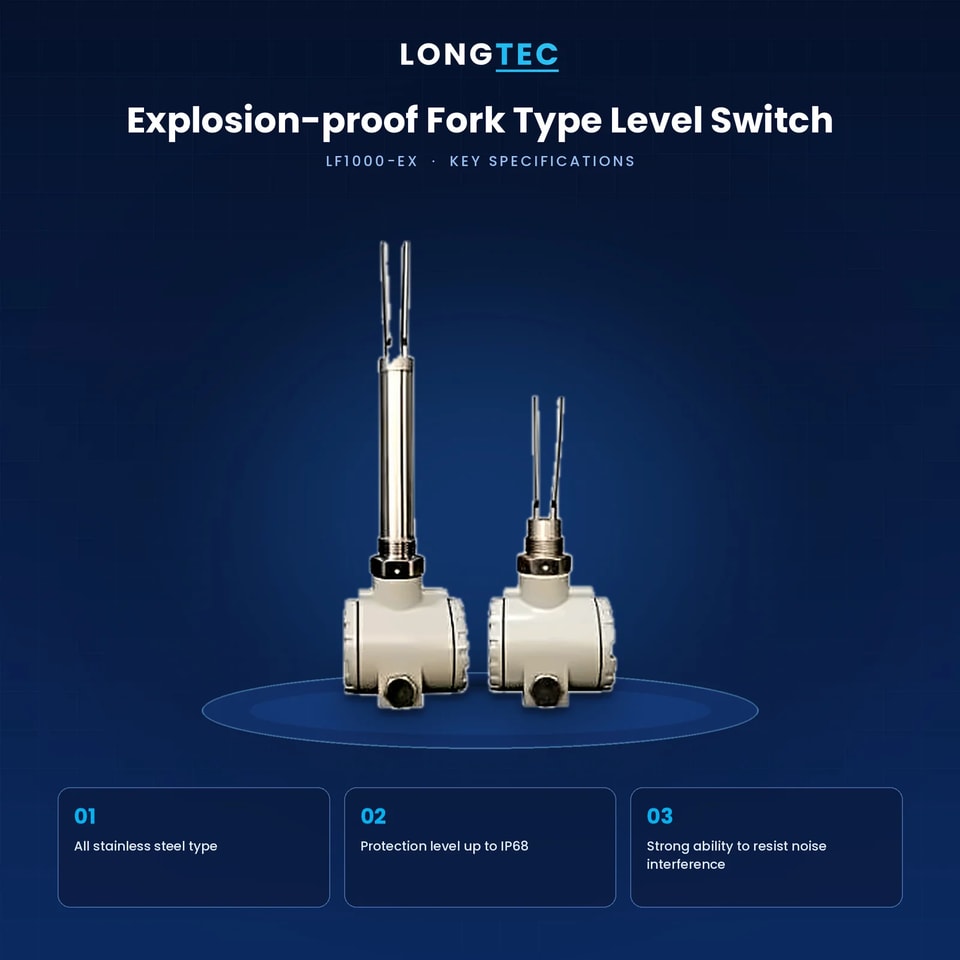
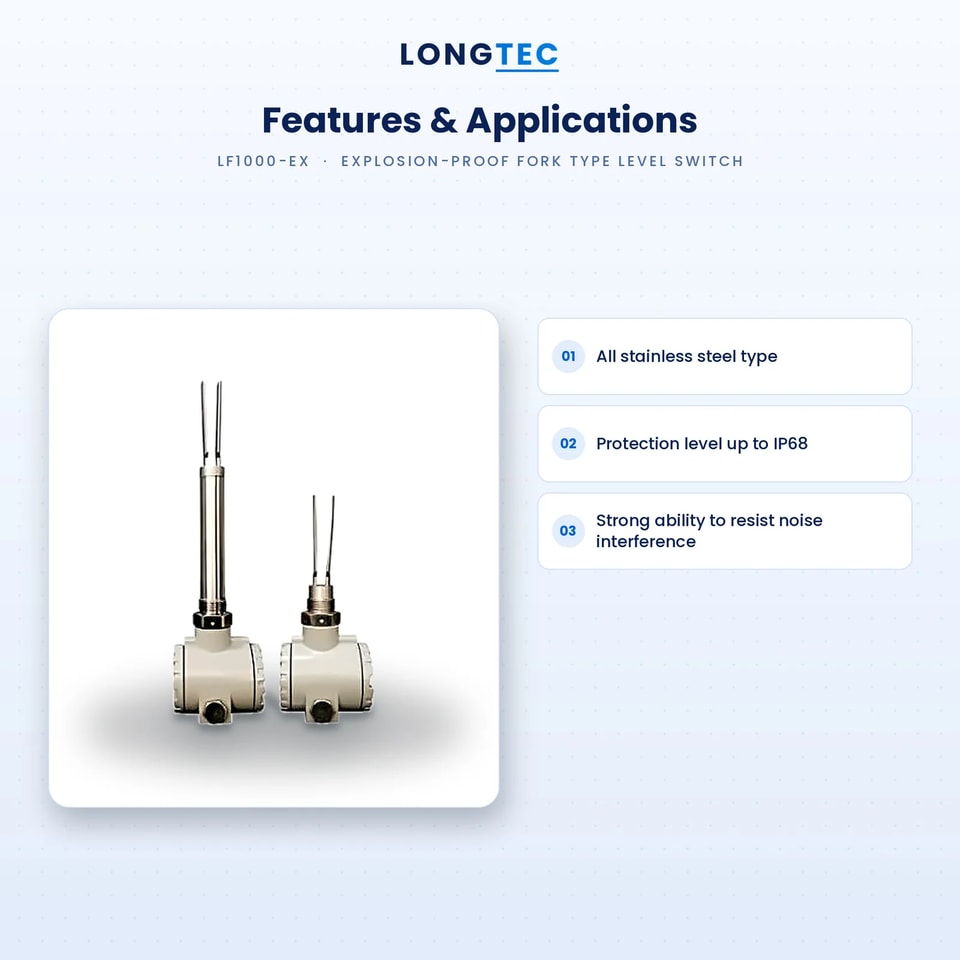

LF1000-Ex Explosion-Proof Tuning-Fork Point Level Switch
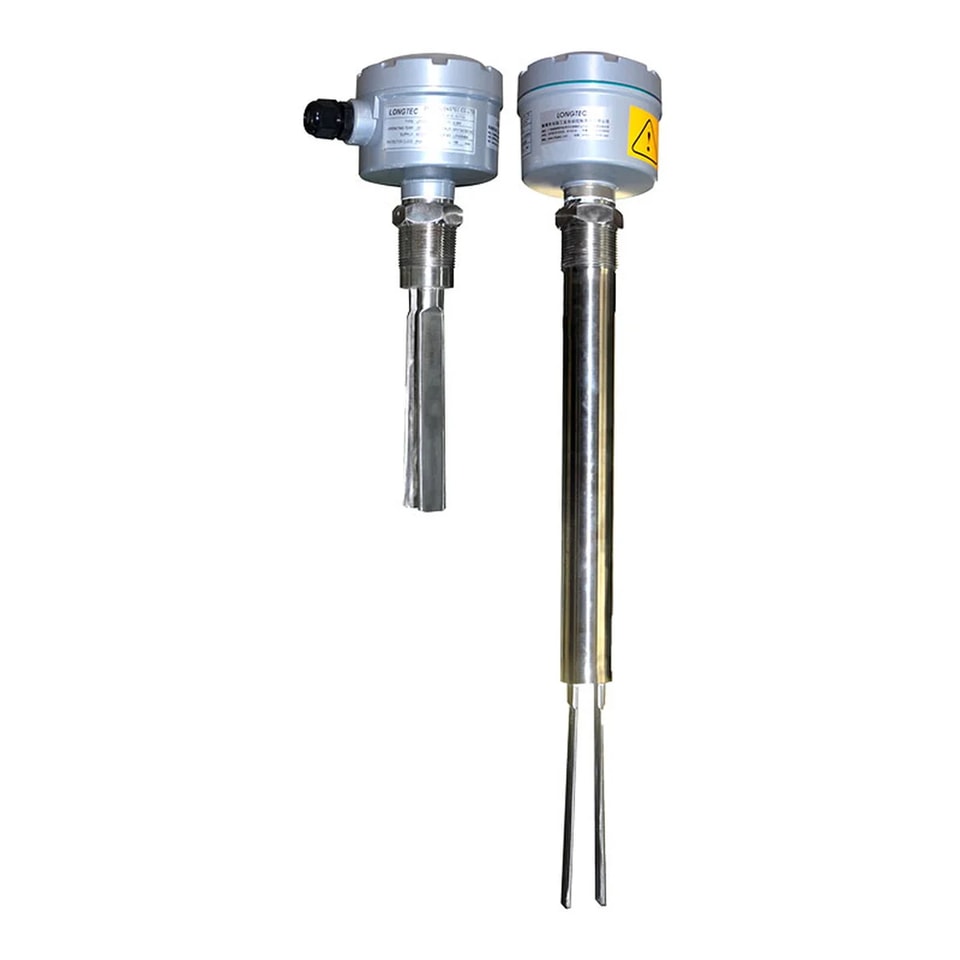
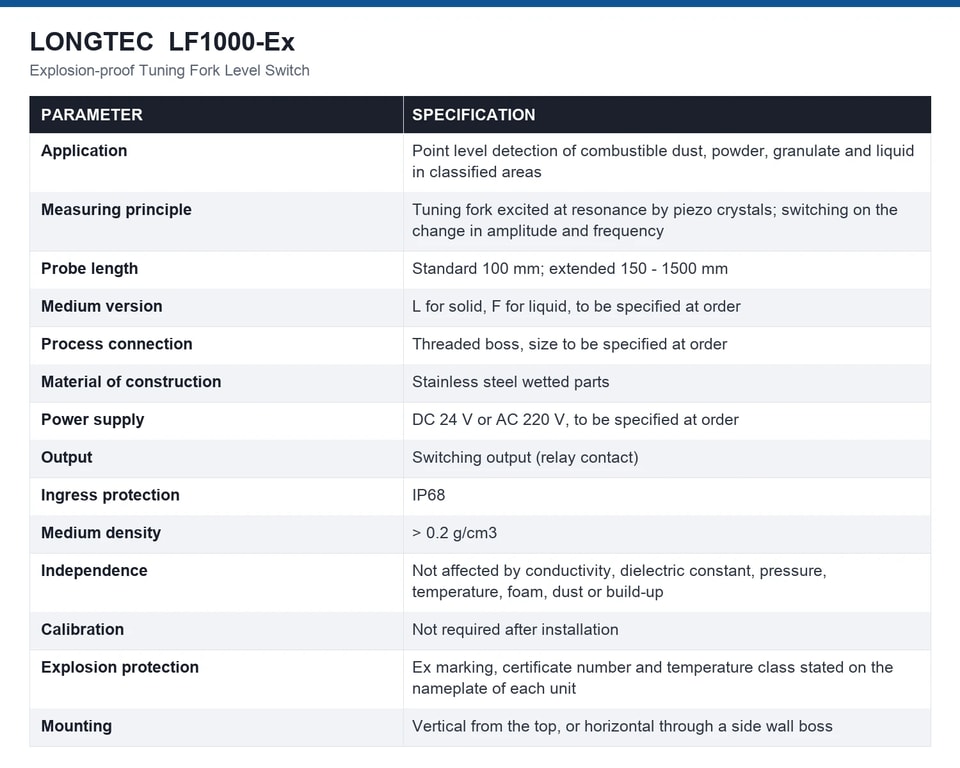
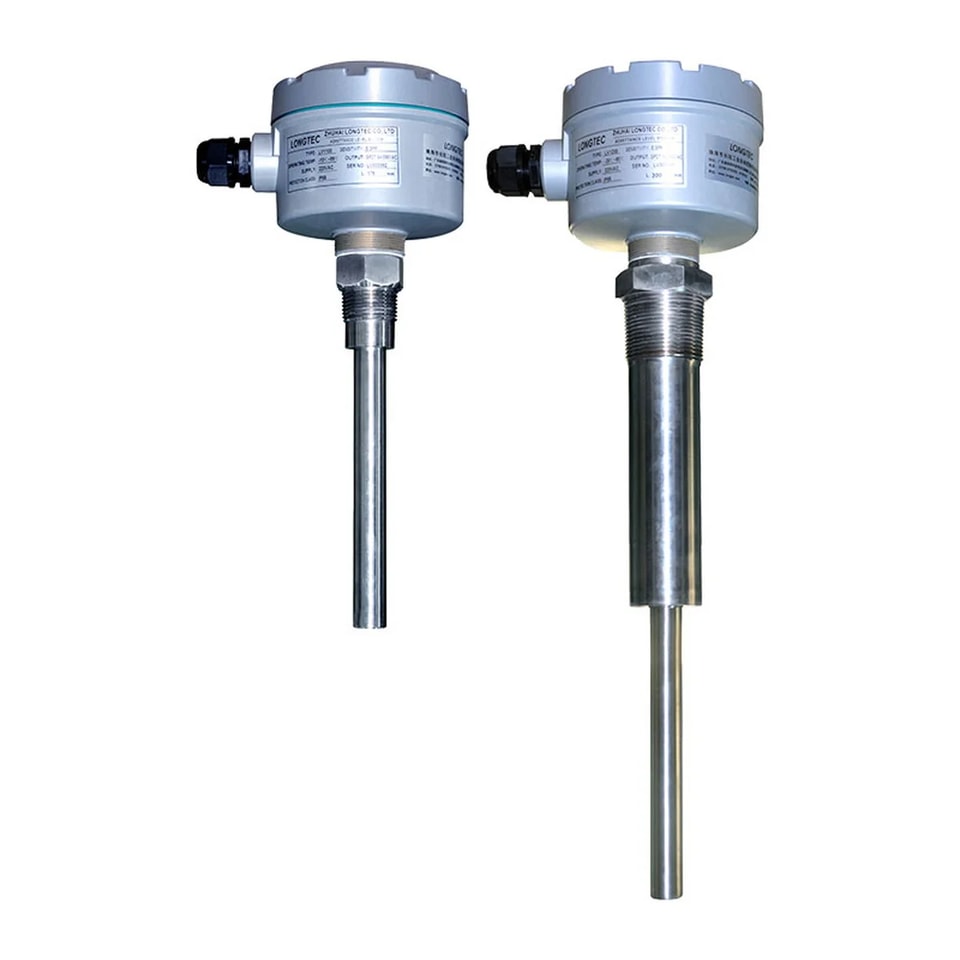
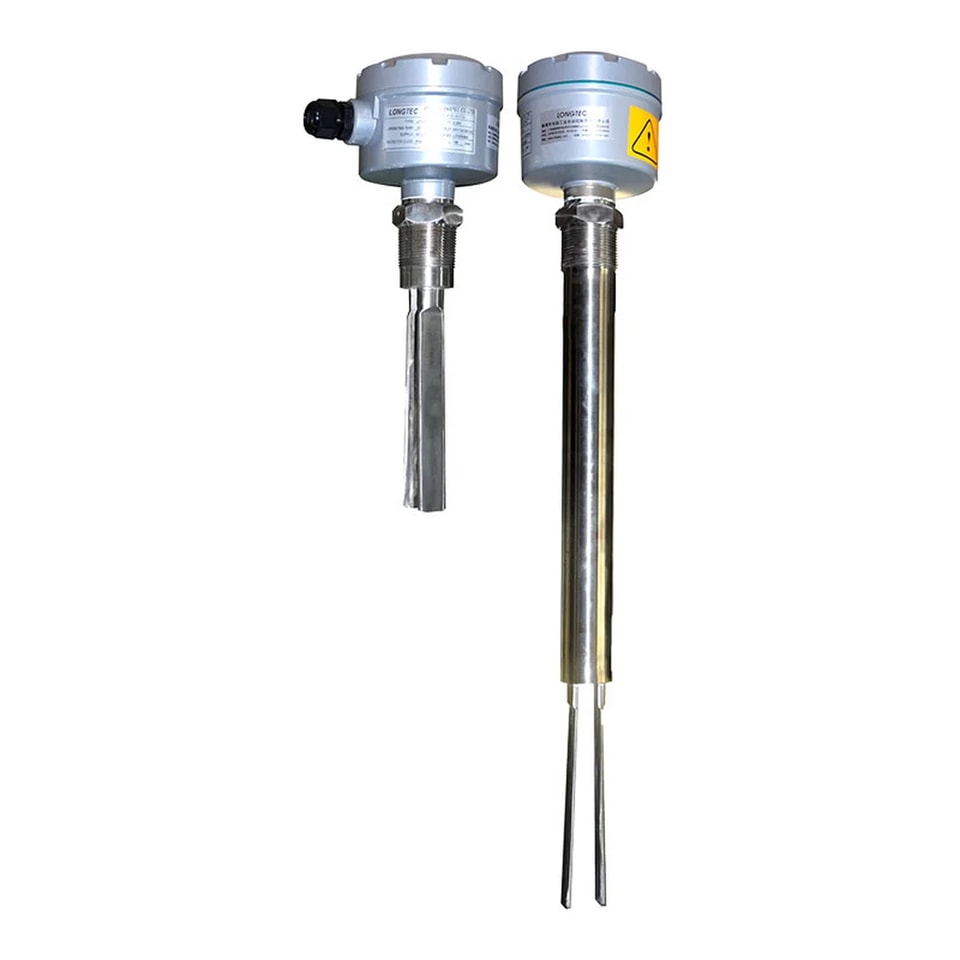
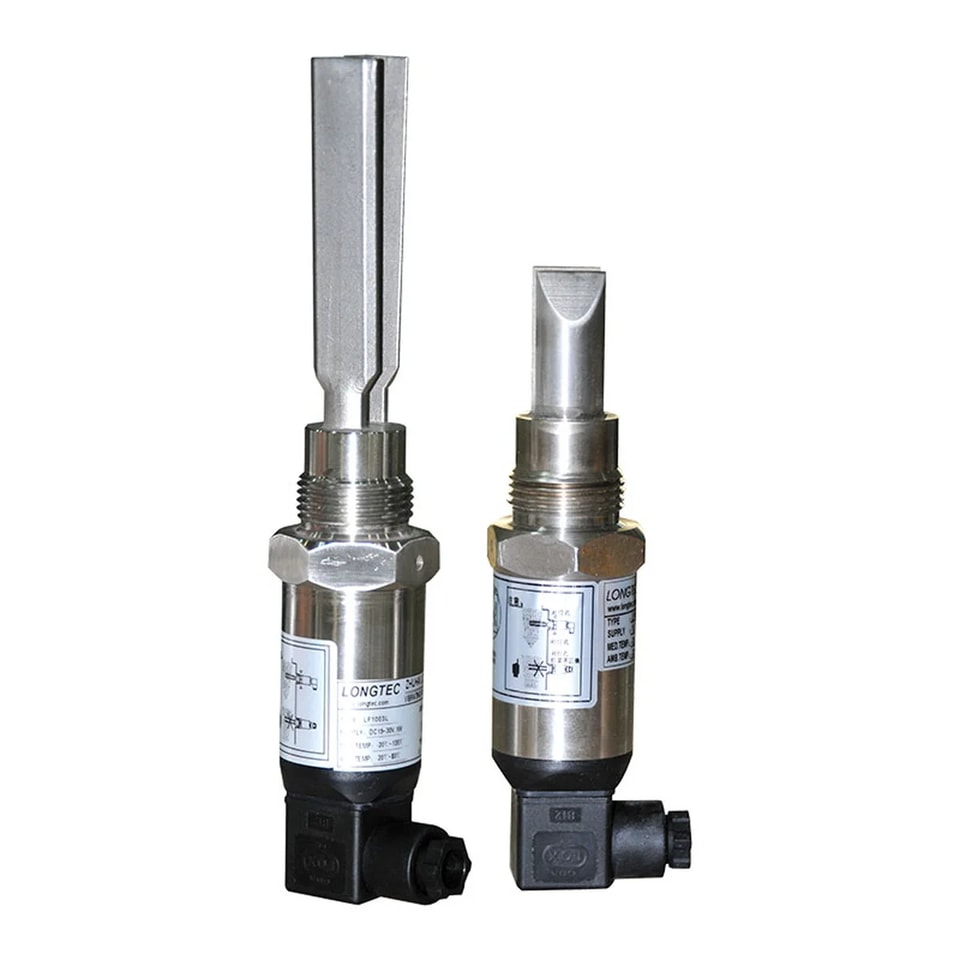
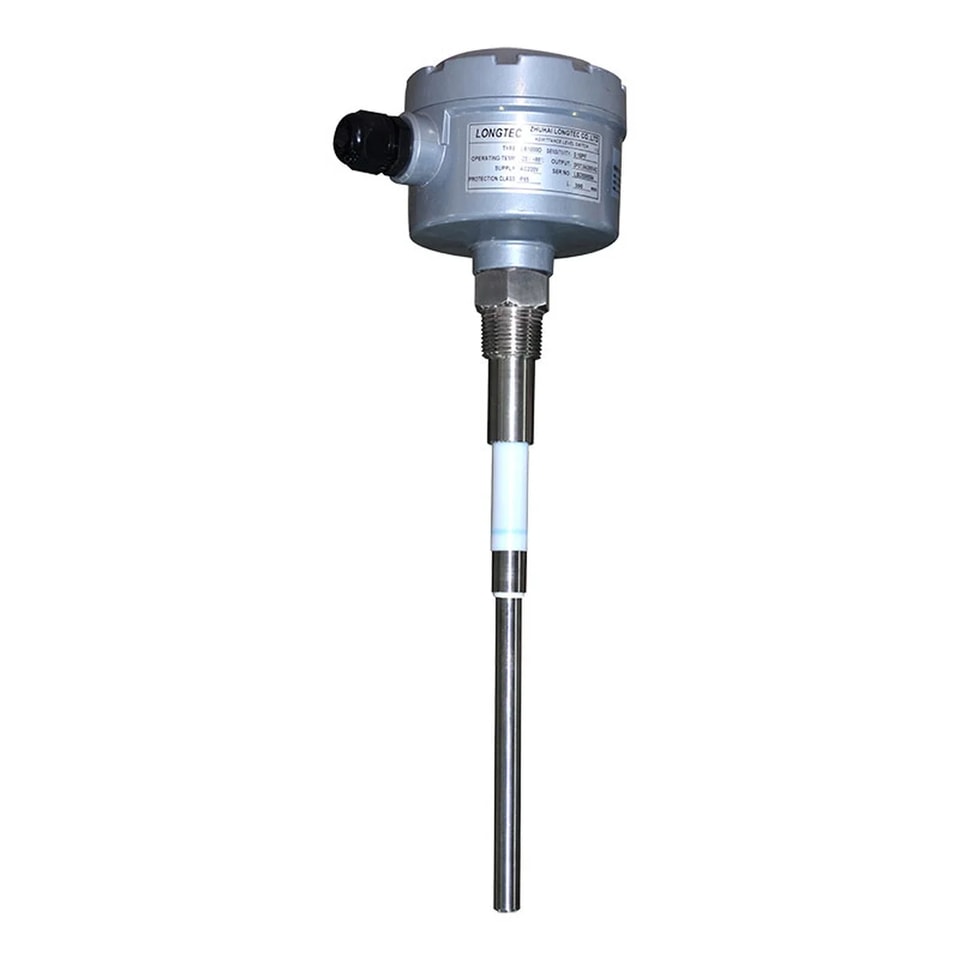
The LF1000-Ex is the explosion-proof version of the LF100 tuning fork level switch, intended for silos, hoppers and vessels where dust or gas makes an ordinary switch unacceptable. The measuring principle is unchanged: piezo crystals drive the stainless steel fork at resonance, and the change in amplitude and frequency when material covers the fork produces a switching signal. That makes the switch independent of the conductivity, dielectric constant, pressure and temperature of the medium, and insensitivity to dust, foam and build-up is exactly what a hazardous dust area needs. The fork is supplied in two lengths, 100 mm as standard and 150 mm to 1500 mm extended, and each is available in a solid version and a liquid version so that a fine powder or a viscous liquid can both be handled. The stainless housing is sealed to IP68. Cable entry and the Ex marking are matched to the zone and the temperature class declared on the nameplate of each unit.
· Explosion-proof construction for hazardous dust and gas areas, with the Ex marking and certificate supplied against the ordered zone.
· Tuning fork principle: switching depends on the mechanical damping of the fork, not on the electrical properties of the medium.
· Two probe lengths, 100 mm standard and 150 mm to 1500 mm extended, each available for solid or for liquid media.
· All stainless steel wetted parts and an IP68 housing, so wash-down and outdoor installation are both possible.
· Unaffected by dust, foam, build-up and changes in density, pressure or temperature inside the silo.
· No calibration after installation: mount at the switching point, set the fail-safe mode and the instrument is in service.
The LF1000-Ex is used where a level switch has to sit inside a classified area: coal and coke silos, pulverised coal and fly ash hoppers in power stations, grain and starch bins where dust is explosive, chemical powder and solvent tanks, paint and coating vessels, and any hopper handling a solvent-wet solid. It provides high and low level signals, pump protection and overflow alarms in those areas, and the liquid version covers solvent and fuel tanks in the same zone.
What makes this version explosion-proof?
The housing and cable entry are built for a classified area instead of a general-purpose one, and each unit is delivered with its Ex marking, certificate number and temperature class on the nameplate. The measuring principle is the same tuning fork as the standard LF100, so the switching behaviour and the installation rules are unchanged.
Which probe length do I need?
The standard 100 mm probe covers a top-mounted high level where the boss is close to the switching point. For low level detection from the top of a tall silo, or where the switching point is far from the mounting boss, use the extended probe from 150 mm up to 1500 mm.
Should I take the L or the F version?
L is the solid version and F is the liquid version. They differ in fork geometry and in the switching sensitivity that suits the medium, so a fine powder and a solvent need different versions even though both are point level duties. State the medium when ordering.
Will dust in the silo trigger a false alarm?
No. The fork only reacts when material actually damps its vibration, and it is insensitive to the dust cloud, to foam and to pressure changes in the vessel. That is the main reason a tuning fork is preferred to optical or capacitive switches in a dusty hazardous area.
How is it installed and commissioned?
Mount it vertically from the top of the silo, or horizontally through a side boss at the switching point, and make off the cable entry to the standard required for the zone. There is no calibration: set the fail-safe mode to high or low as the process requires and the switch is in service.
Solutions & Support
We go the extra mile to thoroughly analyze each project and deliver tailored business solutions that meet your specific requirements.
Contact US
×