
LV100 Vibrating-Rod Point Level Switch
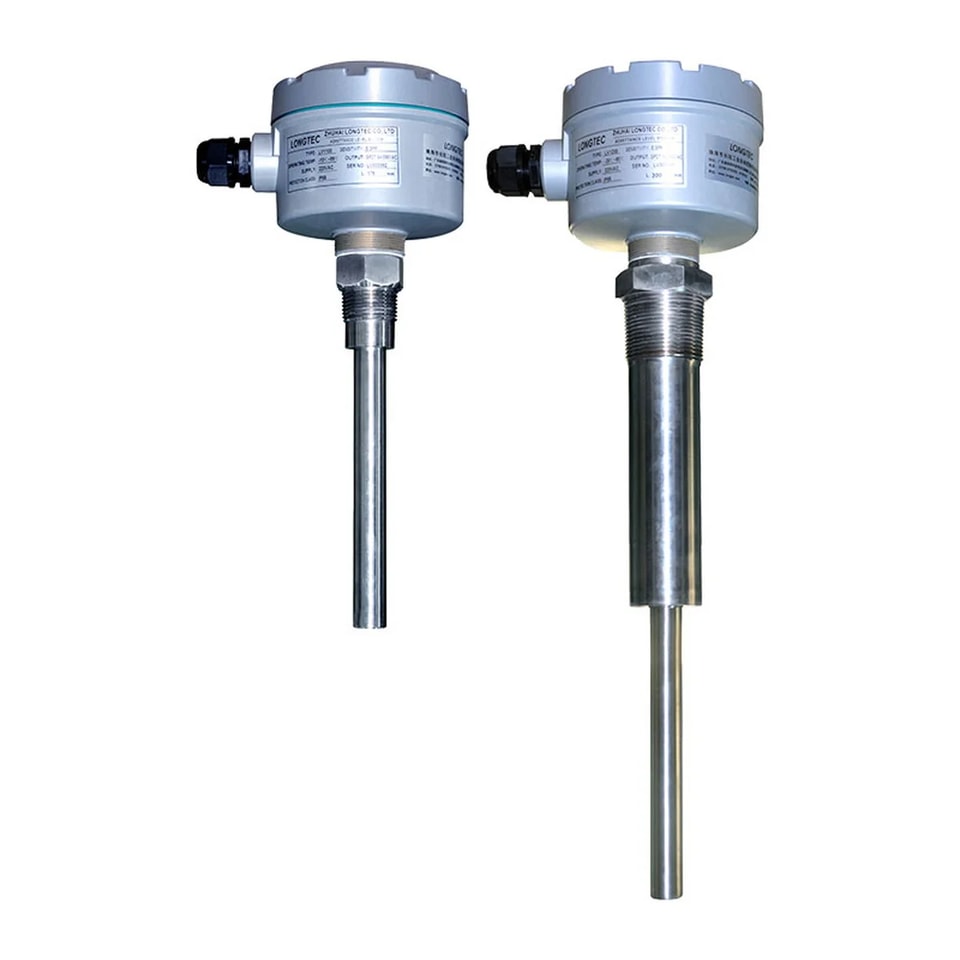
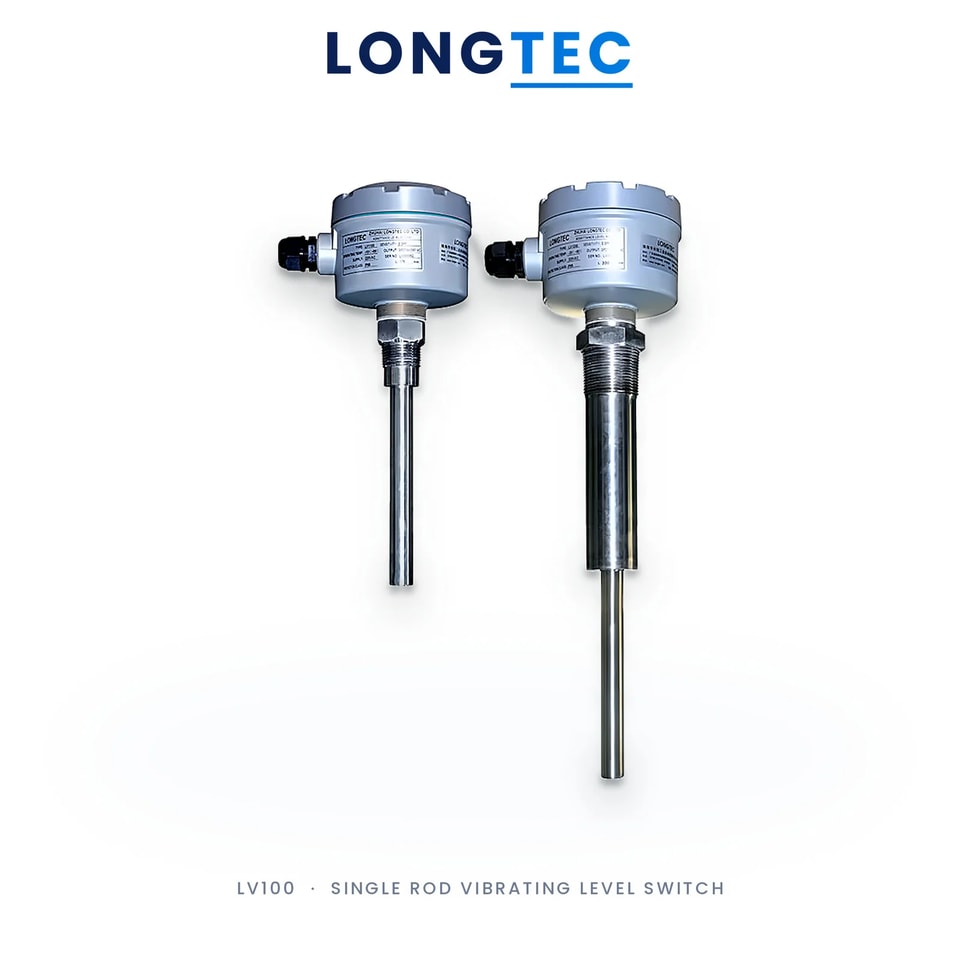
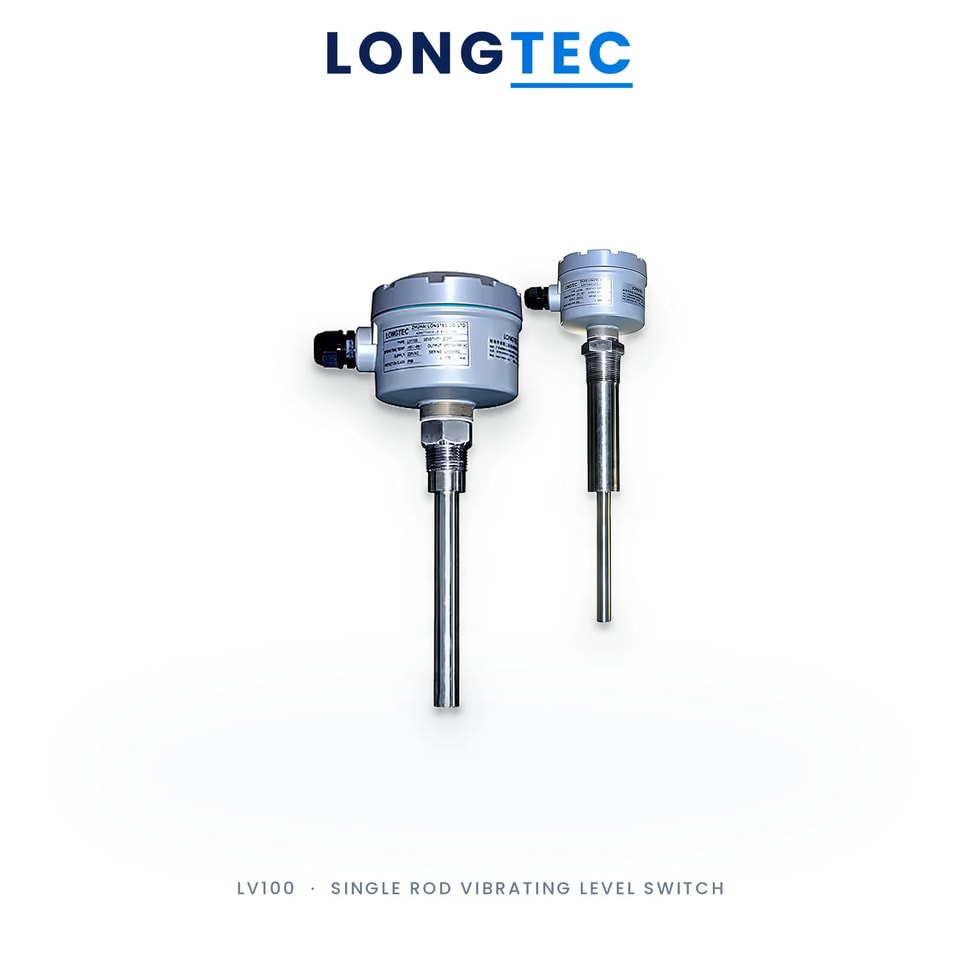
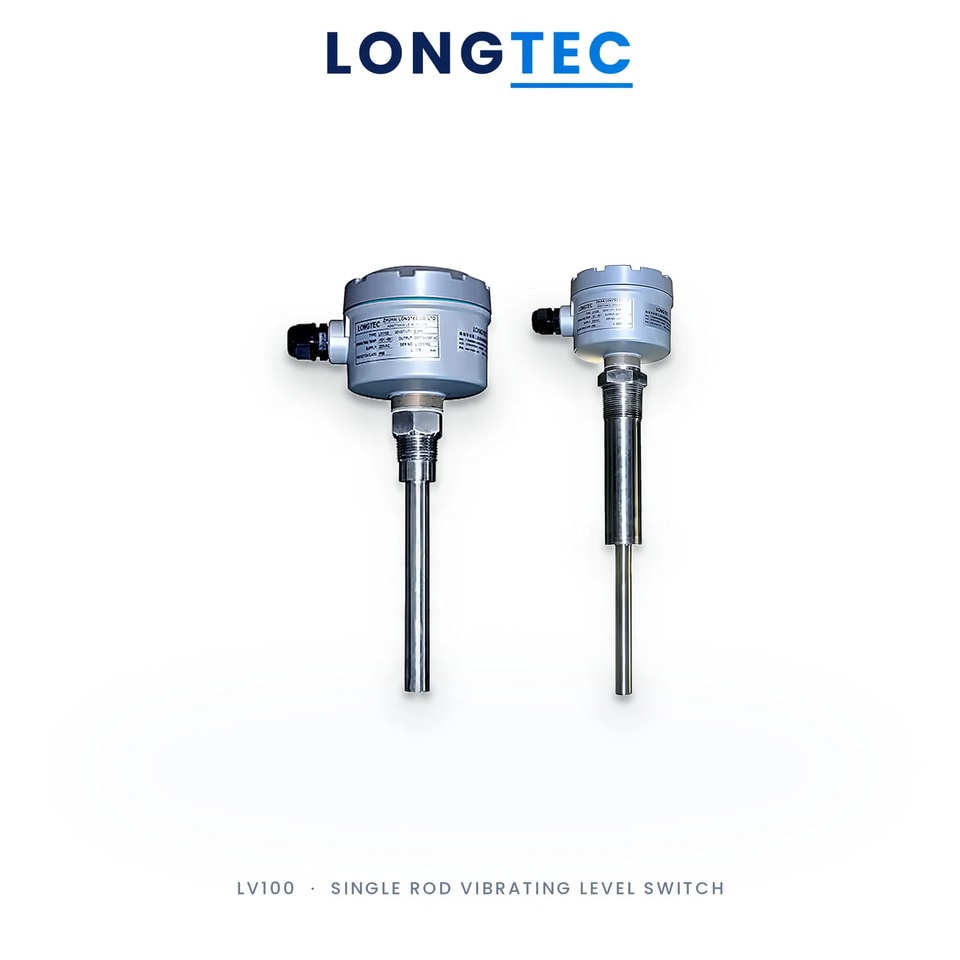
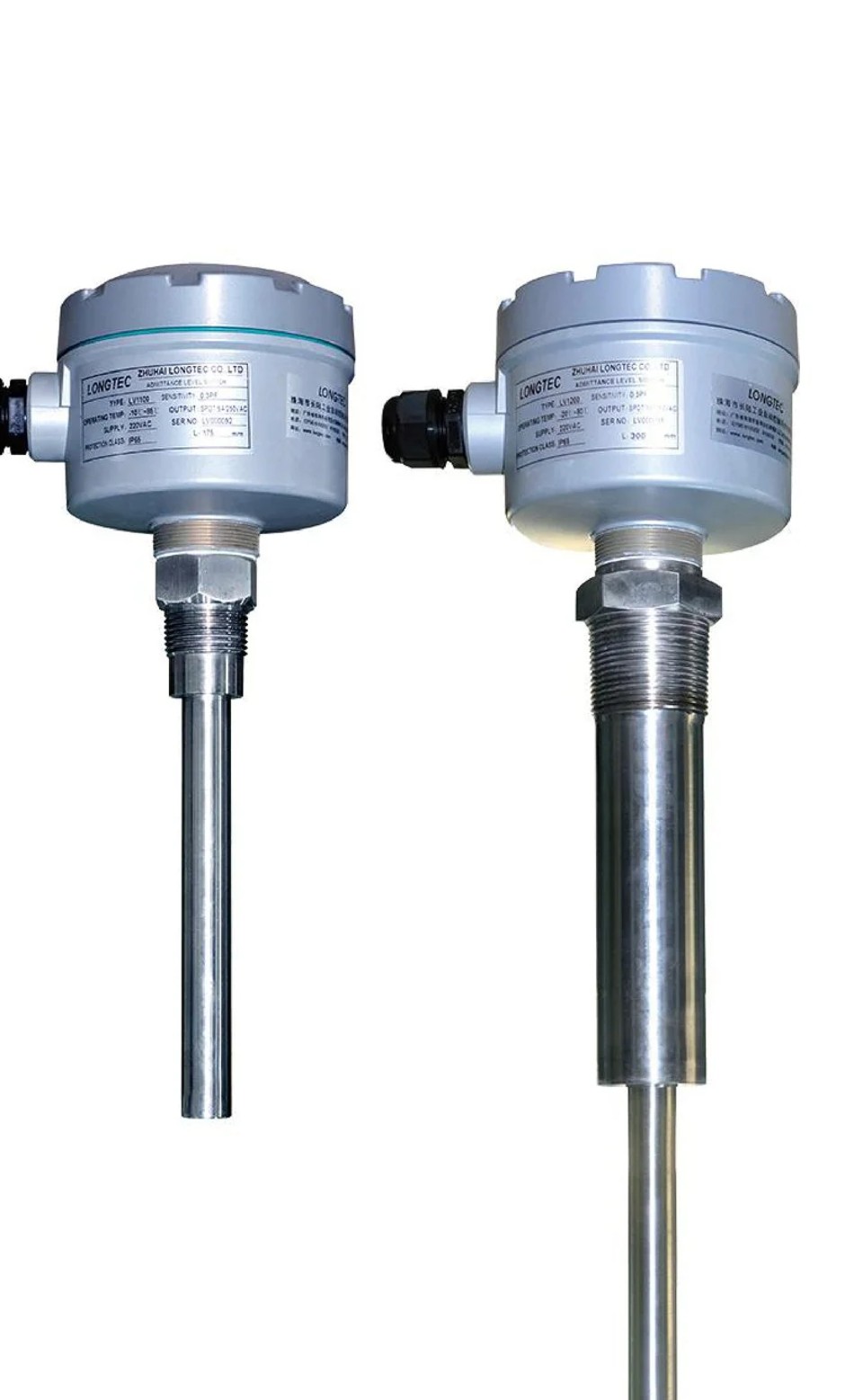
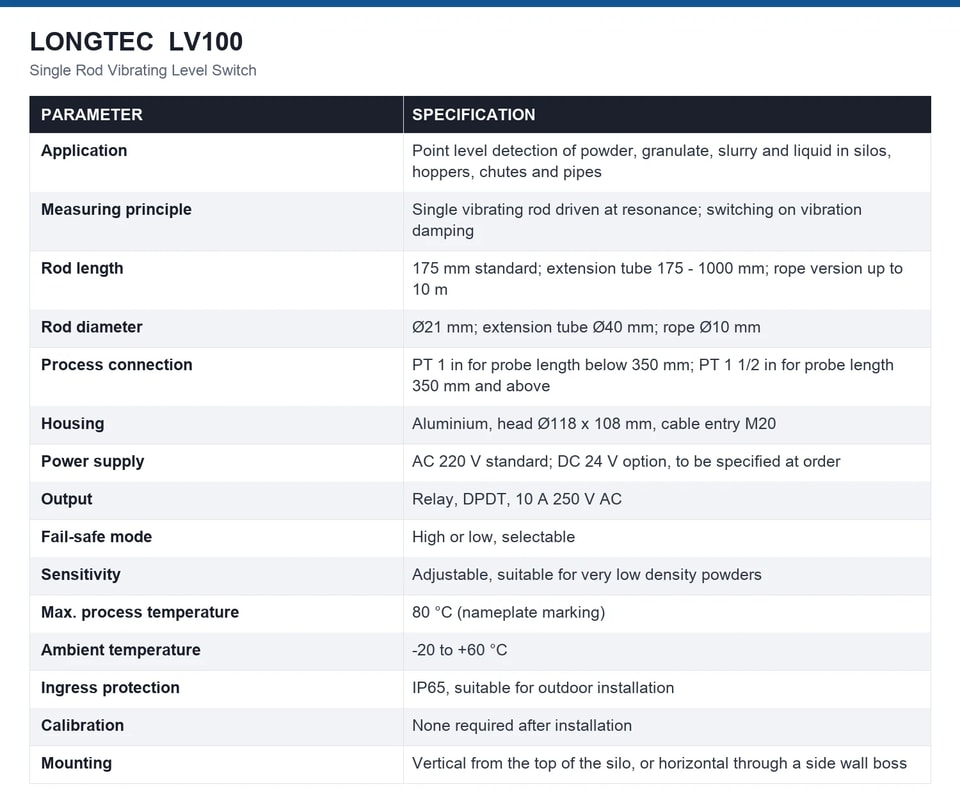
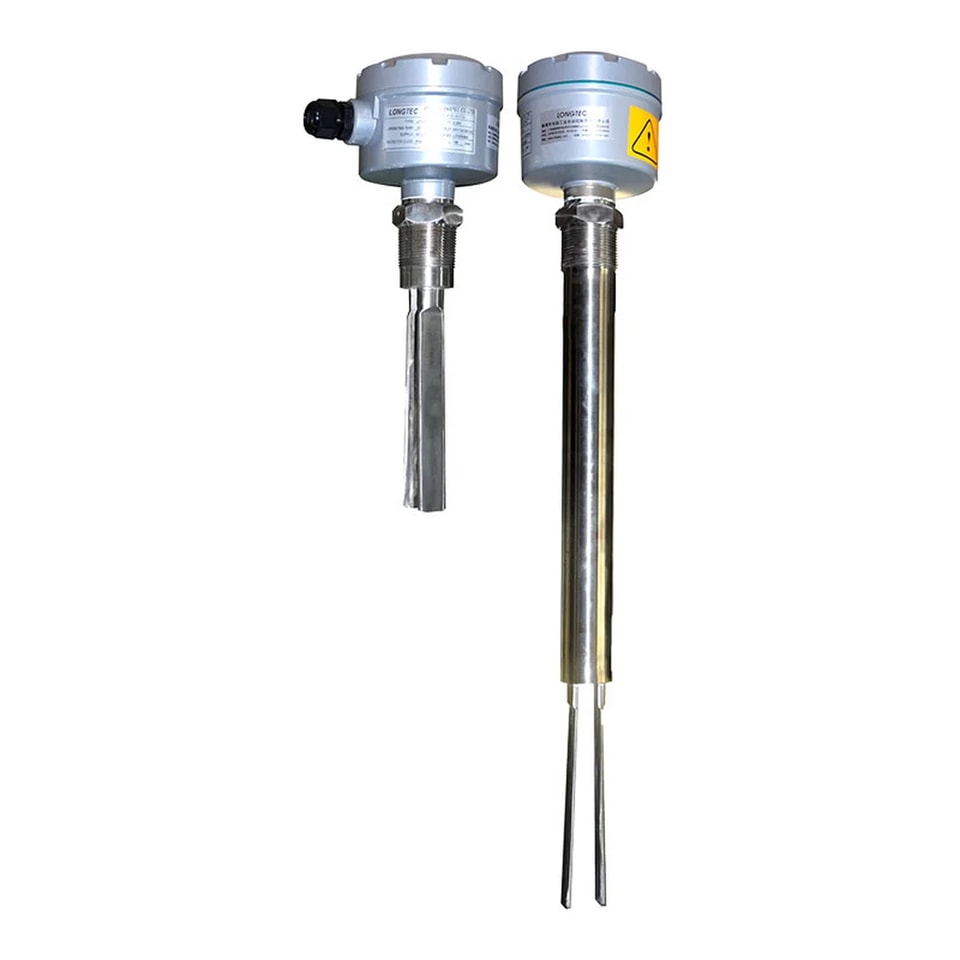
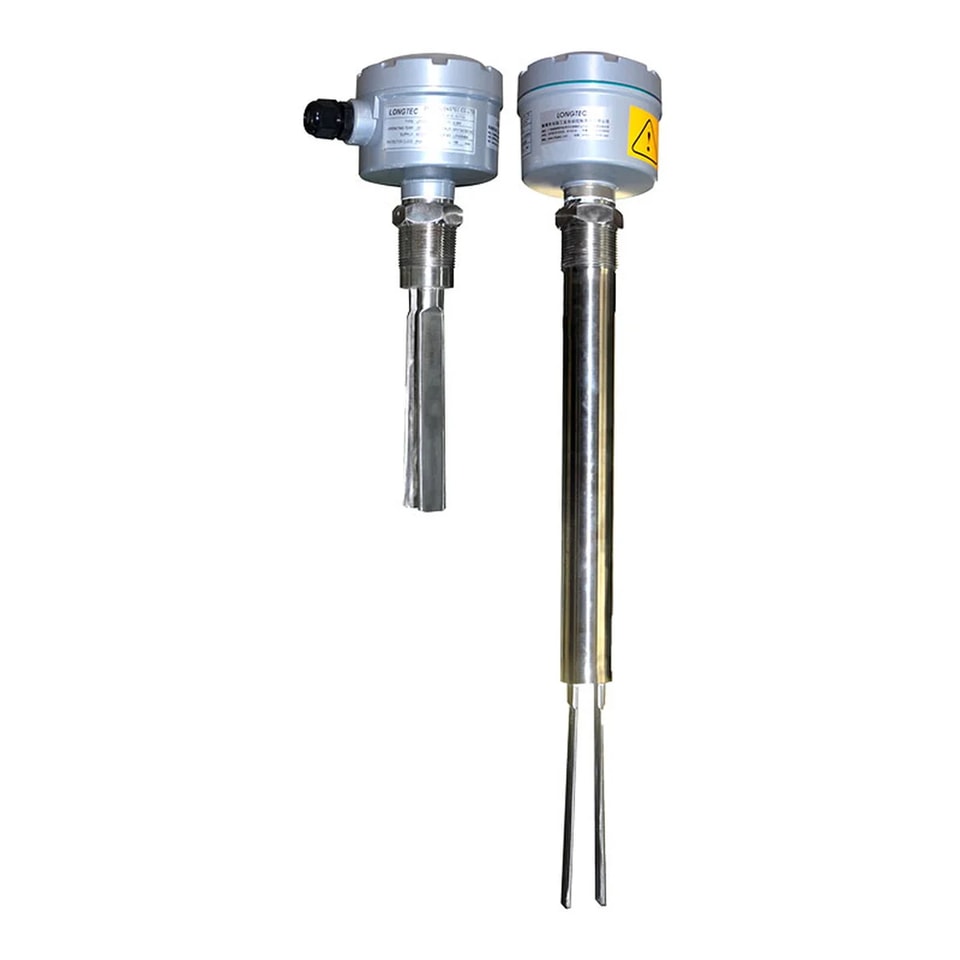
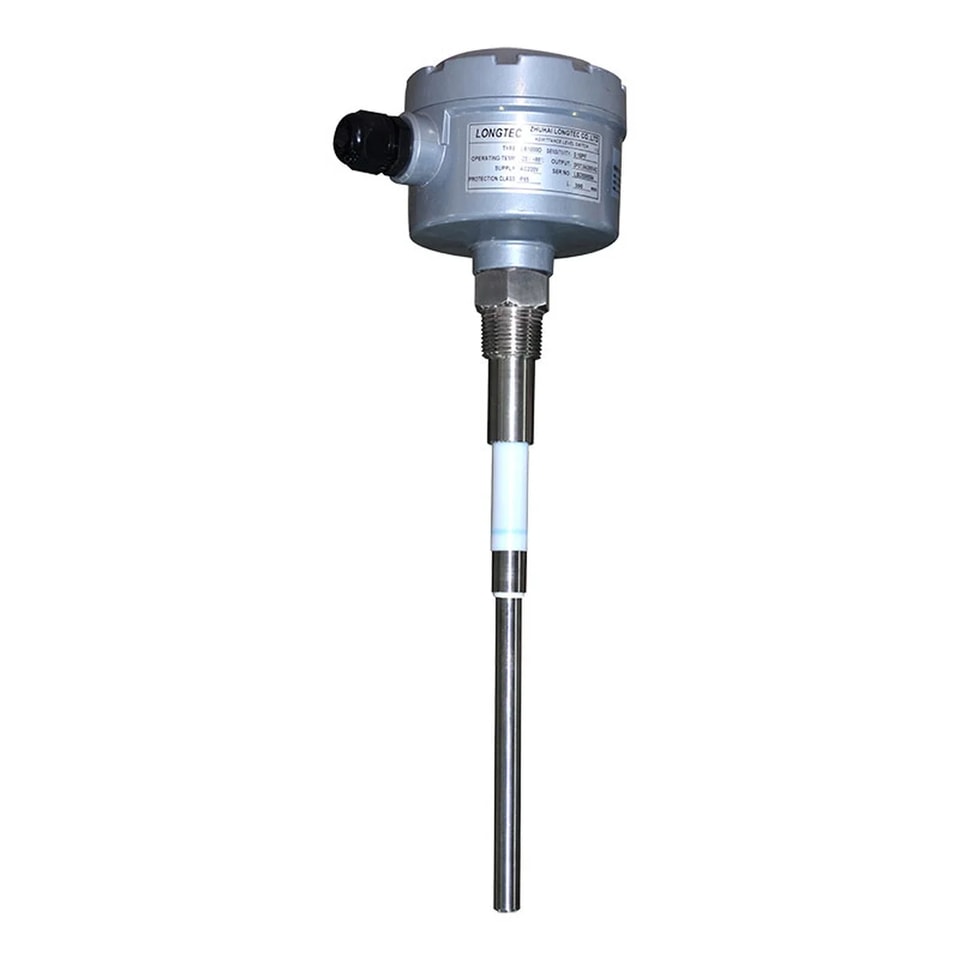
The LV100 is a point level switch built around a single vibrating rod instead of a tuning fork. A piezo drive keeps the rod oscillating at its resonance; when powder, granulate or liquid covers the rod the vibration is damped, the electronics see the change and switch a relay. Because there is only one rod there is no fork gap to bridge, no clamping direction to respect and no place for sticky material to pack, which is the usual failure mode of a fork in damp fly ash or wet sand. Sensitivity is adjustable, so the same instrument covers light powders down to a few grams per litre as well as sand, cement and plastic pellets. Rod length is made to order: 175 mm as standard, a rigid extension tube up to 1 m, or a flexible rope up to 10 m for tall silos. The housing is aluminium, sealed to IP65 for outdoor installation, and the process temperature can reach 85 C. No calibration is needed after mounting: install it, set the fail-safe mode and it runs.
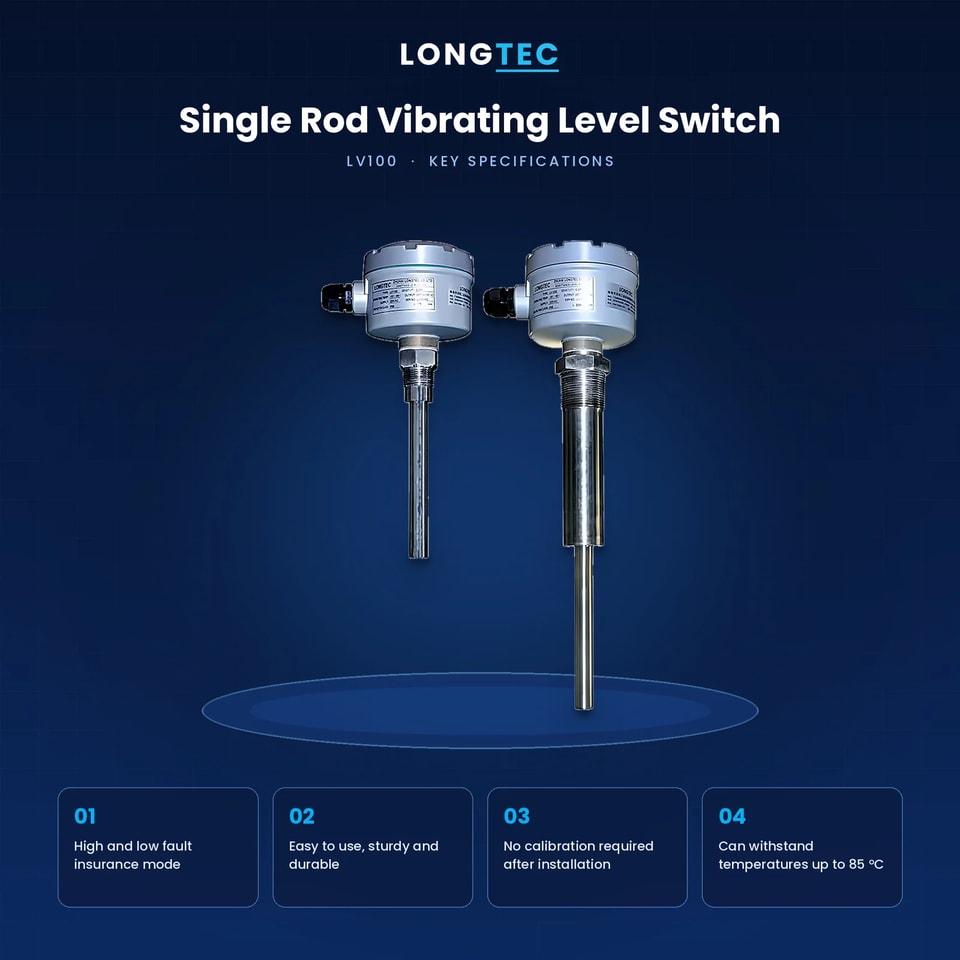
· Single vibrating rod: no fork gap to bridge and no preferred mounting direction, so it installs from the top or the side of a silo.
· Adjustable sensitivity reaches very light powders, while the same setting range still covers sand, cement and plastic pellets.
· Rigid rod 175 mm as standard, extension tube up to 1 m and rope version up to 10 m for deep silos.
· Relay output with selectable high or low fail-safe mode, so a broken cable reads as full or empty as your process requires.
· No calibration after installation and no moving parts to wear: the rod is the only thing in contact with the material.
· Aluminium housing sealed to IP65 and a process temperature up to 80 °C, suitable for outdoor silos and unheated plants.
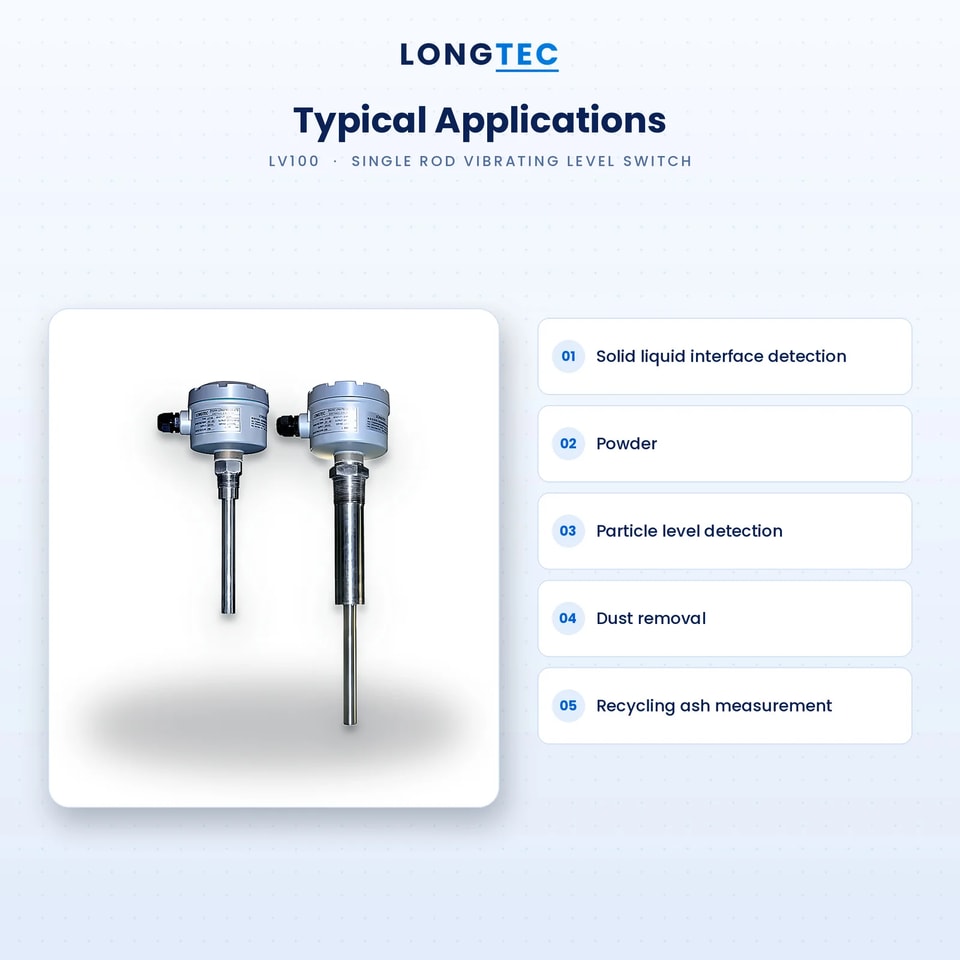
The LV100 is used wherever a bin, silo, hopper or chute needs a reliable full, empty or high-level signal: cement and fly ash in power plants, sand and aggregate bins, plastic pellets and regrind, flour, starch and feed, chemical powders, and the detection of material flow on belt and screw conveyors. It also works as a liquid level switch and as a solid-liquid interface detector in settling tanks and sumps. Typical mounting is one unit at the top of a silo for high level and one at the outlet for empty, or a single unit on a chute to prove that material is actually moving.
Why a single rod instead of a tuning fork?
A fork has a gap between its tines, and damp or sticky material bridges that gap and gives a permanent covered signal. A single rod has nothing to bridge, and it does not care about the mounting angle, which makes it the safer choice for fly ash, wet sand and sticky powders.
Which rod version do I need?
Measure the distance from the mounting boss to the level you want to detect. Up to 175 mm the standard rod is enough. Between 175 mm and 1 m use the rigid extension tube. For silos deeper than 1 m, or where a rigid rod would bend in a falling material stream, use the rope version up to 10 m.
What thread will I need on the silo?
PT 1 in when the probe length is below 350 mm, and PT 1 1/2 in from 350 mm upwards. The extension tube and the rope versions both use the larger thread because the gland and the weight have to pass through it.
Can it be used outdoors?
Yes. The housing is sealed to IP65 and the ambient range is -20 to +60 °C, so it can be mounted on an outdoor silo. The process temperature at the rod can go to 85 °C, which covers cement, ash and most mineral powders straight out of a dryer.
How is it wired and commissioned?
Two supply options are available, DC 24 V or AC 220 V, and they must be specified when ordering. The output is a DPDT relay, and the fail-safe mode can be set to high or low so that a cable break is reported as the safe state for your process. There is no calibration: set the sensitivity once for the material and the switch is ready.
Solutions & Support
We go the extra mile to thoroughly analyze each project and deliver tailored business solutions that meet your specific requirements.
Contact US
×