
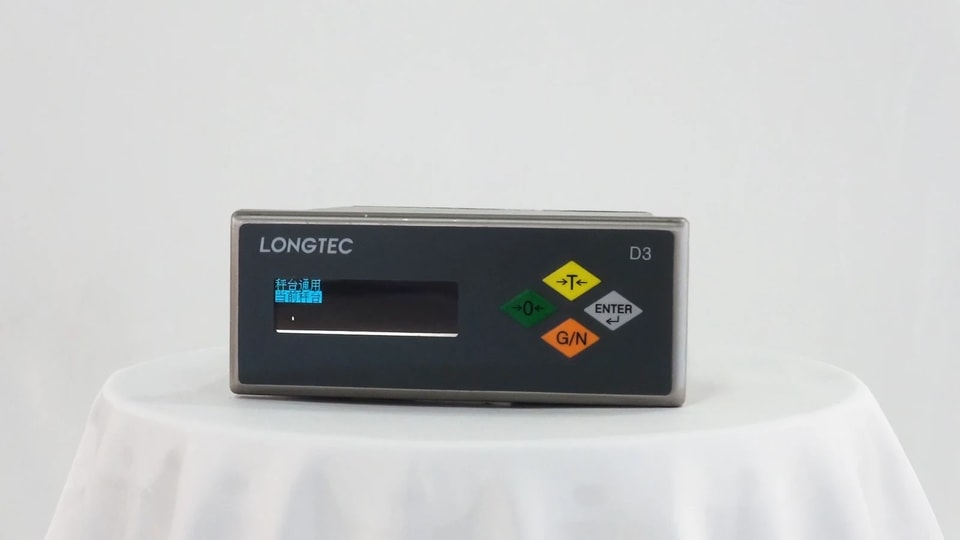
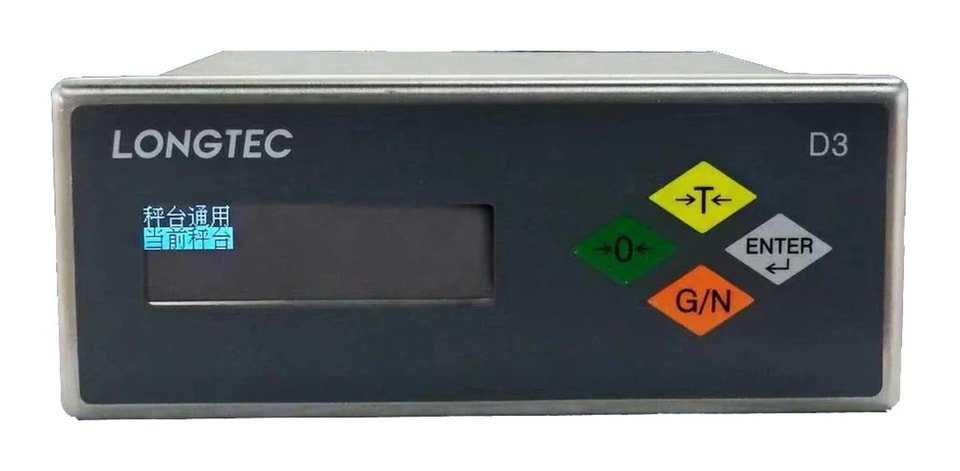
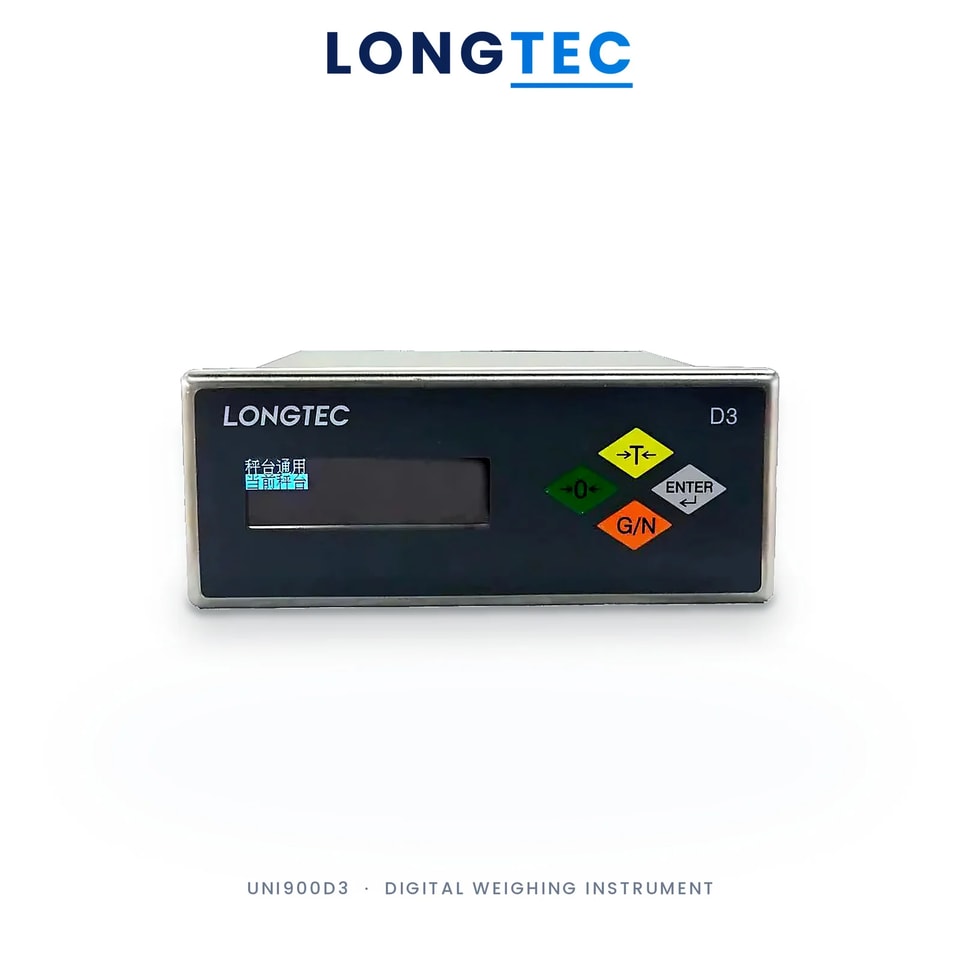
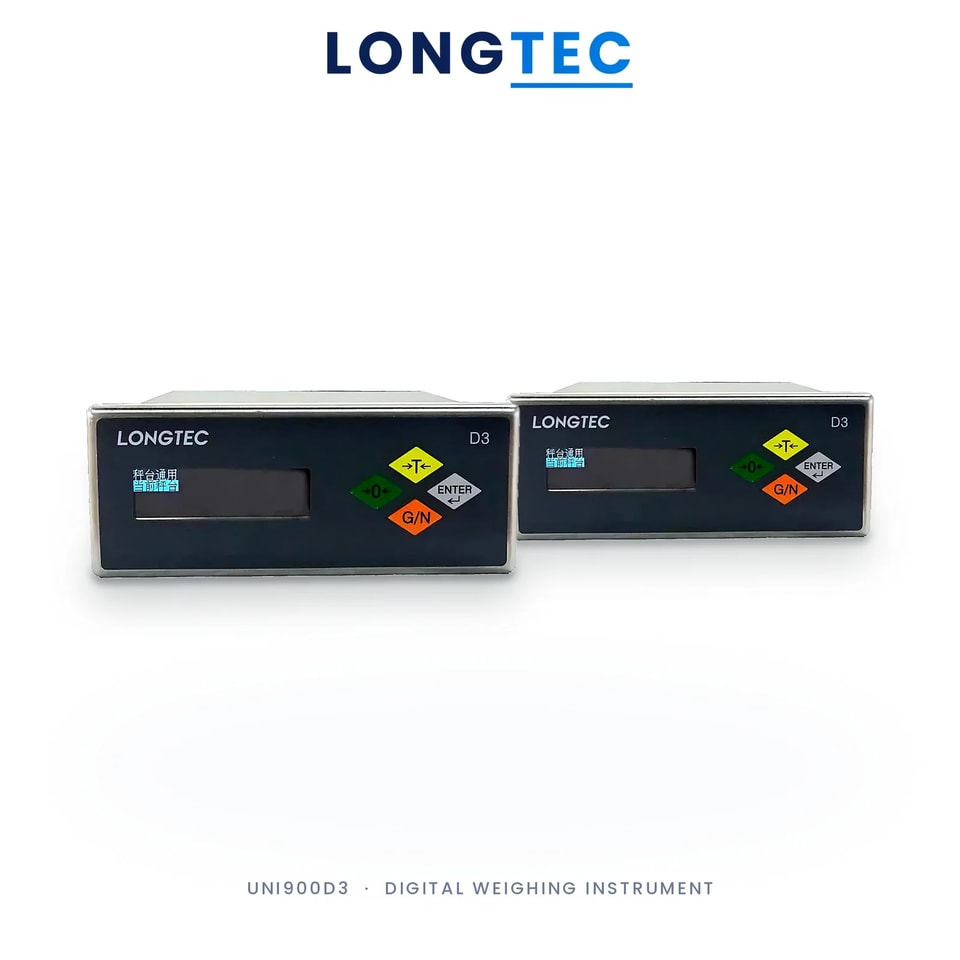
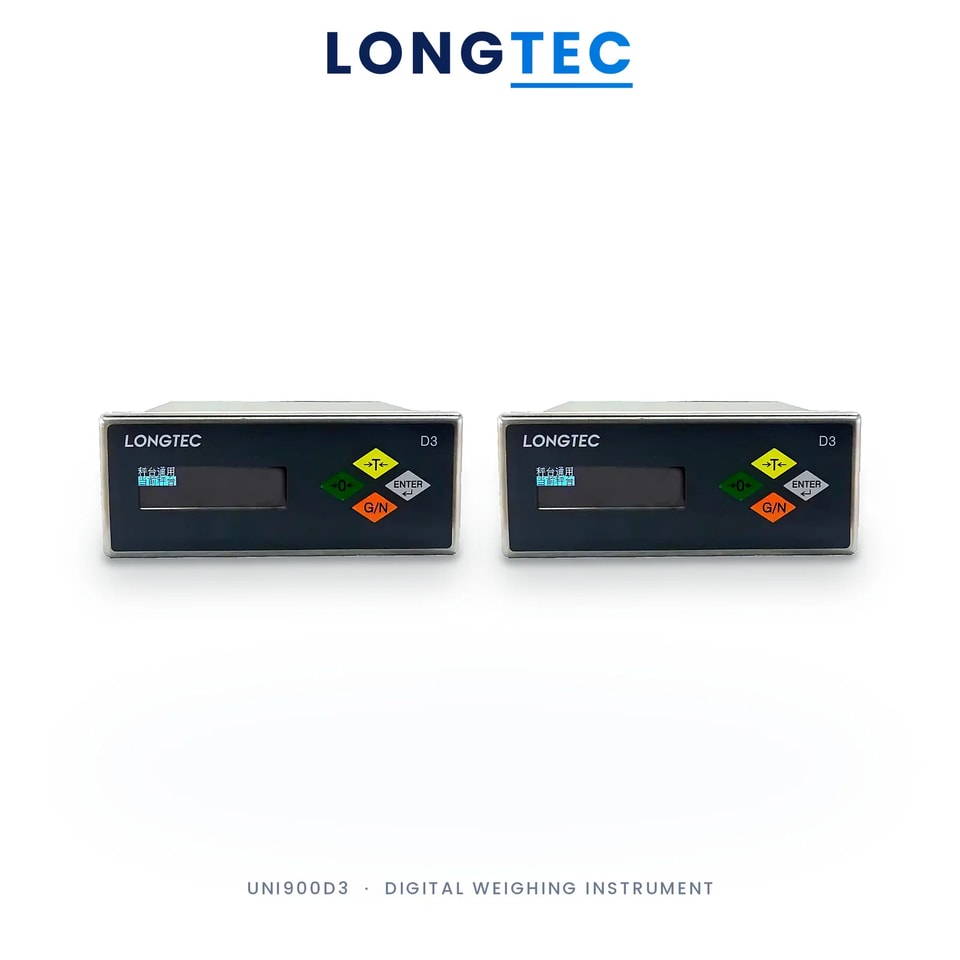
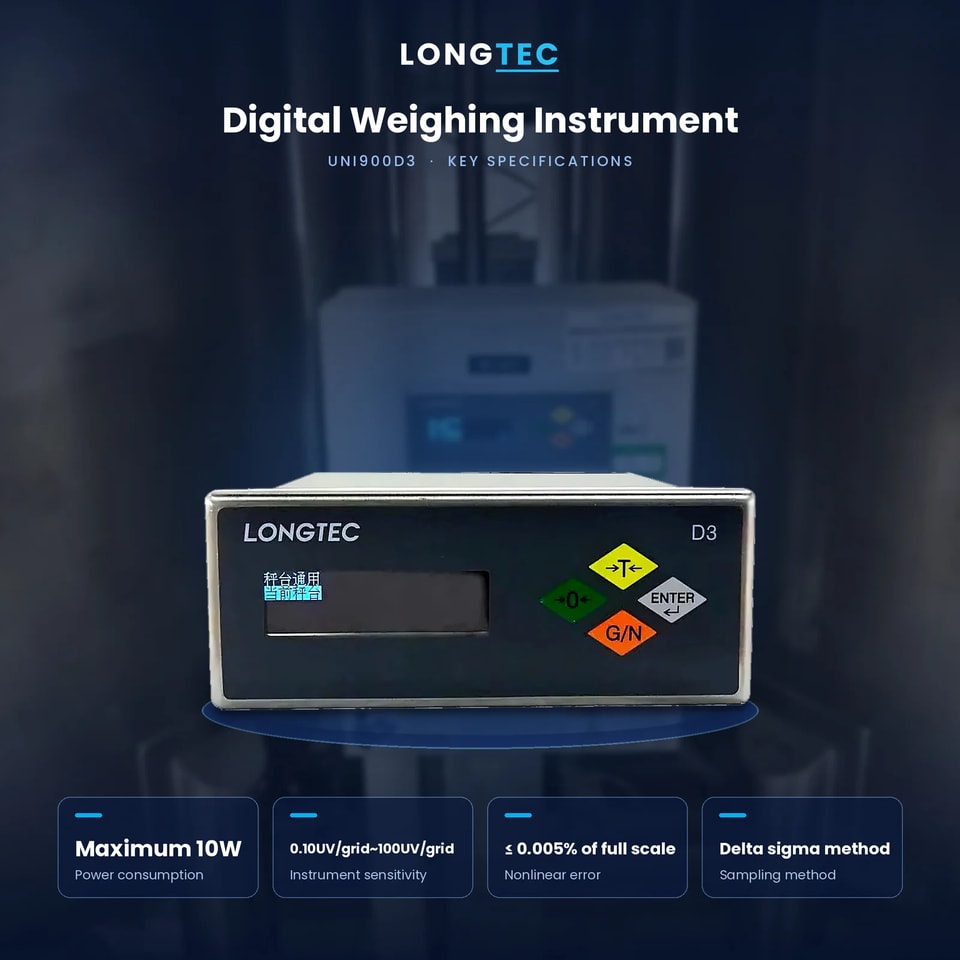

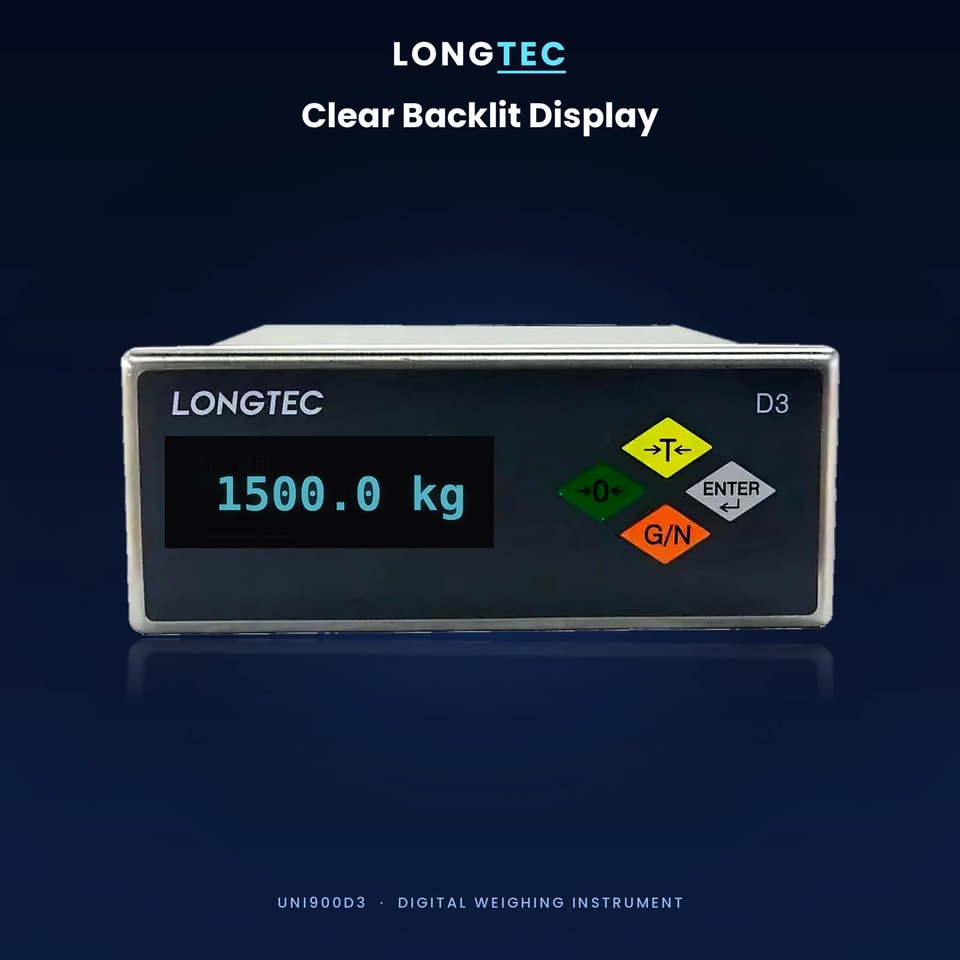
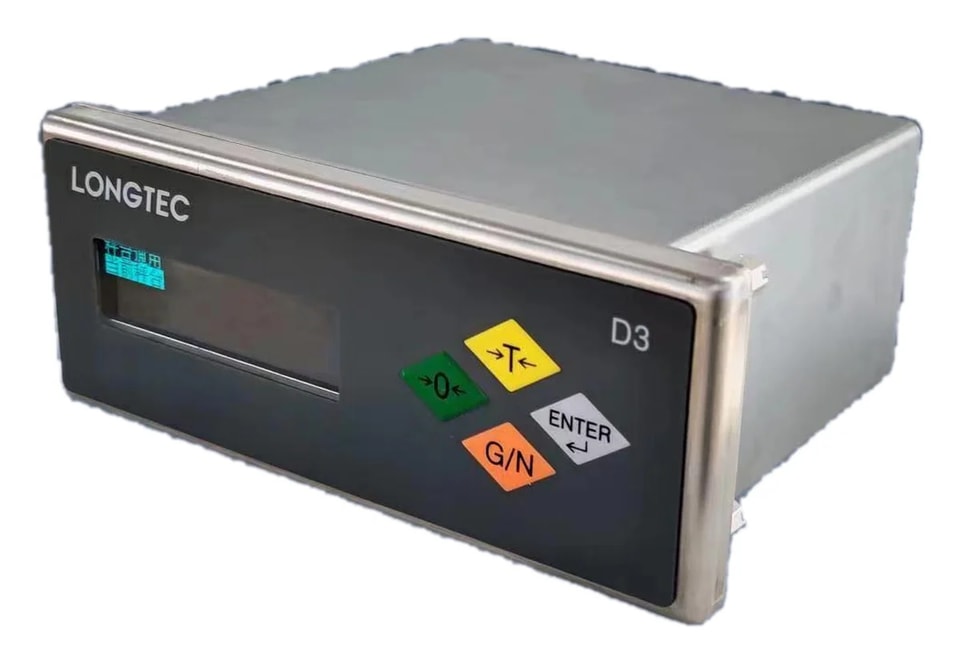
UNI900D3 Digital Weighing Instrument
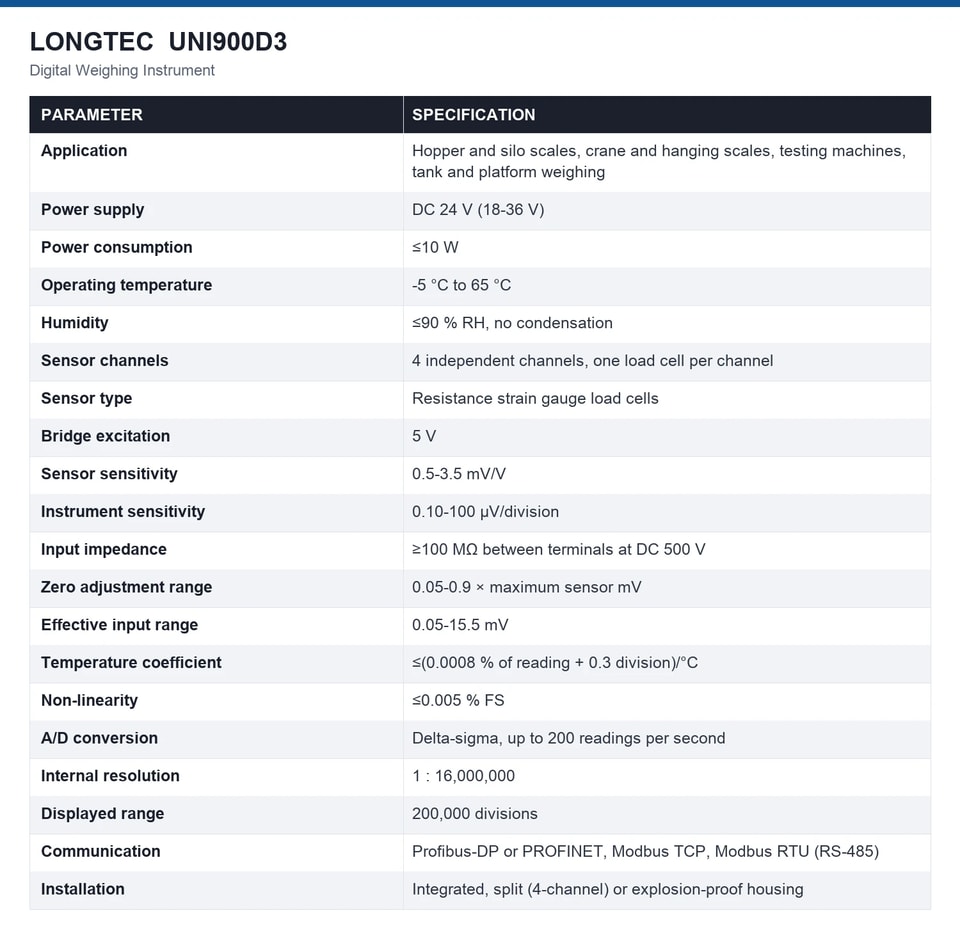
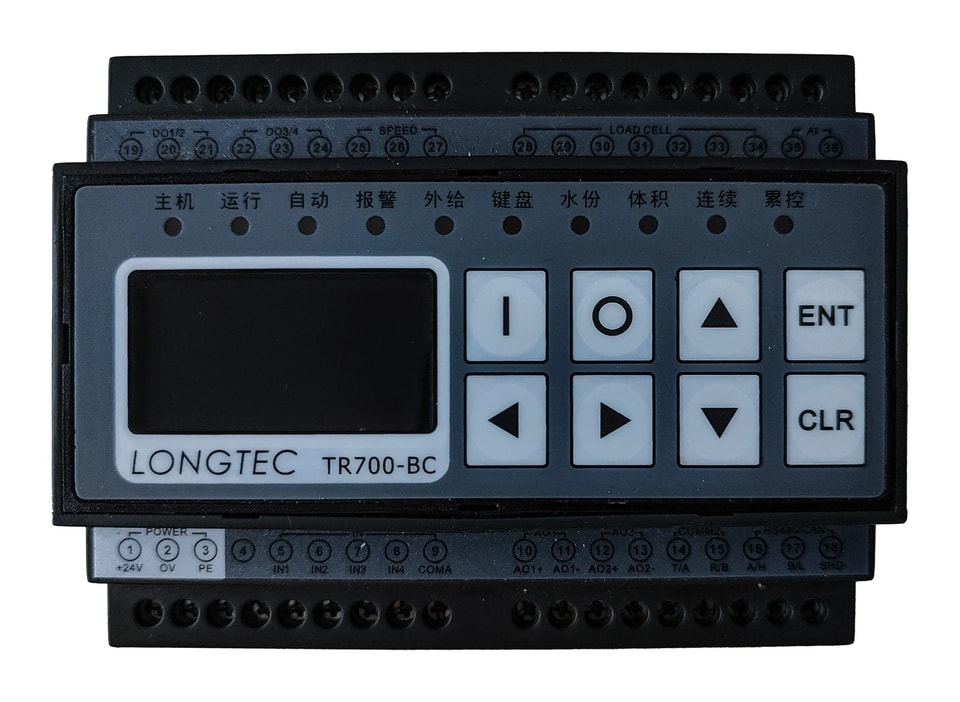
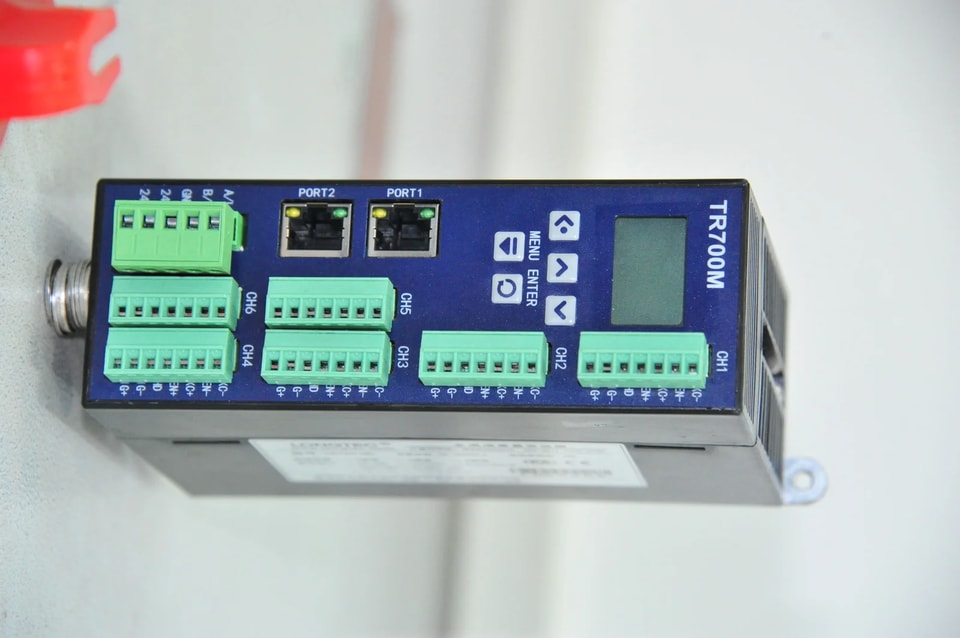
The LONGTEC UNI900D3 is a four-channel digital weighing instrument for vessels and platforms that use several load cells. Instead of summing the cells in a junction box, it measures each of the four channels independently at up to 200 readings per second, at an internal resolution of 1:16,000,000 and a displayed range of 200,000 divisions. The benefit is diagnostic as much as metrological: the instrument shows the signal and the status of every cell, so a drifting or dead cell is spotted from the display instead of being found by elimination. Corner adjustment is automatic - place the same weight on each corner of the platform and the instrument corrects the angle difference by itself. A faulty cell can be blocked so production continues, and a replacement cell is written in without recalibrating the scale. Communication covers Profibus-DP or PROFINET, Modbus TCP and Modbus RTU on RS-485, and the same electronics is available in integrated, split or explosion-proof housings.
· Four independent load cell channels, each sampled at up to 200 readings per second with no junction box in the circuit.
· Internal resolution 1:16,000,000 and a displayed range of 200,000 divisions for wide turndown on one instrument.
· Automatic angle difference adjustment: put the same weight on each corner and the instrument corrects the platform itself.
· Live signal and status for each channel, so a drifting, overloaded or dead cell is located from the display.
· Block a faulty channel to keep production running, and write a replacement cell into the instrument without recalibrating.
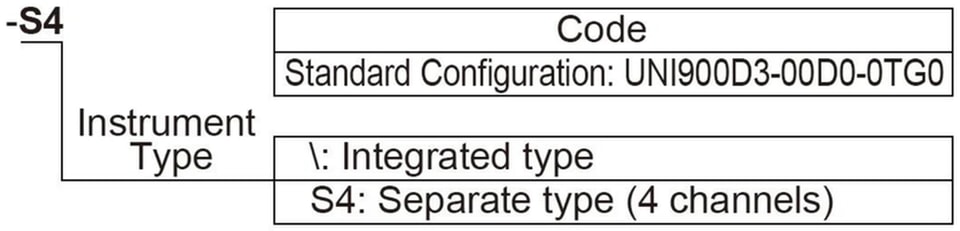
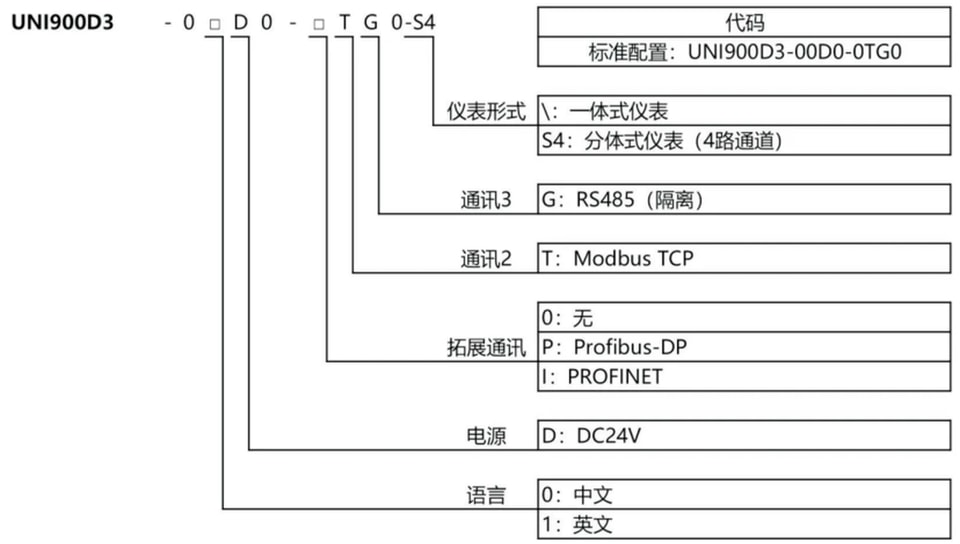
· Profibus-DP or PROFINET, Modbus TCP and Modbus RTU on RS-485, in integrated, split or explosion-proof housings.
UNI900D3 instruments are used on hopper and silo scales, crane and hanging scales, tensile and compression test machines, tank and reactor weighing, and irregular or oversized platforms, in grain, light industry, metallurgy, building materials, chemical, non-ferrous metal, energy and machinery plants. The four independent channels suit platforms where cells sit far apart or where one cell is hard to reach, and the split version keeps the display at eye level while the terminals stay at the vessel.
Why use four channels instead of one summed signal?
Because the instrument can then see each cell separately. A drifting cell, an overloaded corner or a broken cable is identified directly, and a bad channel can be blocked so the scale keeps working while the rest of the platform stays accurate.
How is the corner (angle difference) adjusted?
Automatically. Put the same weight on each corner of the platform one after another; the instrument measures the difference and corrects it. No potentiometers in a junction box and no repeated trial and error.
Can I replace a load cell without recalibrating?
Yes, if the new cell has the same capacity and sensitivity. Its parameters are written into the instrument and it runs immediately. Cells with different ranges and sensitivities can also be mixed on one platform.
Which networks does it support?
Three communication channels: Profibus-DP or PROFINET in the first slot, Modbus TCP in the second, and Modbus RTU on RS-485 in the third.
Is the same instrument available for hazardous areas?
Yes. The electronics is offered in integrated, split and explosion-proof housings; the flameproof version with the same four-channel measuring system is listed separately as the TR700-EX-D3.
Solutions & Support
We go the extra mile to thoroughly analyze each project and deliver tailored business solutions that meet your specific requirements.
Contact US
×