
PFG86 Rotary-Paddle Point Level Switch
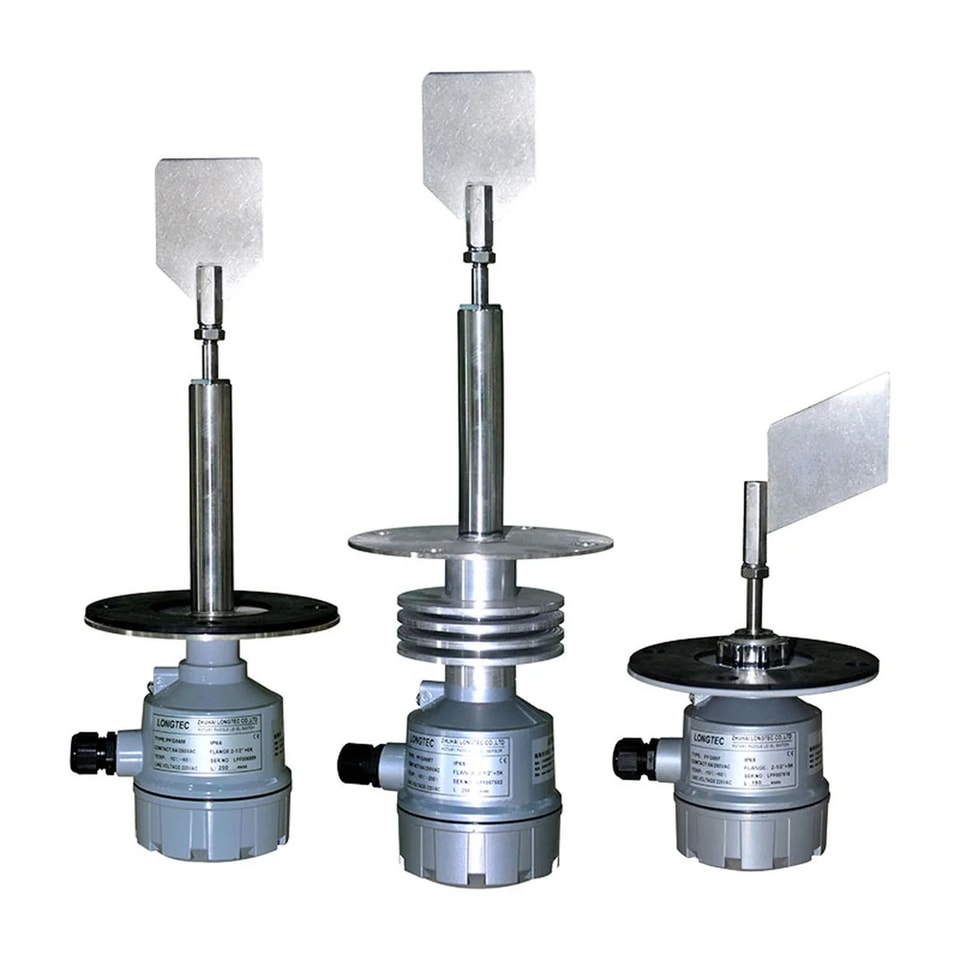
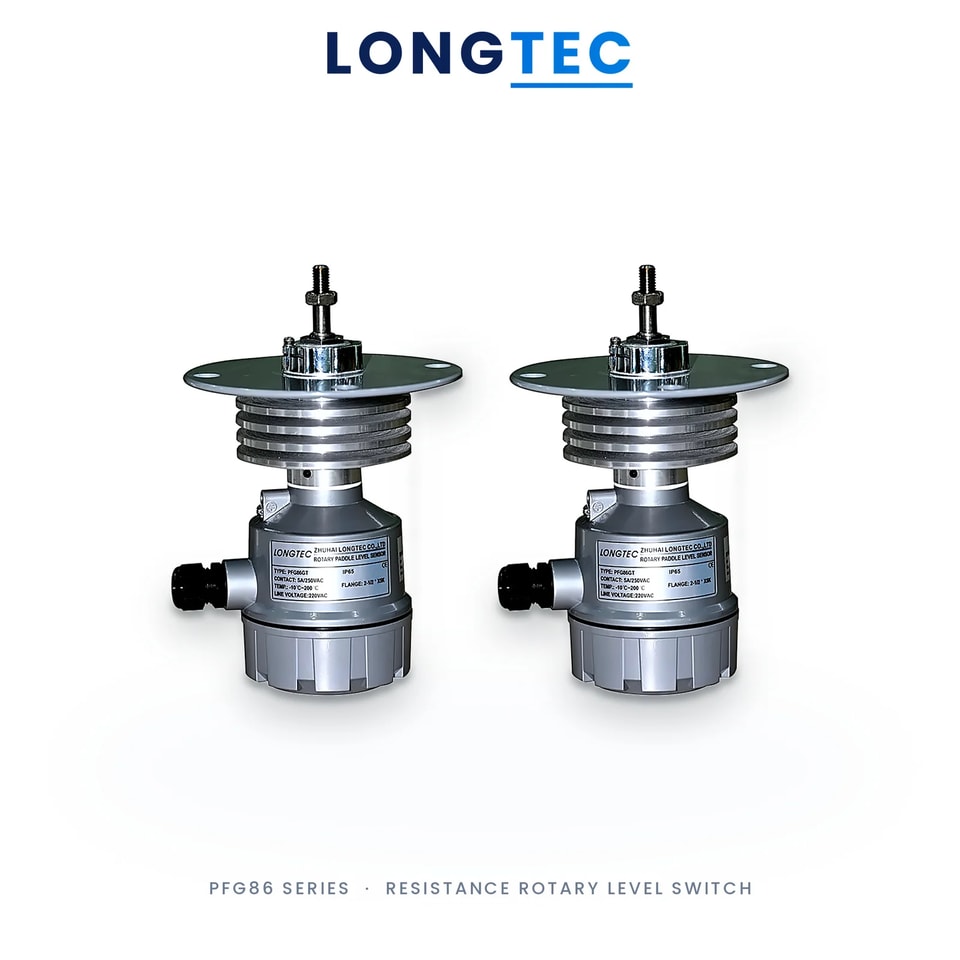
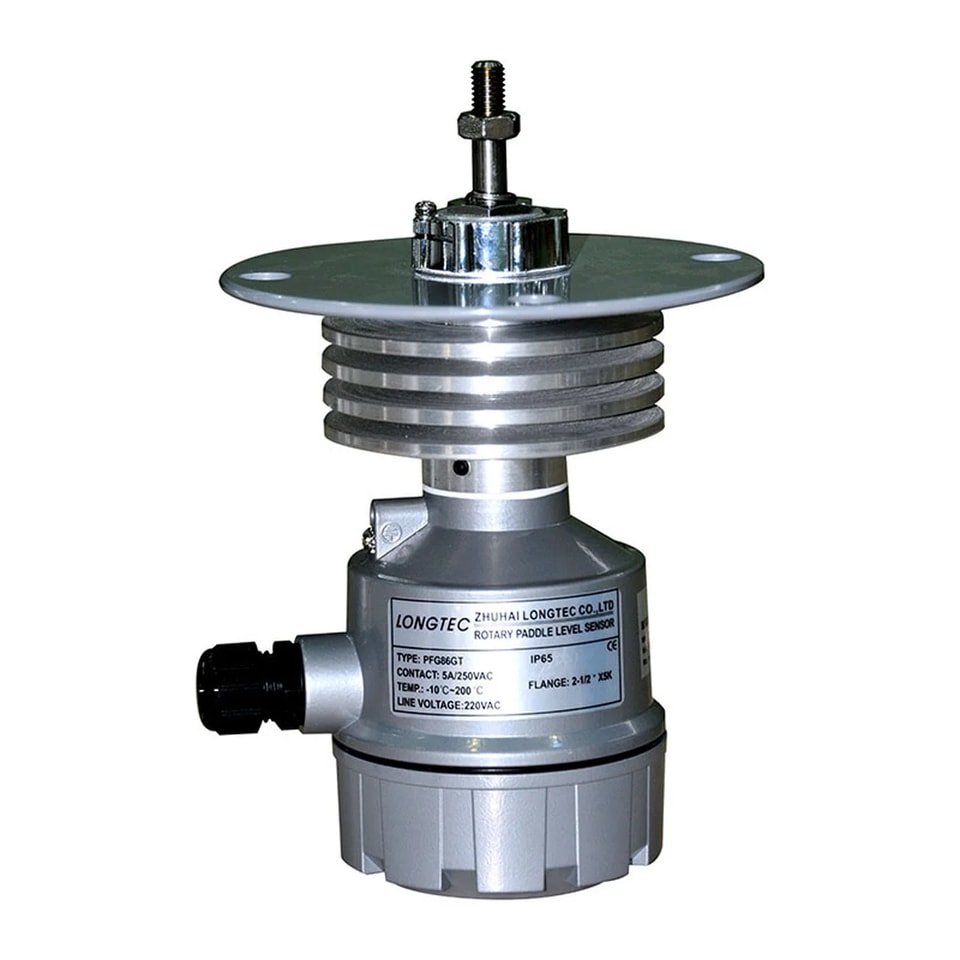
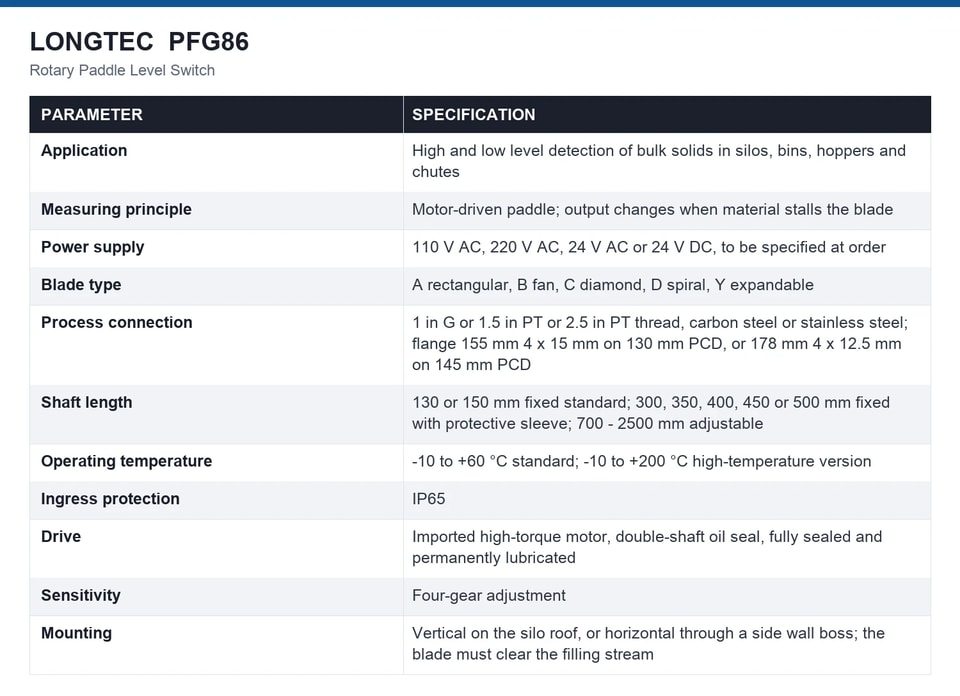
The PFG86 is a rotary paddle level switch for bulk solids. A small geared motor turns a paddle on a shaft; while the paddle is free it rotates, and as soon as material covers the blade the motor stalls, the detection mechanism senses that the shaft has stopped and the output changes. When the material falls away the blade starts turning again and the output resets. Nothing is measured electrically, so the switch is indifferent to dust, dielectric constant, moisture and temperature, which is why a paddle is the default choice in grain, feed, cement, coal and aggregate bins. The drive is an imported high-torque motor with a double-shaft oil seal, sealed to IP65 and permanently lubricated, so it needs no maintenance. Four-gear sensitivity adjustment lets the same unit cover light powders and heavy stone, and the shaft length is selectable from 130 mm up to 2.5 m, with fixed, sleeved and adjustable versions, so the blade can sit at the exact level to be detected.
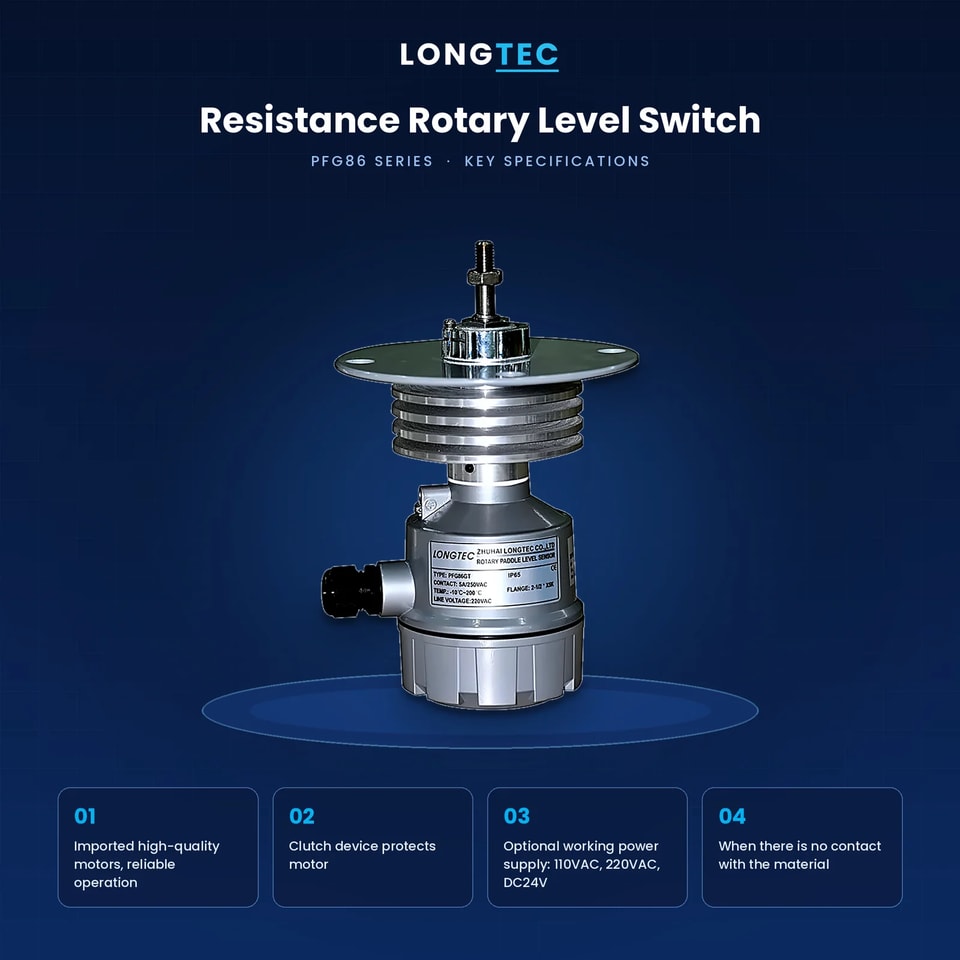
· Mechanical paddle driven by an imported high-torque motor: it detects material by stalling, not by an electrical property of the product.
· Four-gear sensitivity adjustment covers light powders such as fly ash as well as heavy stone and wet sand.
· Fully sealed, permanently lubricated drive with a double-shaft oil seal and IP65 protection, so no routine maintenance is needed.
· Shaft lengths from 130 mm up to 2500 mm, in fixed, protective-sleeve and adjustable versions, for any silo height.
· Blade types for different products: rectangular, fan, diamond, spiral and an expandable blade for a narrow filling opening.
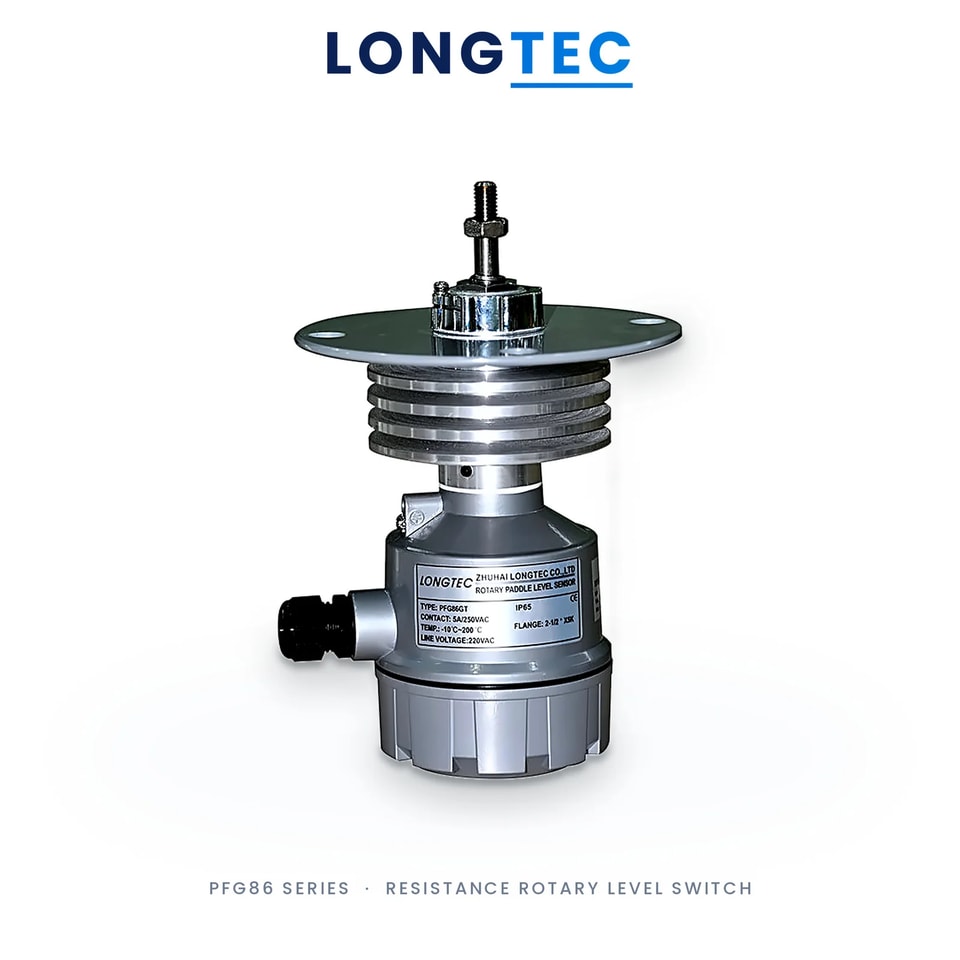
· Power supply options of 110 V AC, 220 V AC, 24 V AC and 24 V DC, with a high-temperature version to 200 °C.
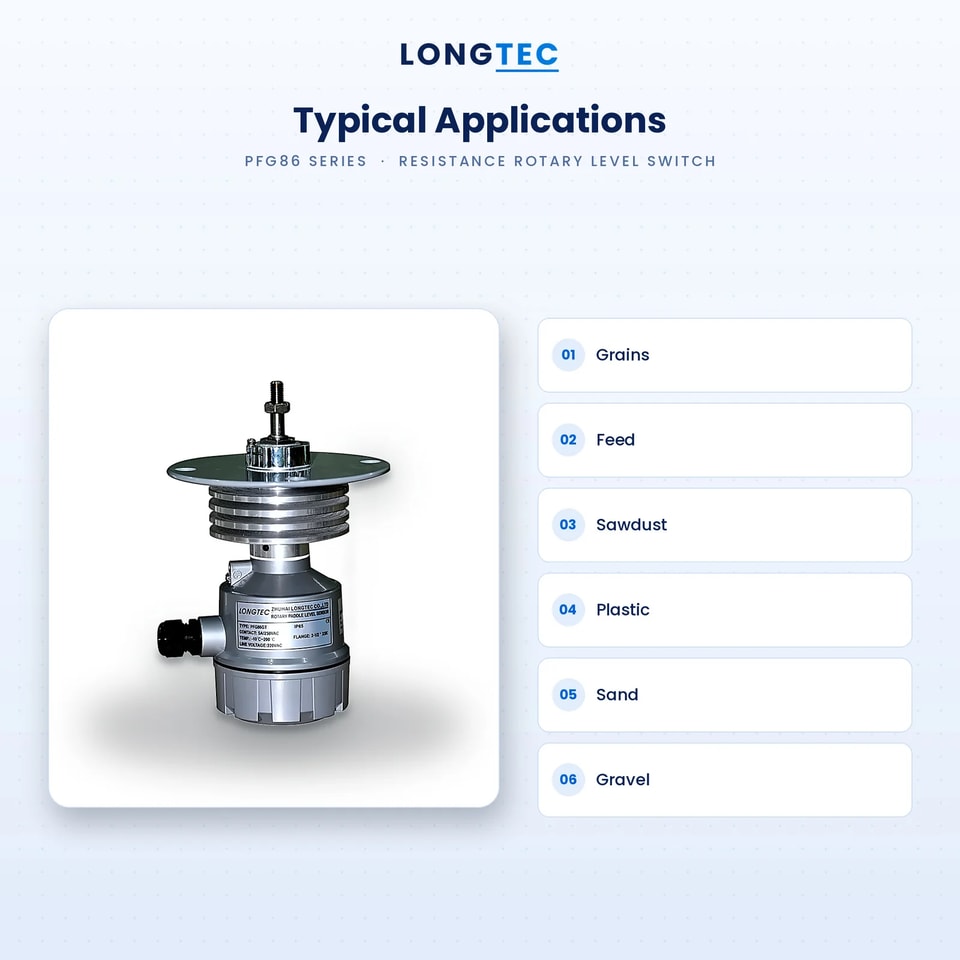
The PFG86 is used for high and low level control in silos, bins and hoppers holding grain, feed, wood chips, plastic pellets and regrind, sand, stone, cement, coal, ash, chemical powders and other bulk solids. It is also used as a blocked-chute and material-presence switch on transfer points, and as a full-bin alarm on loading spouts. Because the paddle is driven mechanically, it keeps working in a dust cloud that would blind an optical device, and the seals keep the drive clean in a wash-down or outdoor installation.
How does a paddle switch detect the level?
A geared motor turns the paddle. When material covers the blade the paddle cannot turn, the motor stalls, and the mechanism senses that the shaft has stopped and changes the output. When the material drops away the paddle turns again and the output resets, so the same unit gives a full and an empty signal.
Which blade and shaft do I need?
Choose the blade by the product: the rectangular and fan blades for free-flowing powders and pellets, the diamond blade for sticky material, the spiral blade for coarse or fibrous products, and the expandable blade where the filling opening is too narrow to pass a fixed paddle. The shaft must place the blade at the switching level, so measure from the mounting flange to that point.
What does the four-gear sensitivity adjustment change?
It changes the torque at which the mechanism declares the shaft stalled. Light powders such as fly ash need a low setting so the blade is not stalled by the product's own weight, while stone and wet sand need a high setting so the paddle is not pushed round by the load.
Can it work at high temperature?
Yes, with the high-temperature version rated from -10 to +200 °C. The standard version covers -10 to +60 °C, which suits most outdoor silos and unheated plants.
What maintenance does it need?
None in normal service. The drive is fully sealed, permanently lubricated and fitted with a double-shaft oil seal, and the housing is IP65, so there is no oil to change and no bearing to grease. Check the blade for bent or worn paddles after a mechanical incident in the silo.
Solutions & Support
We go the extra mile to thoroughly analyze each project and deliver tailored business solutions that meet your specific requirements.
Contact US
×