
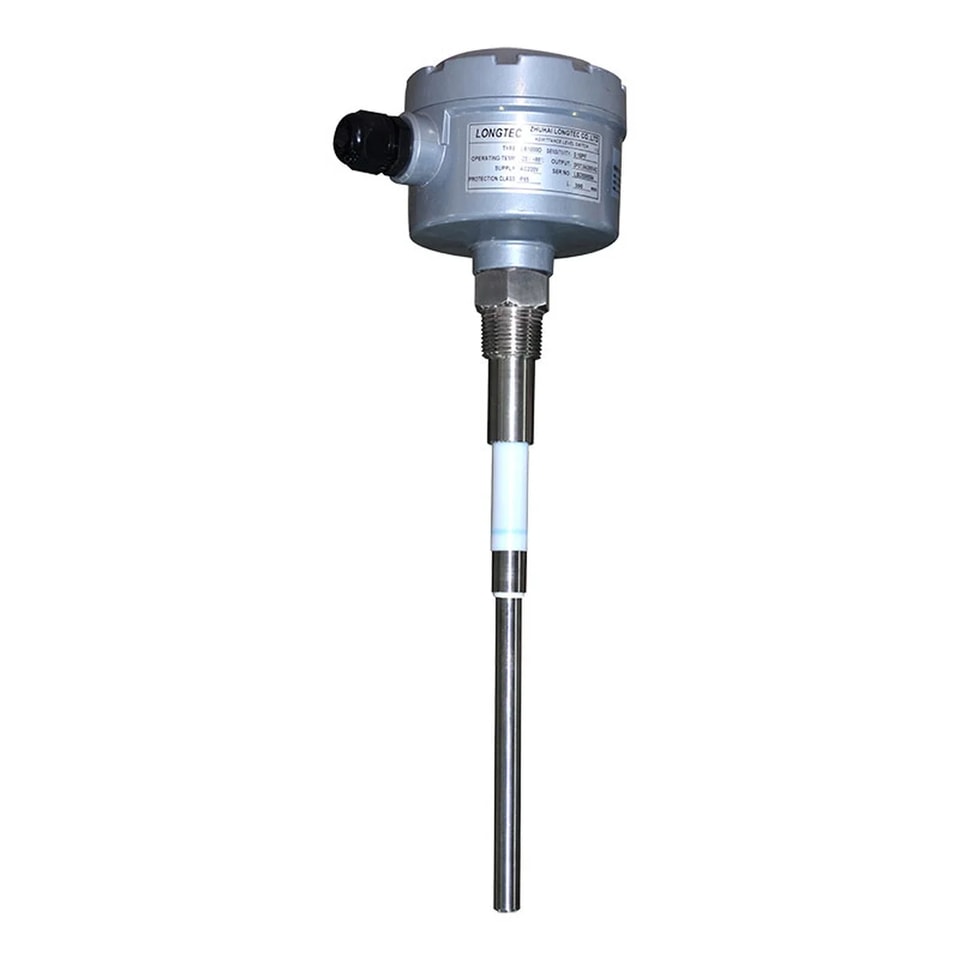
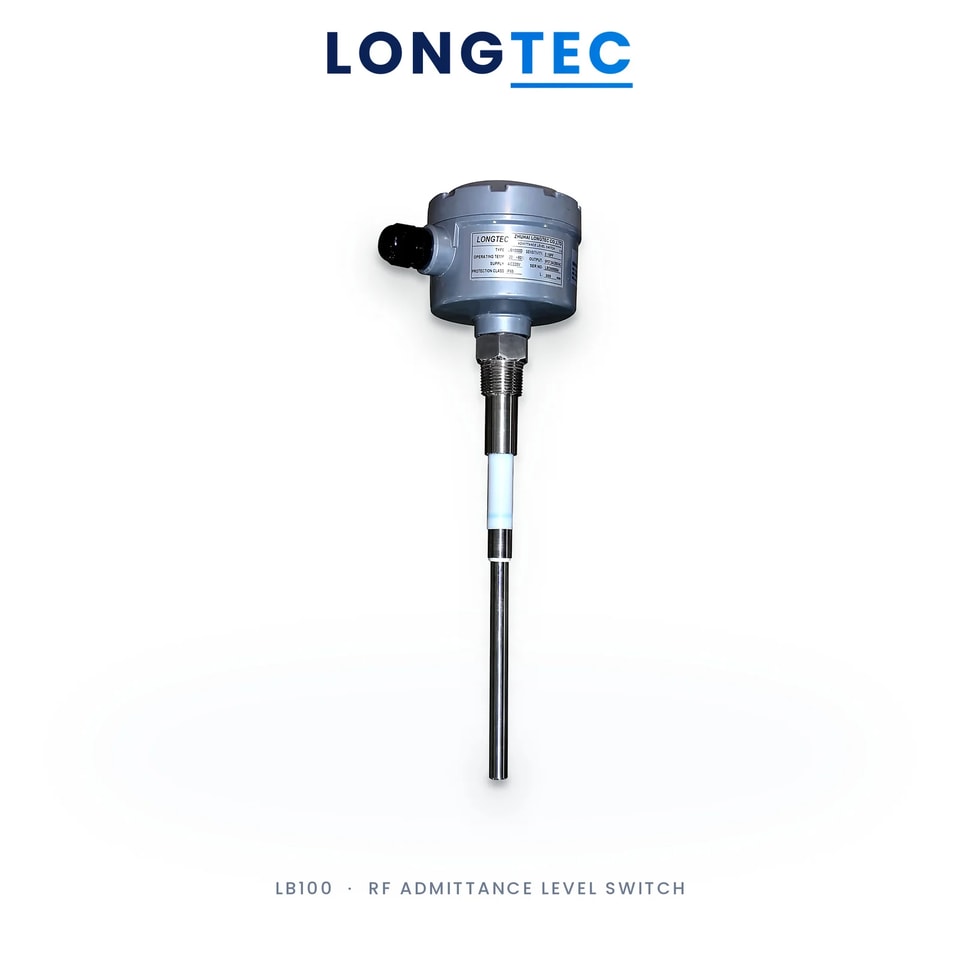
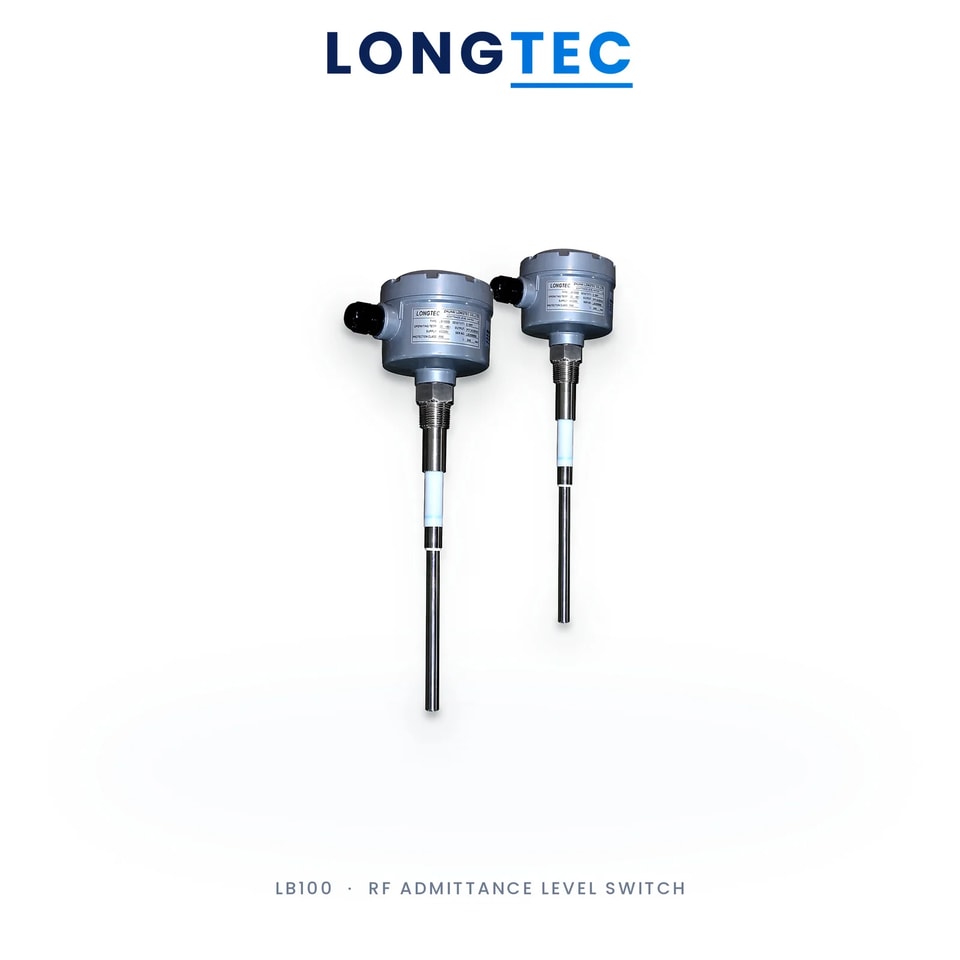
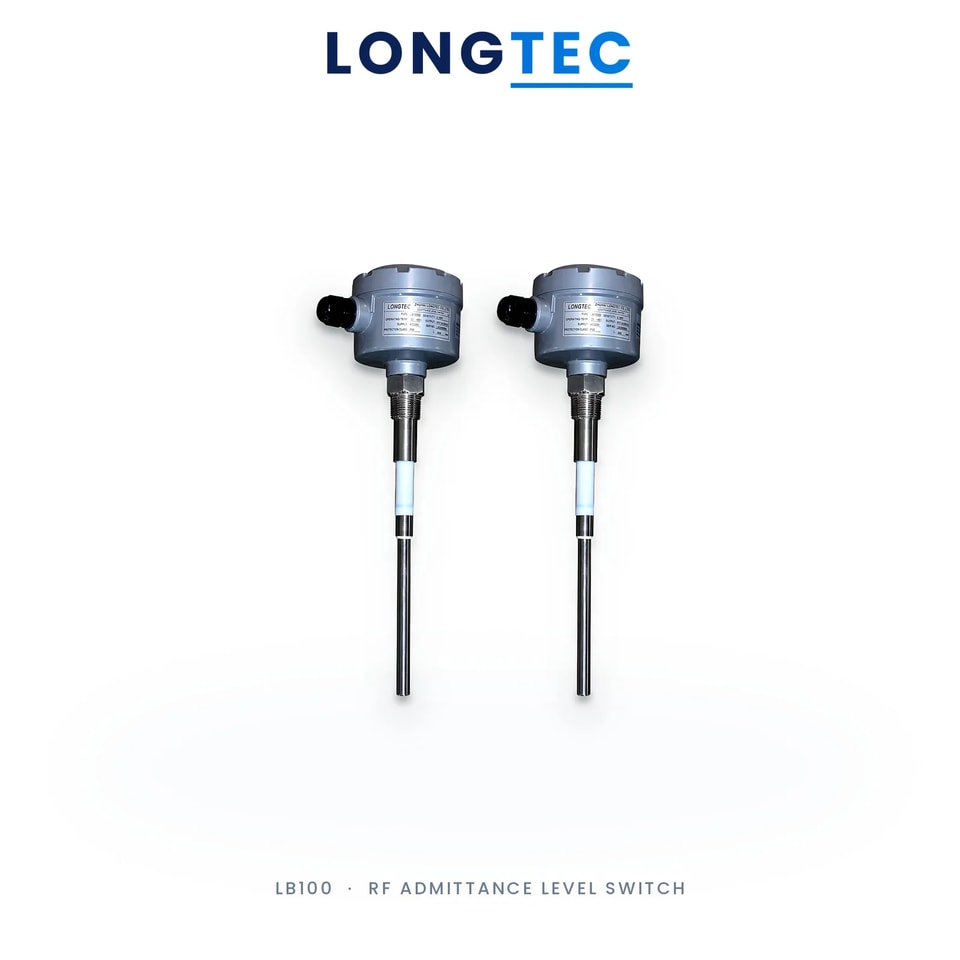
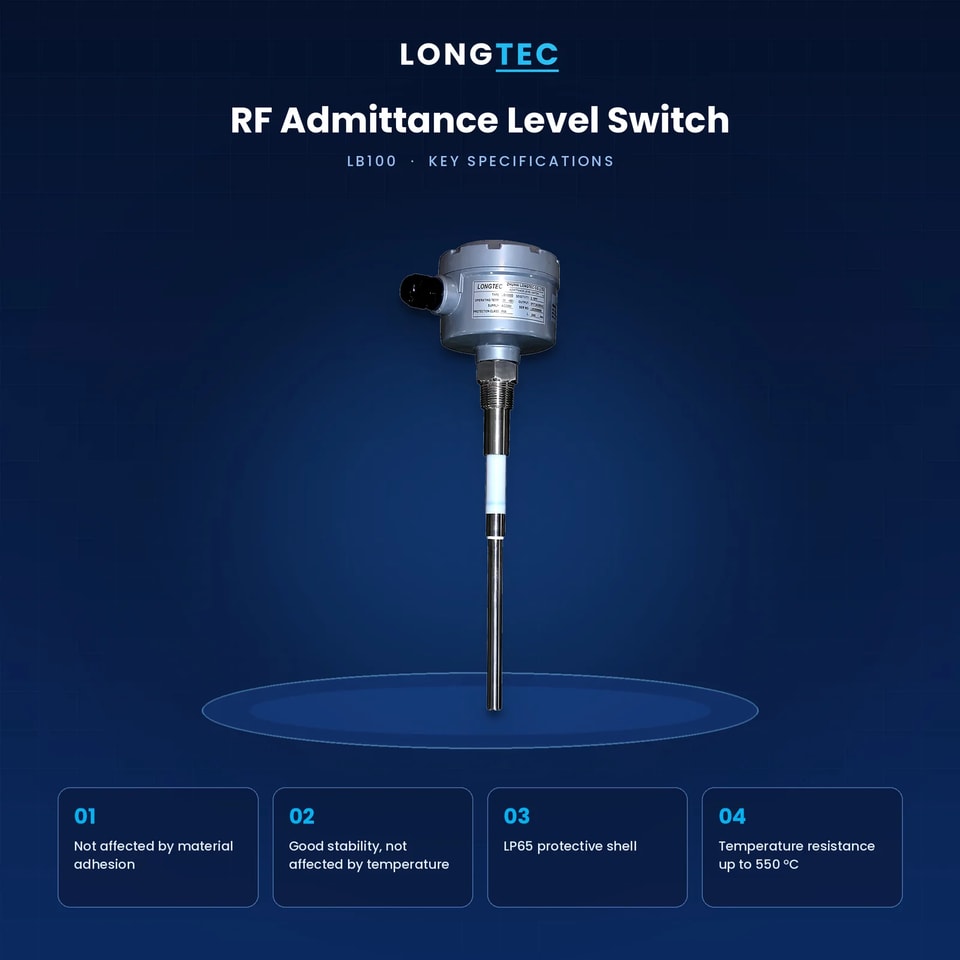
LB100 RF Admittance Point Level Switch
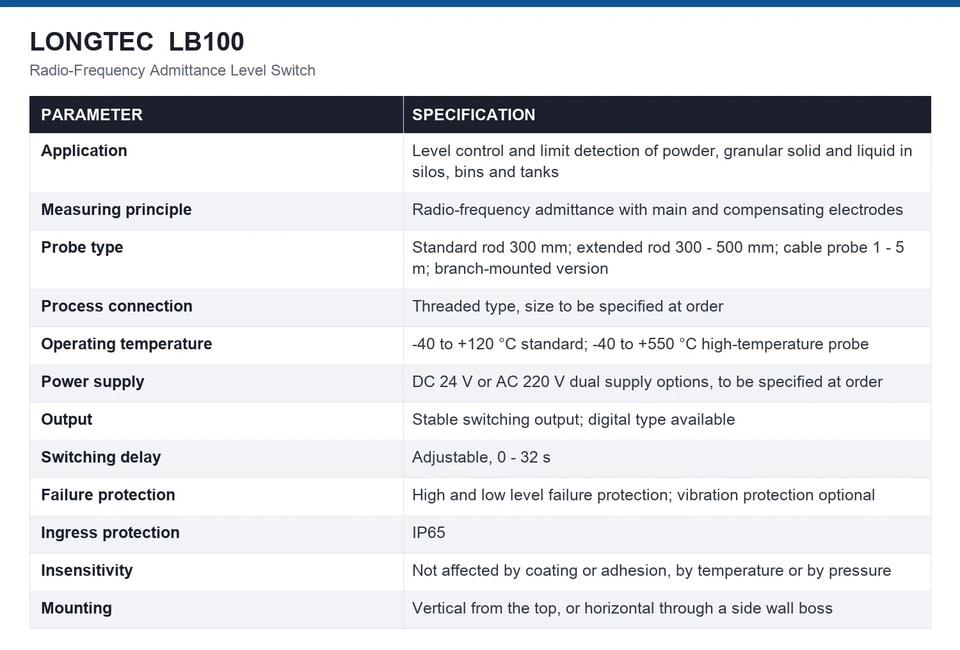
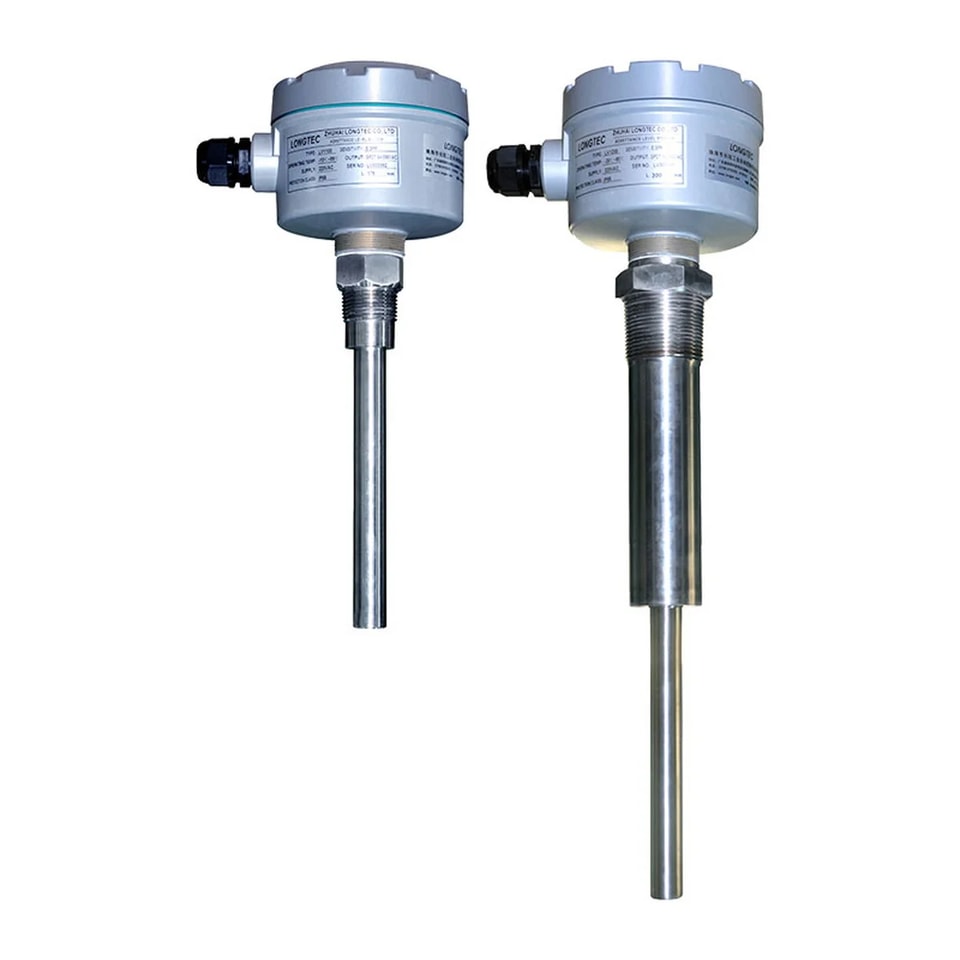
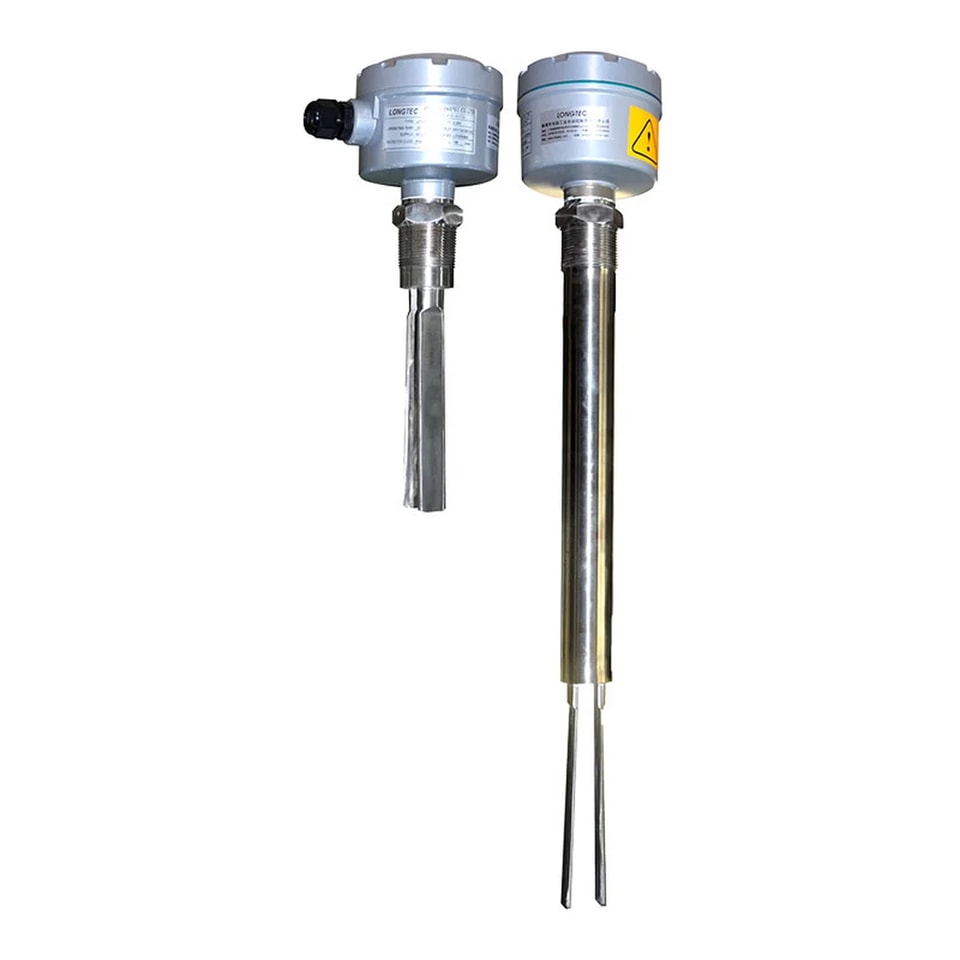
The LB100 is a radio-frequency admittance level switch. A main electrode and a compensating electrode are both driven by an RF excitation signal; as material covers the probe, the amplifier output changes in proportion to the material, while the compensating electrode cancels the effect of build-up on the probe. That compensation is what separates an admittance switch from a plain capacitance switch: coating and adhesion no longer shift the switching point, so the instrument keeps working in sticky powders, in ash and in products that crystallise. The probe is available as a 300 mm standard rod, a 300 to 500 mm extended rod, a branch-mounted version, or a cable probe from 1 to 5 m for tall silos, and a high-temperature version is rated from -40 to +550 °C. The delay is adjustable from 0 to 32 seconds, so ripples, dust clouds and material surges do not chatter the output, and the housing is sealed to IP65 for outdoor installation.
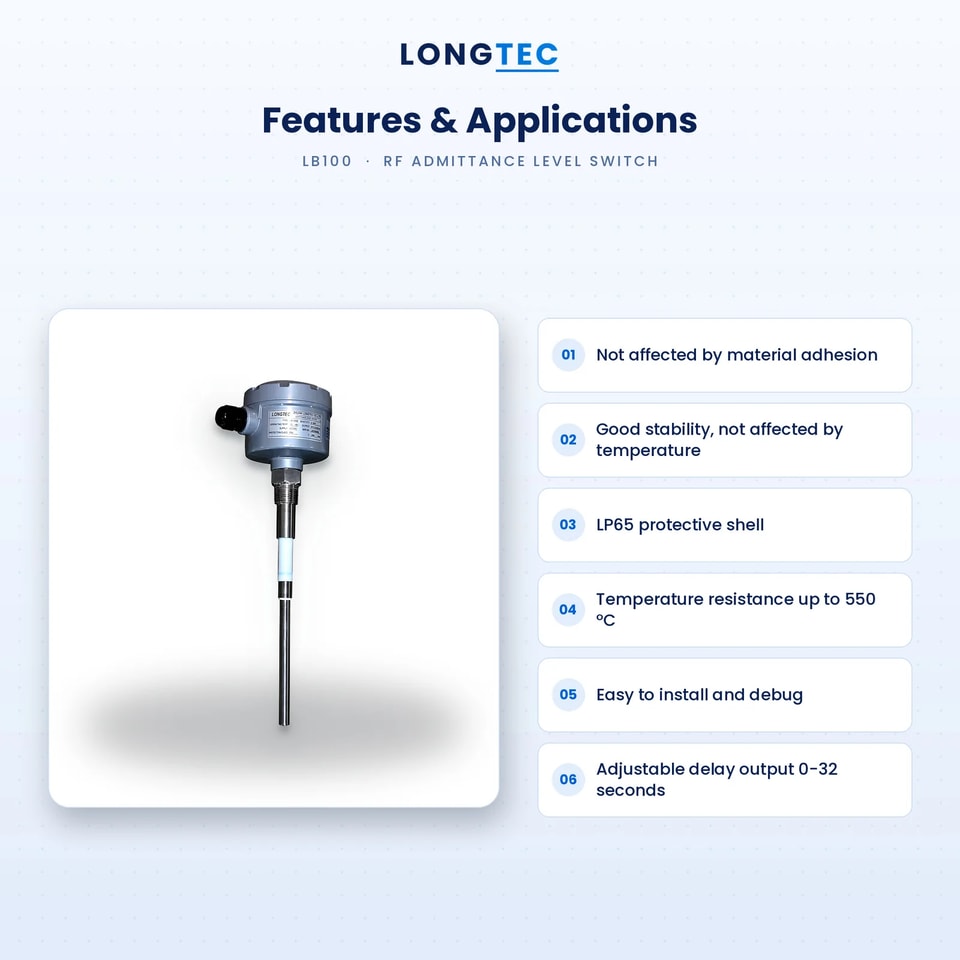
· Compensating electrode cancels the effect of coating and adhesion on the probe, which is what a plain capacitance switch cannot do.
· Probe options from a 300 mm rod to a 5 m cable, plus a branch-mounted version for a side entry on a thick wall.
· High-temperature probe rated from -40 to +550 °C for kiln, clinker and hot ash duties.
· Adjustable delay from 0 to 32 seconds filters out dust clouds, ripples and material surges.
· Stable output that is not affected by temperature, pressure or changes in the dielectric constant of the product.
· High and low level failure protection, with vibration protection optional, and a housing sealed to IP65.
The LB100 is used for level control and limit detection in silos, bins, tanks and hoppers holding powder and granular solids as well as liquids: cement and clinker, fly ash and coal, sand and aggregate, flour and starch, plastic pellets, chemical powders, asphalt, water, and process liquids. Typical plants are refineries and chemical works, power stations, cement plants, coal mines, water and wastewater treatment works, sugar mills, flour mills and food processing lines. It is the choice where a layer of product sticks to the probe, because the compensating electrode removes that effect.
How is this different from a capacitance level switch?
A capacitance switch reads one electrode, so a layer of product on the probe looks like product in the silo. The LB100 drives a second, compensating electrode that measures the build-up and cancels it, so the switching point stays where it was set even after months of sticky service.
What probe length do I need?
The 300 mm rod covers a top or side entry where the switching point is close to the boss. Use the extended rod up to 500 mm for a deeper entry, and the cable probe from 1 to 5 m for a tall silo where the level has to be detected far below the roof.
How hot can it run?
The standard probe is rated from -40 to +120 °C. Where the probe sees clinker, hot ash or kiln gas, the high-temperature probe is rated from -40 to +550 °C. State the temperature at the probe, not at the silo wall, when ordering.
Why is the delay adjustable up to 32 seconds?
Because a silo is never still: filling creates a dust cloud, a bin with a stirrer has ripples, and a truck unloading creates surges. Setting a delay longer than those events keeps the output from chattering while still responding to a real level change.
What supply and output does it use?
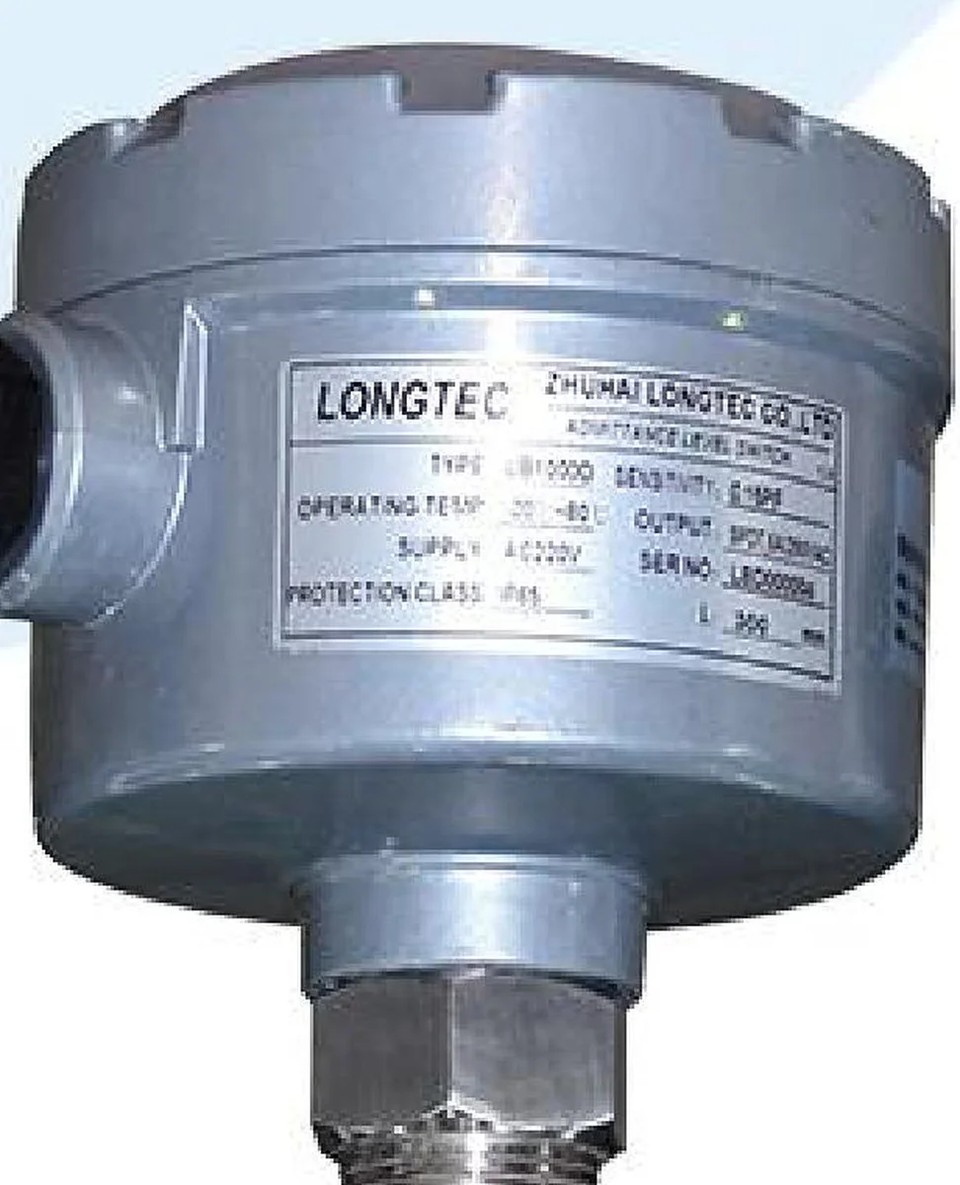
DC 24 V and AC 220 V dual power supplies are both available and must be specified at order. The output is a stable switching signal, and a digital type is offered where a serial interface is wanted; high and low level failure protection is built in, with vibration protection as an option.
Solutions & Support
We go the extra mile to thoroughly analyze each project and deliver tailored business solutions that meet your specific requirements.
Contact US
×