
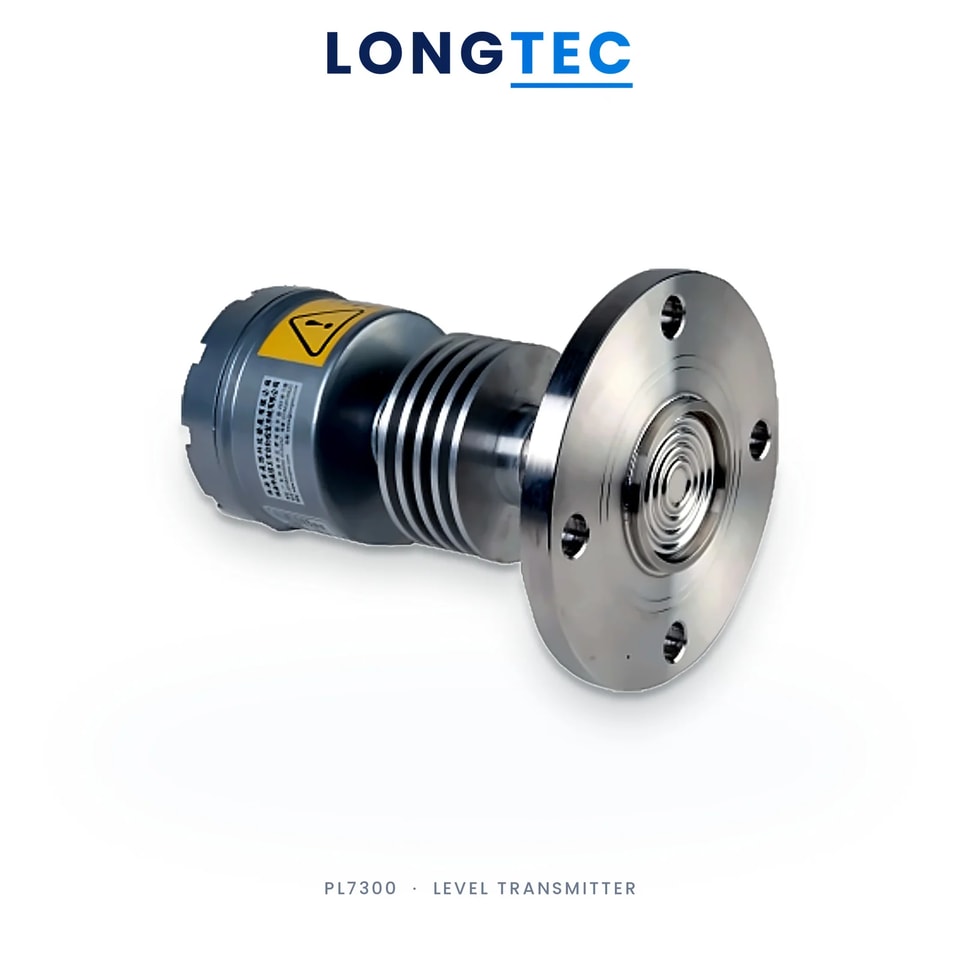
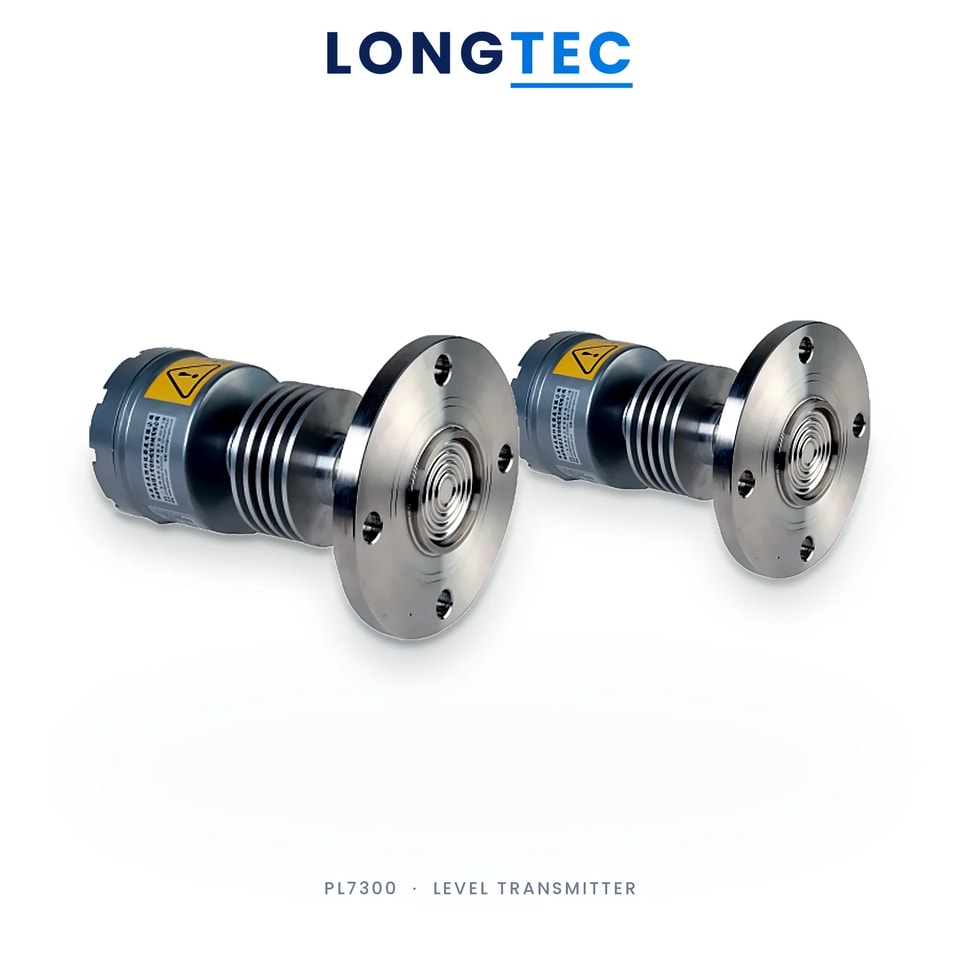
PL7300 Level Transmitter
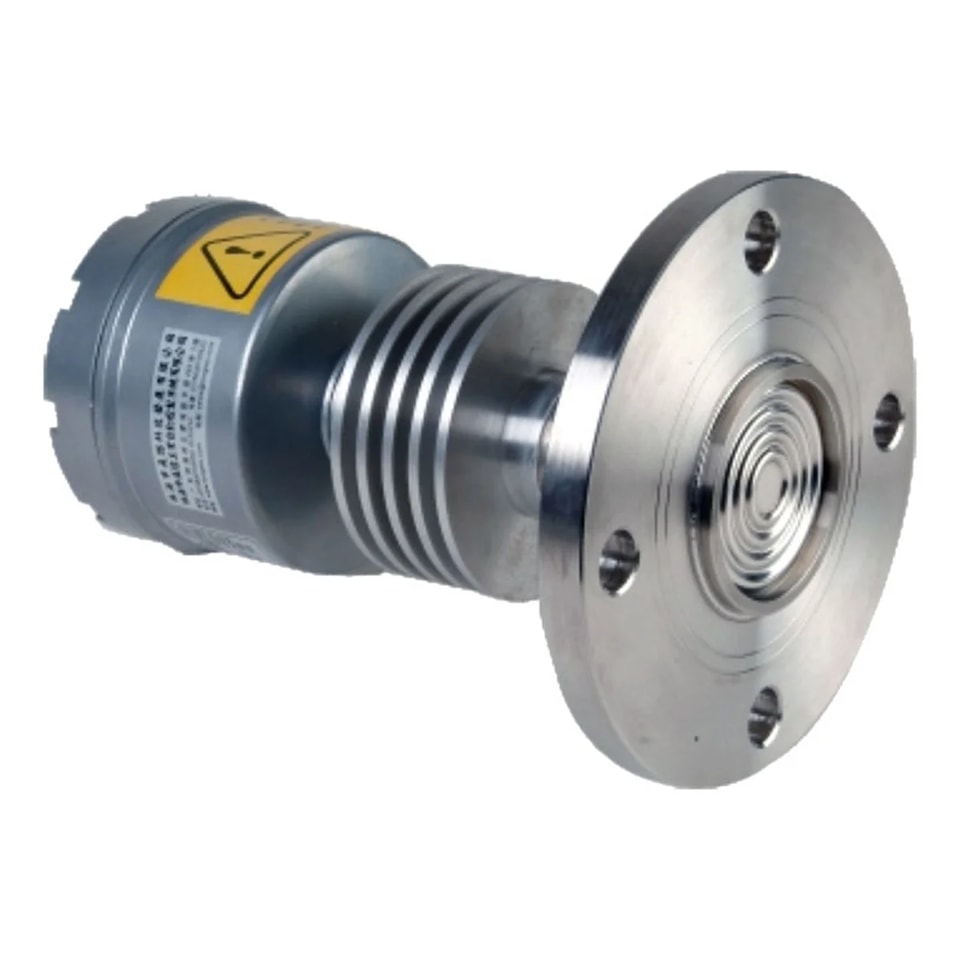
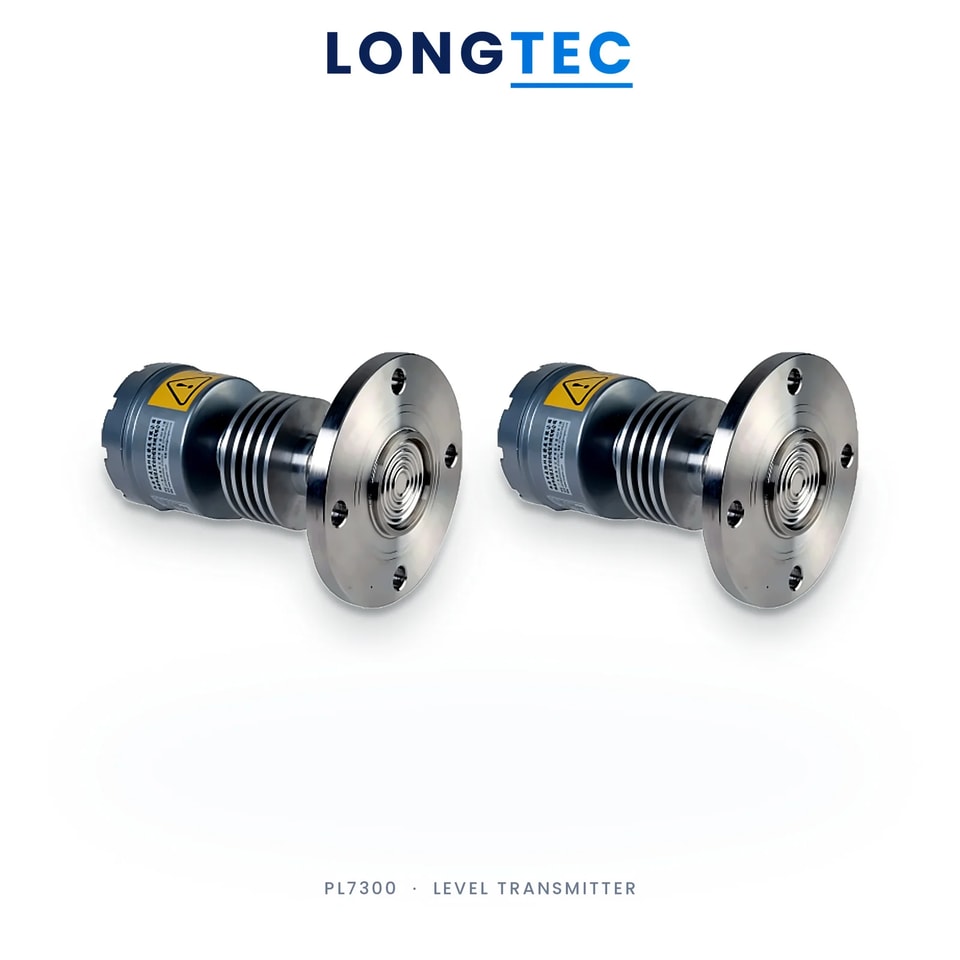
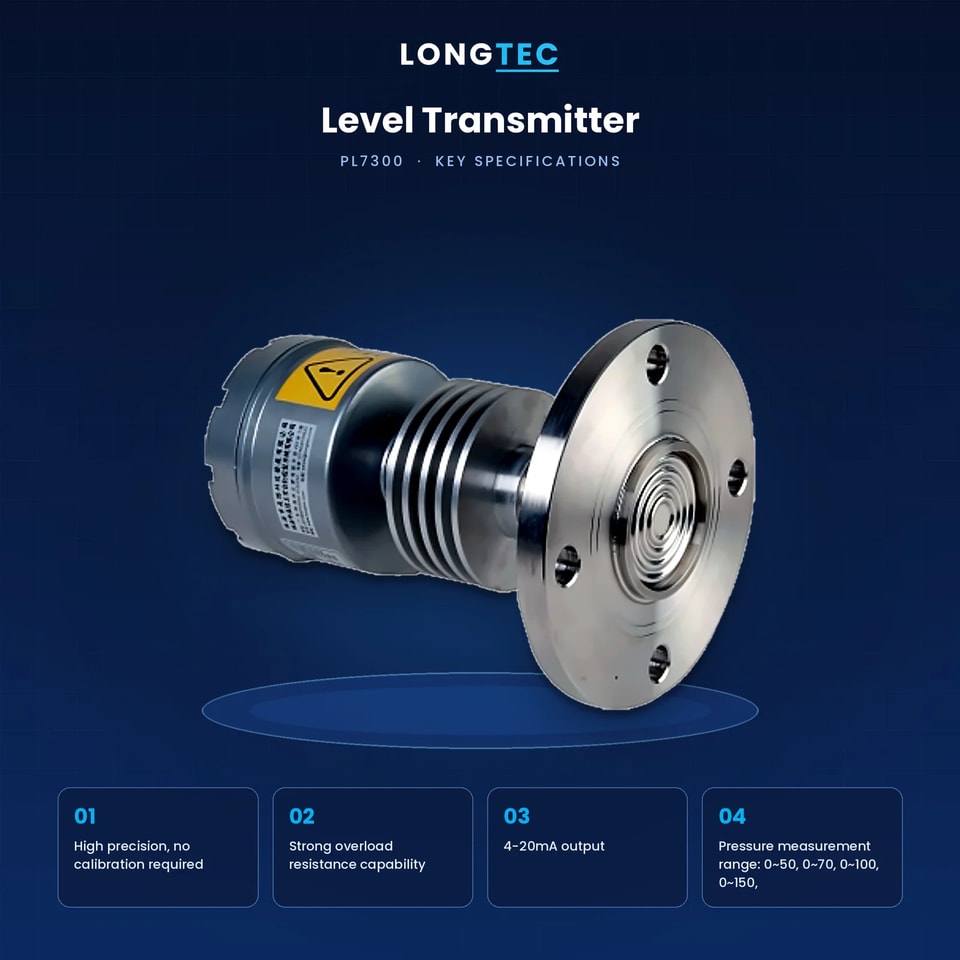
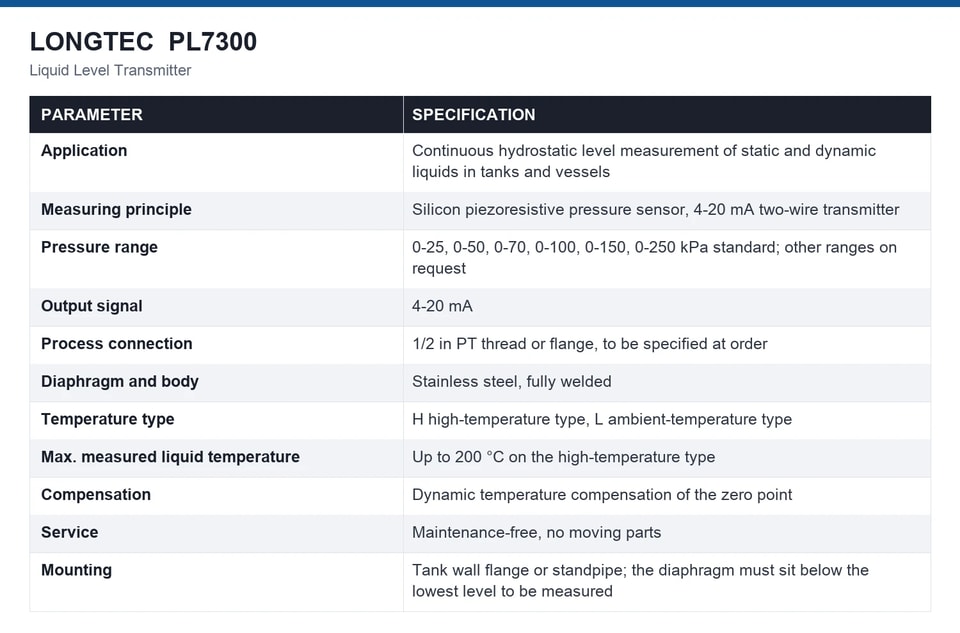
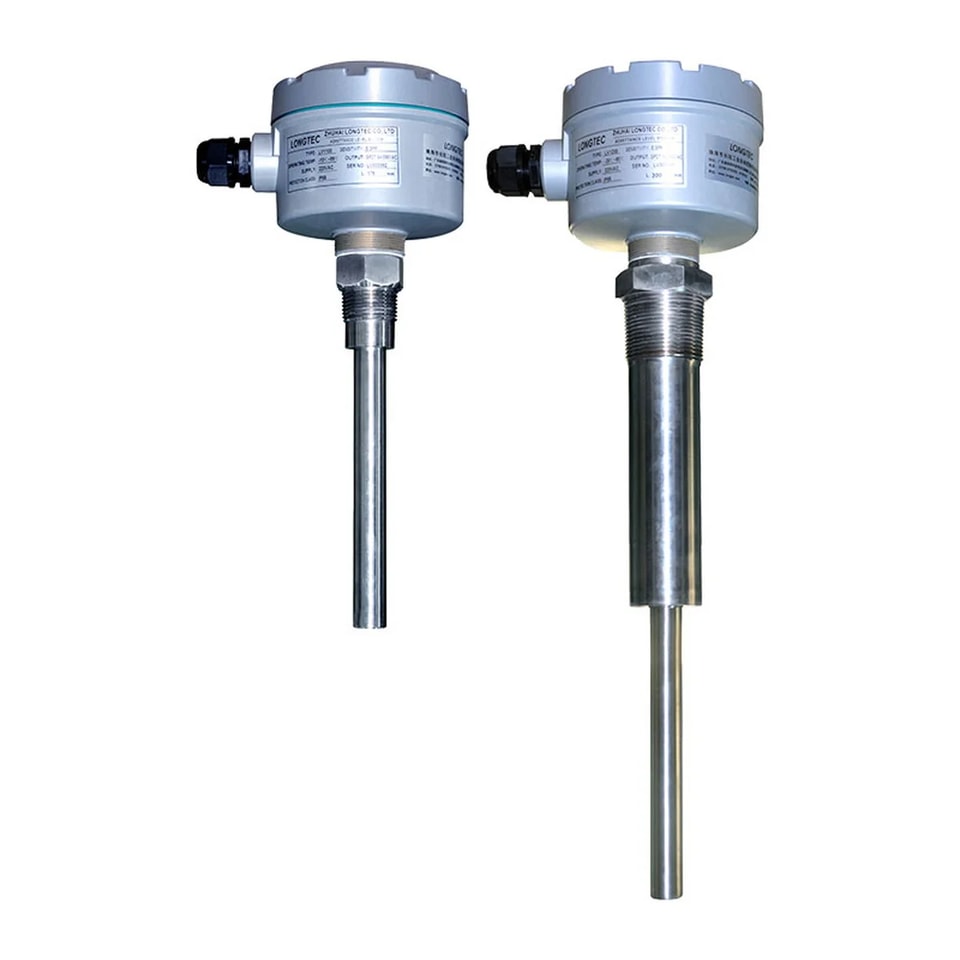
The PL7300 is a hydrostatic liquid level transmitter built on a silicon piezoresistive sensor in a fully welded stainless steel body. The sensor measures the head of liquid above the diaphragm and the electronics convert it to a 4-20 mA signal, so the output is proportional to level and can be wired straight into a PLC, a chart recorder or a batch controller. Dynamic temperature compensation corrects the zero drift that a hydrostatic sensor otherwise shows when the process heats up, which is why the unit holds its accuracy in a hot tank as well as a cold one. Pressure ranges of 0-25, 0-50, 0-70, 0-100, 0-150 and 0-250 kPa are standard and other ranges can be built, and the high-temperature type takes a measured liquid temperature up to 200 C. There are no moving parts and nothing to adjust in service: it is installed on a flange or a 1/2 inch thread in the tank wall or on a standpipe, and it reads.
· Silicon piezoresistive sensor in a fully welded stainless steel body: no moving parts, nothing to wear or to adjust in service.
· Dynamic temperature compensation removes the zero drift that a hydrostatic transmitter shows when the process warms up.
· Standard ranges from 0-25 kPa to 0-250 kPa, with other ranges built to order, so the span matches the tank height.
· 4-20 mA two-wire output connects directly to a PLC, a DCS or a local indicator without extra conditioning.
· High-temperature type takes a measured liquid temperature up to 200 C for hot process and condensate service.
· Strong anti-interference design and a sealed stainless housing, so the transmitter is stable on a plant with pumps and drives nearby.
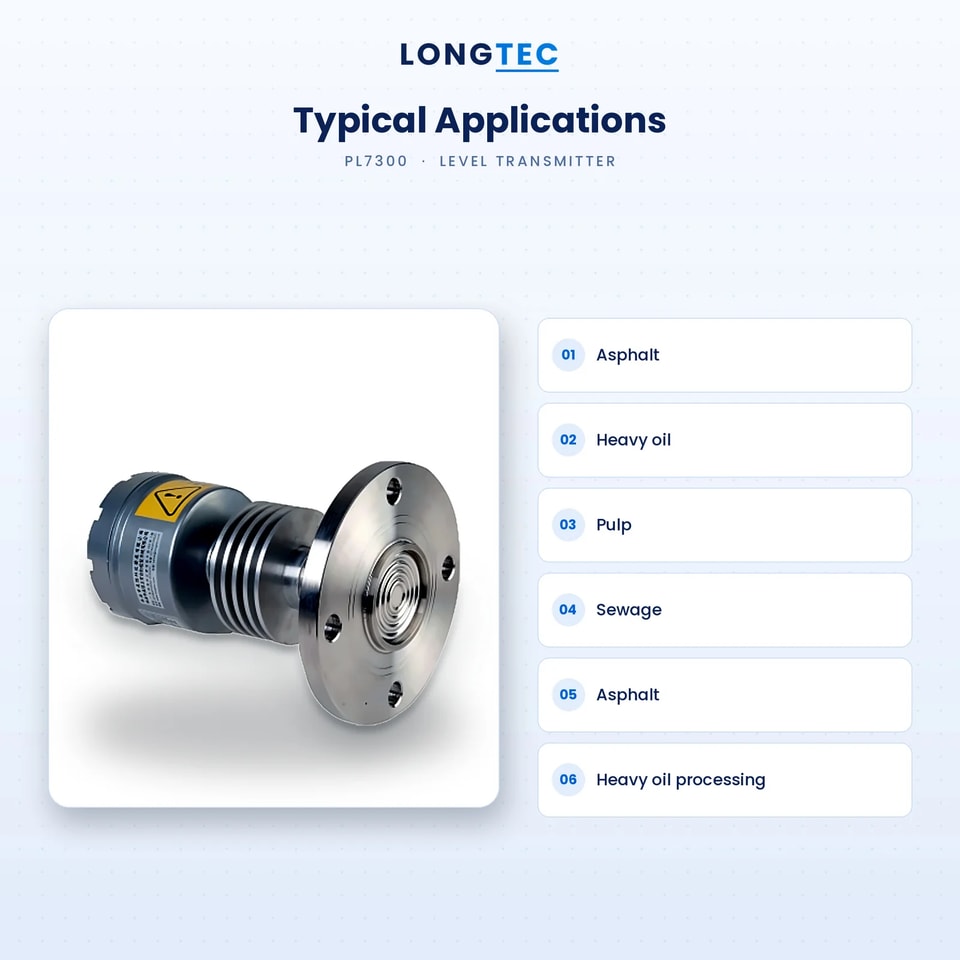
The PL7300 is used for continuous level measurement of static and dynamic liquids in tanks, sumps, columns and process vessels. It is widely applied in petrochemical plants and refineries, metallurgy, water and wastewater treatment, food and beverage processing, paper mills, environmental monitoring and municipal water supply, where a simple 4-20 mA level signal is needed for a control room or a local indicator. Because the wetted parts are stainless steel and fully welded, it also suits clean process liquids, condensate, solvents and food-grade service.
How is the level calculated from the pressure?
The sensor measures the hydrostatic head above the diaphragm. For water, 10 kPa corresponds to about 1 m of head, so a 0-25 kPa range covers a tank up to about 2.5 m and a 0-250 kPa range covers about 25 m. The transmitter output is linear in pressure, and the control system converts it to level with the density of the product.
Which range should I order?
Take the maximum liquid height above the diaphragm, multiply by the density in kg/l and by 9.81 to get kPa, then choose the next range up. Leaving headroom matters because a tank that is filled to the overflow can exceed the nominal height.
Why does temperature compensation matter?
A piezoresistive sensor drifts at zero when it warms up, and in a hydrostatic installation that drift appears directly as a level error. The PL7300 compensates dynamically, so a tank that heats from ambient to 90 °C does not need to be re-zeroed.
What is the difference between the H and L types?
H is the high-temperature type, which takes the measured liquid up to 200 °C and is used on hot process, condensate and heat-transfer duties. L is the ambient-temperature type for water, wastewater and ordinary process liquids.
How is it installed?
On a flange or a 1/2 inch thread in the tank wall or on a standpipe, with the diaphragm below the lowest level to be measured. Mount it where the diaphragm cannot be hit by a stirrer or covered by sediment, and where the process connection is accessible for periodic cleaning.
Solutions & Support
We go the extra mile to thoroughly analyze each project and deliver tailored business solutions that meet your specific requirements.
Contact US
×