

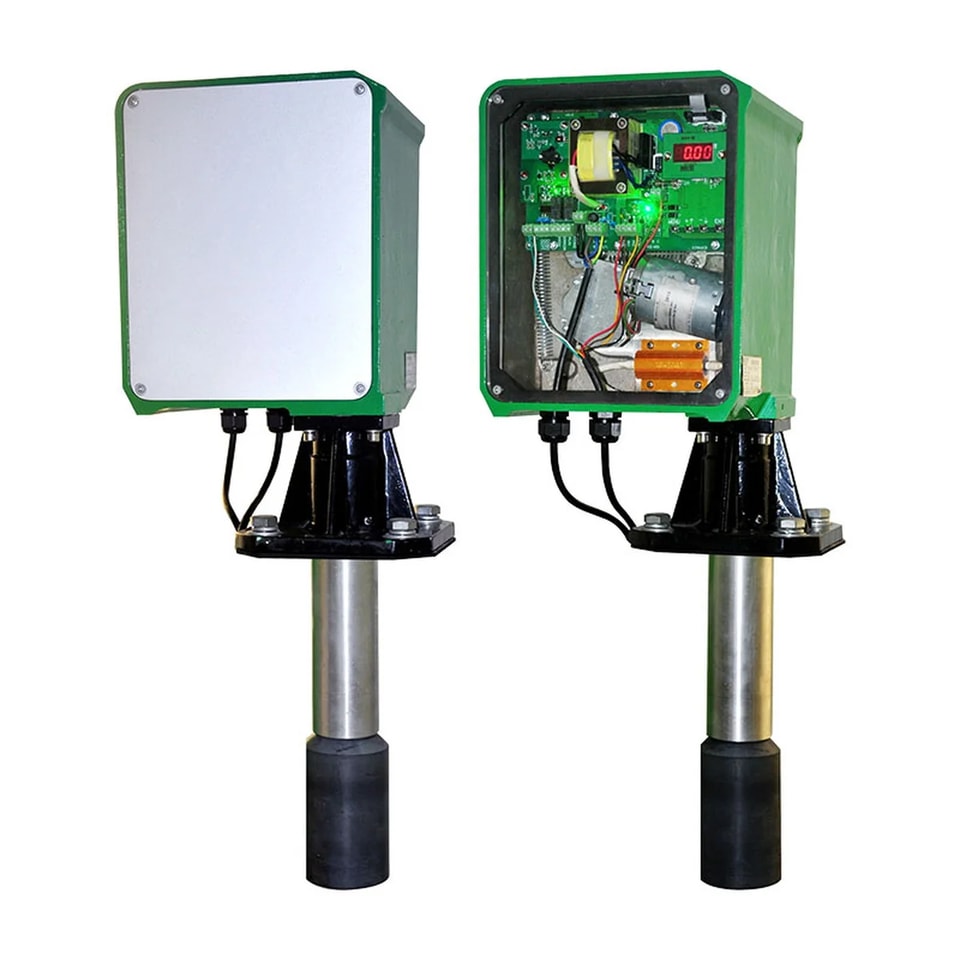
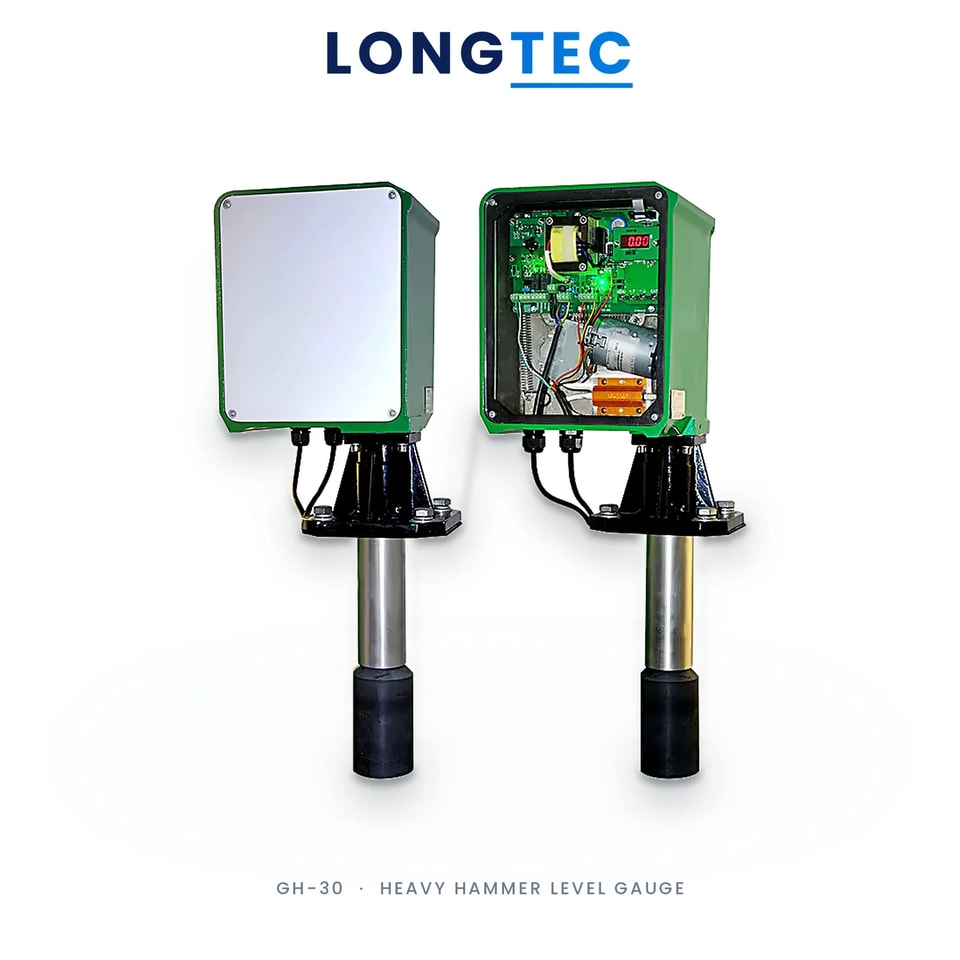
GH-30 Plumb-Bob Level Gauge
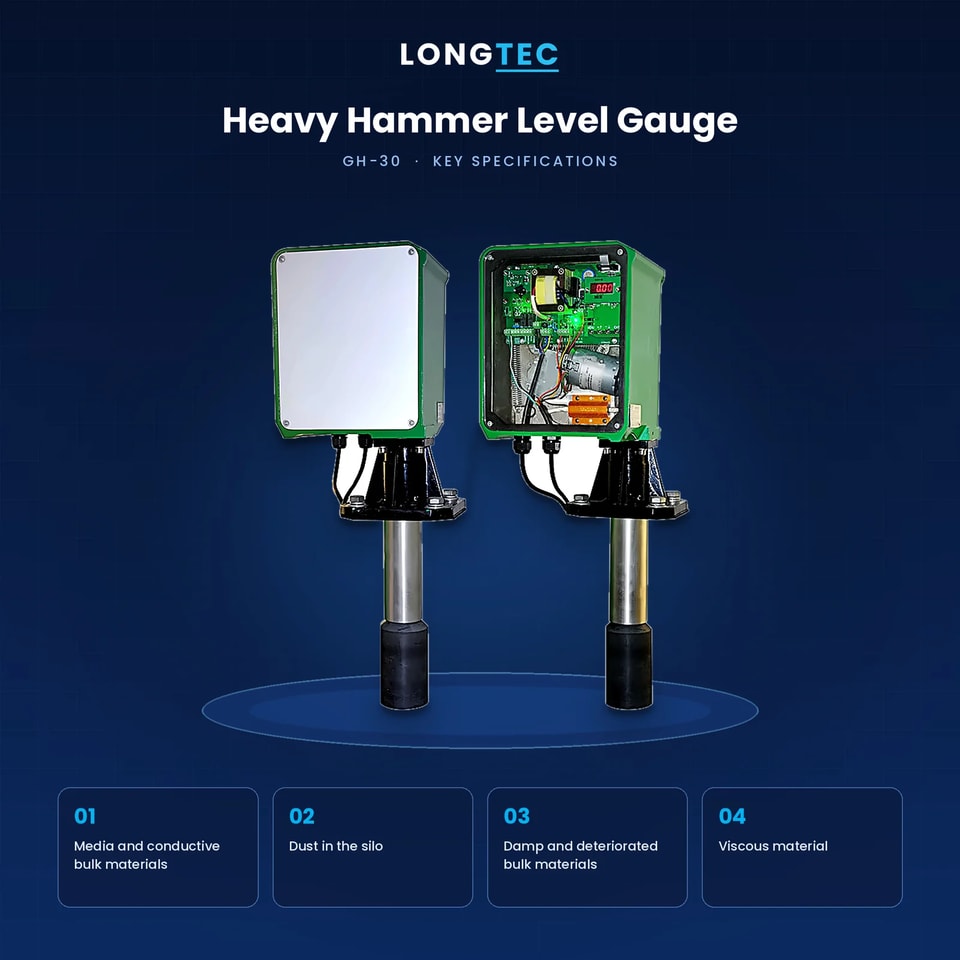
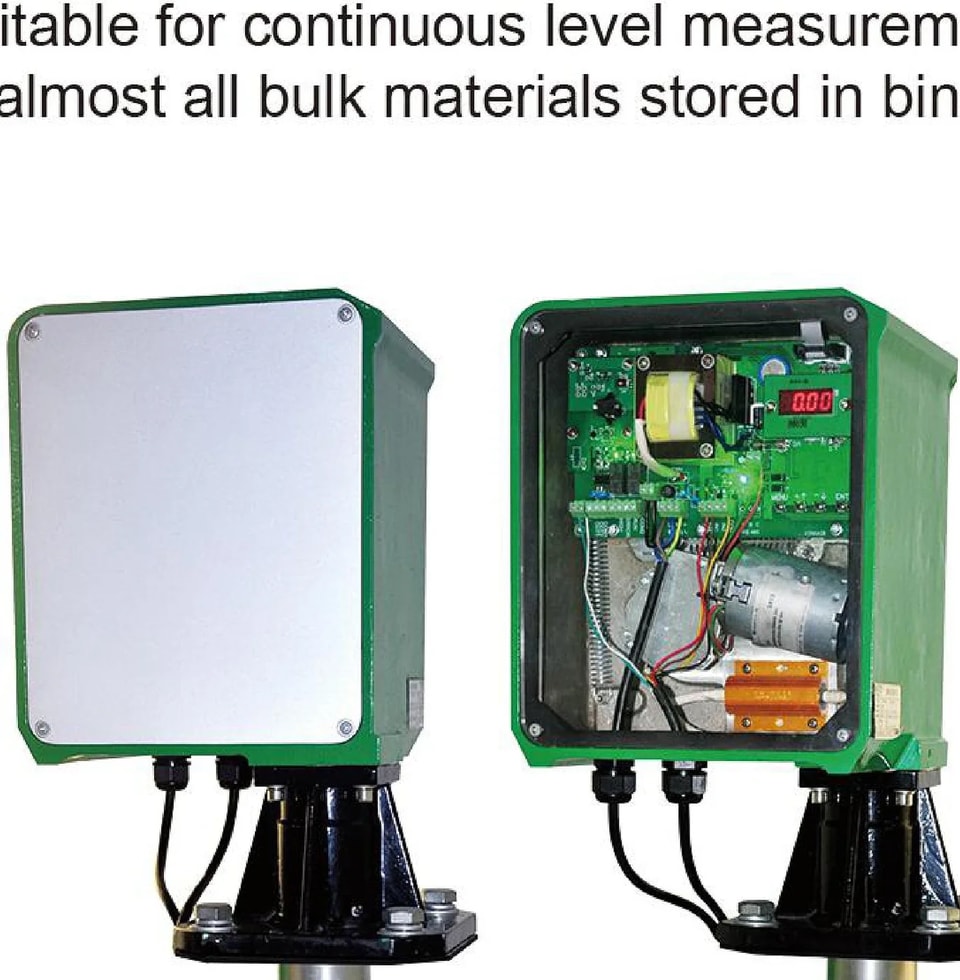
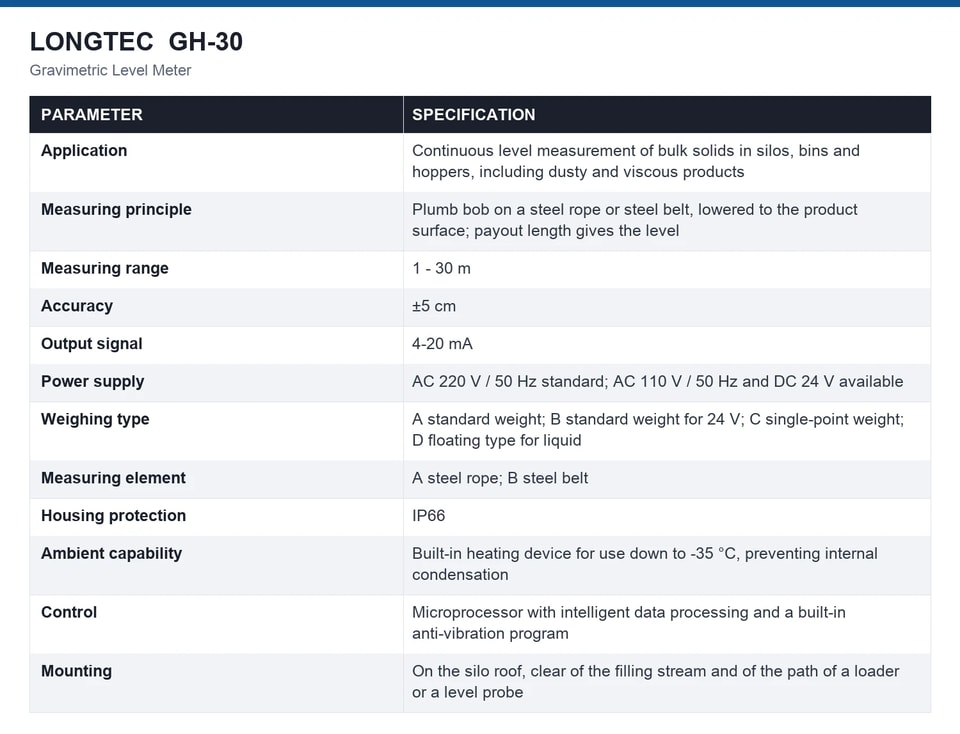
The GH-30 is a gravimetric, plumb-bob level meter: a weight on a steel rope or steel belt is lowered from the silo roof until it touches the surface of the product, the length of rope paid out is the empty distance, and the weight is then wound back. Because the measurement is made by physical contact with the surface and the position is counted on the drum, the result does not depend on dust, dielectric constant, conductivity, foam or the angle of the surface, which is exactly where radar and ultrasonic instruments struggle. It handles material that is dusty or conductive, product that has voids or ratholes inside, bulk material under stress or deformation, viscous products, and the impact of material loading on the surface. Accuracy is ±5 cm over a range of 1 to 30 m, the output is 4-20 mA, and a microprocessor with an anti-vibration program keeps the display steady on a structure that shakes. The housing is sealed to IP66 and a built-in heater keeps condensation off the optics at -35 C.
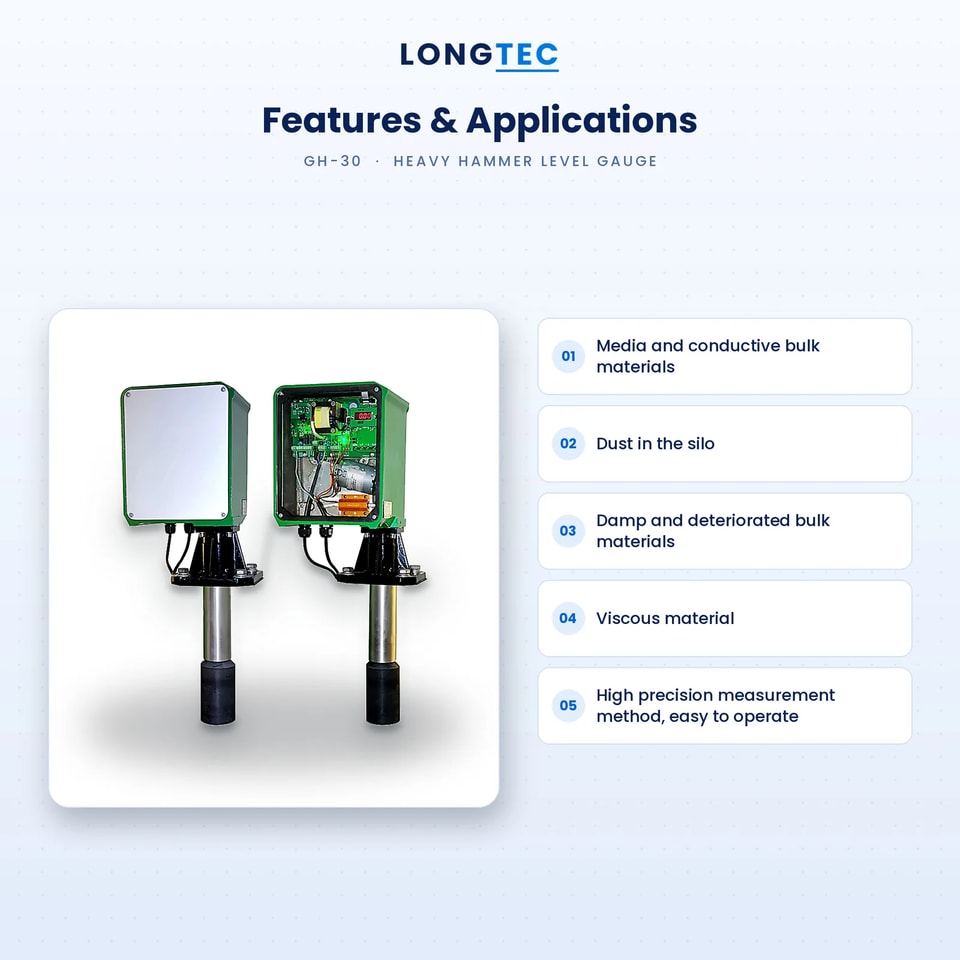
· Measures by physical contact with the surface, so dust, conductivity, dielectric constant, foam and surface angle do not affect the result.
· Works in material with internal voids or ratholes, in bulk solid under stress or deformation, and in viscous products.
· Range of 1 to 30 m with ±5 cm accuracy and a 4-20 mA output that connects to any PLC or indicator.
· Microprocessor control with an anti-vibration program, so the reading stays steady on a structure that shakes during filling.
· IP66 housing with a built-in heater that prevents internal condensation down to -35 C, for outdoor silos in cold climates.
· Steel rope or steel belt measuring element, selected to suit the product's abrasiveness and the silo height.
The GH-30 is used for continuous level measurement in cement and clinker silos, lime and fly ash bins, coal bunkers, ore and aggregate bins, grain and feed silos, and hoppers holding viscous or sticky bulk material. It is also used where a silo is filled from the top with a heavy drop that would damage a radar antenna, and where the product surface is uneven or has a deep funnel in the middle because the meter measures the actual surface at the point of contact.
Why use a plumb bob instead of radar or ultrasonic?
Because contact measurement ignores everything that disturbs a free-space measurement. Dust in the headspace, a foaming or fuming surface, a low dielectric constant, a sloped or funnel-shaped surface, and internal voids in the product do not change the result: the weight touches the surface and the payout length is the level.
How often does it measure?
It measures on demand or on a cycle set by the controller, lowering the weight, reading the level and rewinding. Between measurements the instrument holds the last value, so the 4-20 mA output is continuous and the silo does not need to stand still.
Will the weight sink into a soft product?
The weighing types cover that: the standard weight for normal bulk solids, the single-point weight for a small contact area, and the floating type for liquids. State the bulk density and the angle of repose when ordering, so the weight and the rope are matched to the product.
What about a silo that shakes during filling?
The microprocessor has a built-in anti-vibration program, and the measurement is taken while the weight is in contact with the product, so vibration of the structure does not translate into a level error in the way it does with a free-space instrument.
Can it be used outdoors in winter?
Yes. The housing is IP66 and a built-in heating device keeps the interior above the dew point down to -35 C, which prevents the condensation that otherwise fogs the mechanism and the display on a cold silo roof.
Solutions & Support
We go the extra mile to thoroughly analyze each project and deliver tailored business solutions that meet your specific requirements.
Contact US
×