
CRV100 Capacitance Level Gauge
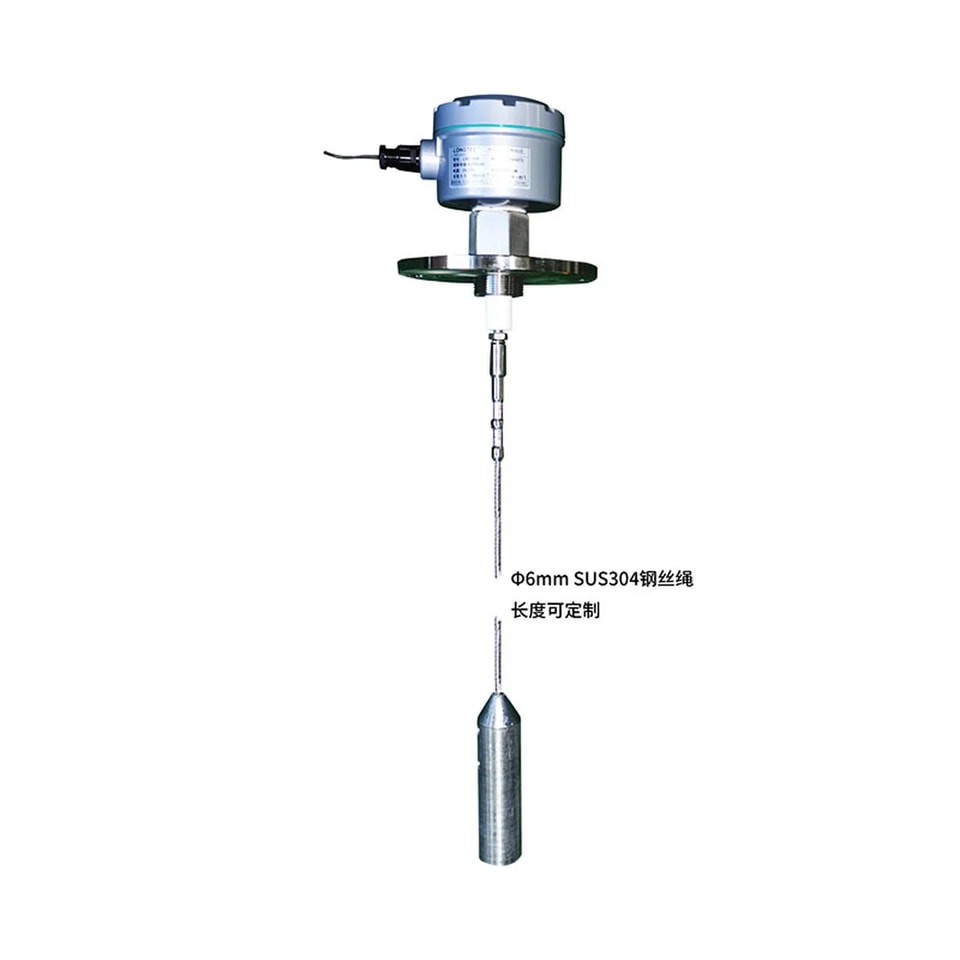
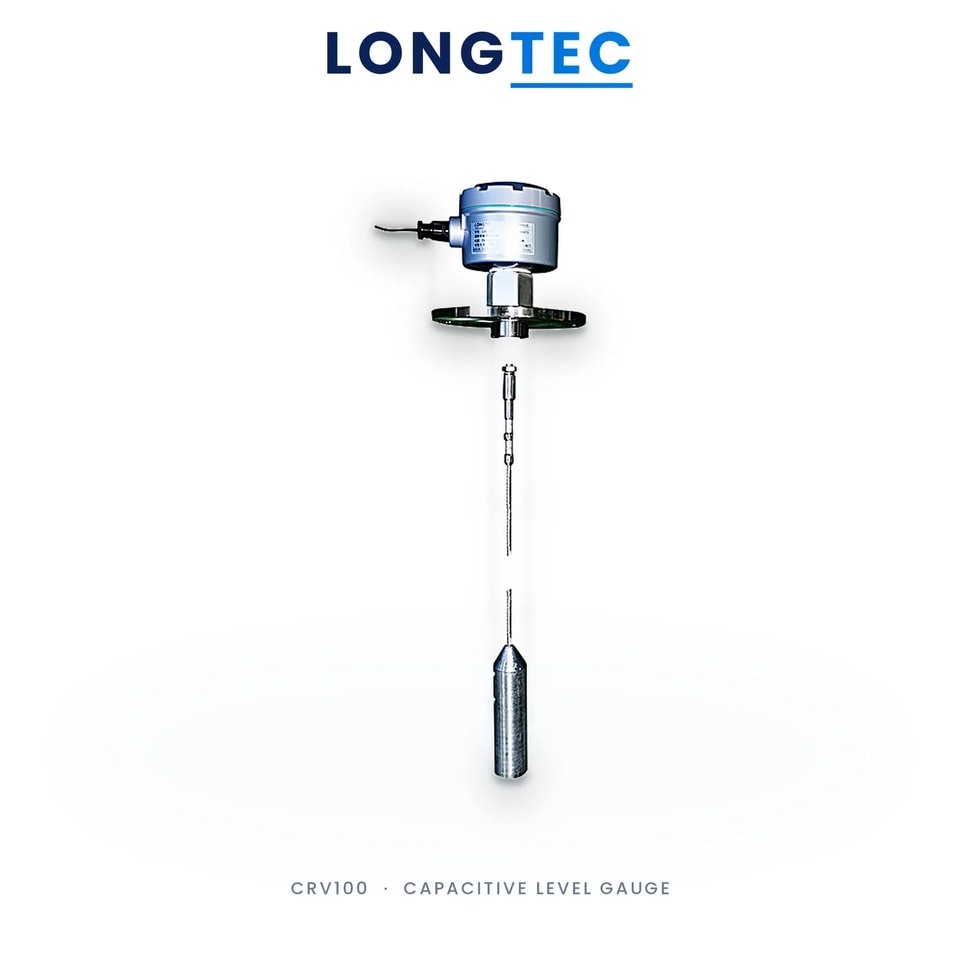
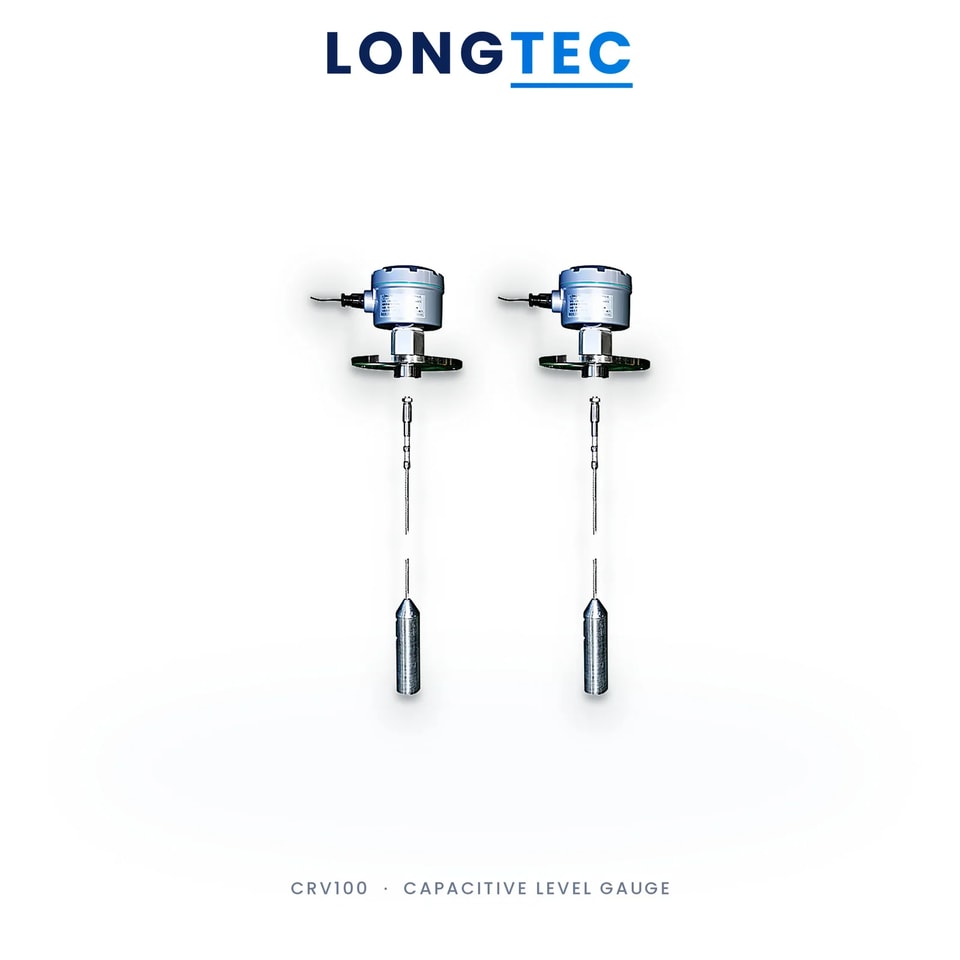
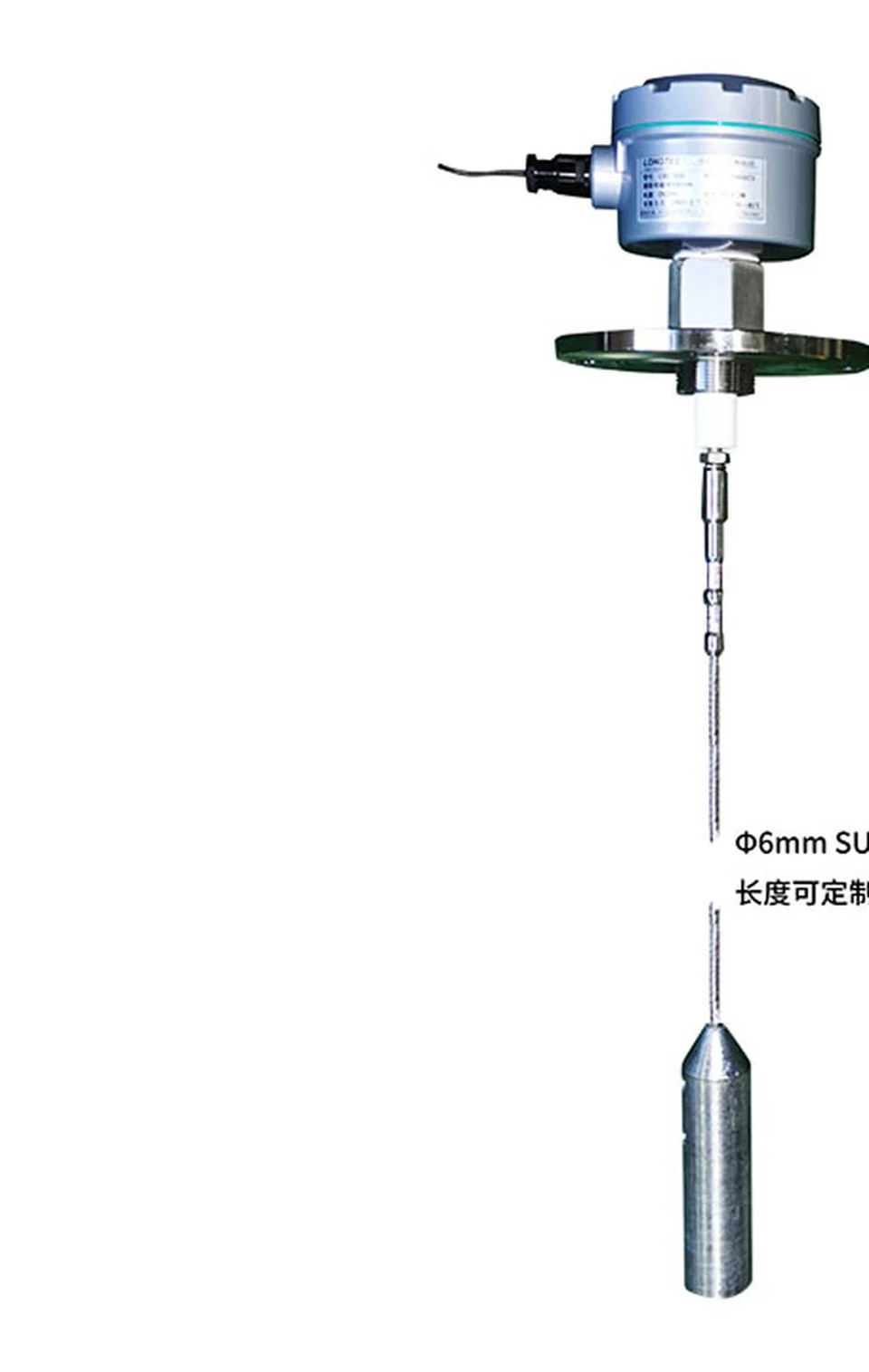
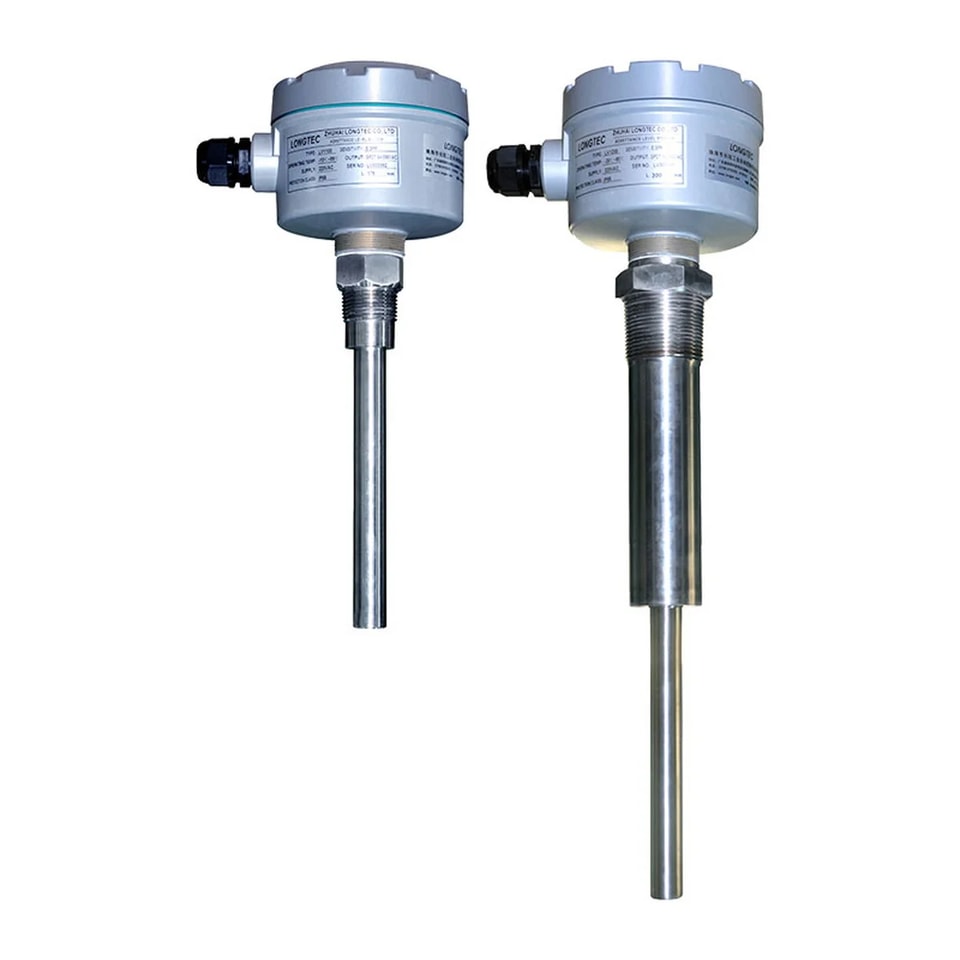
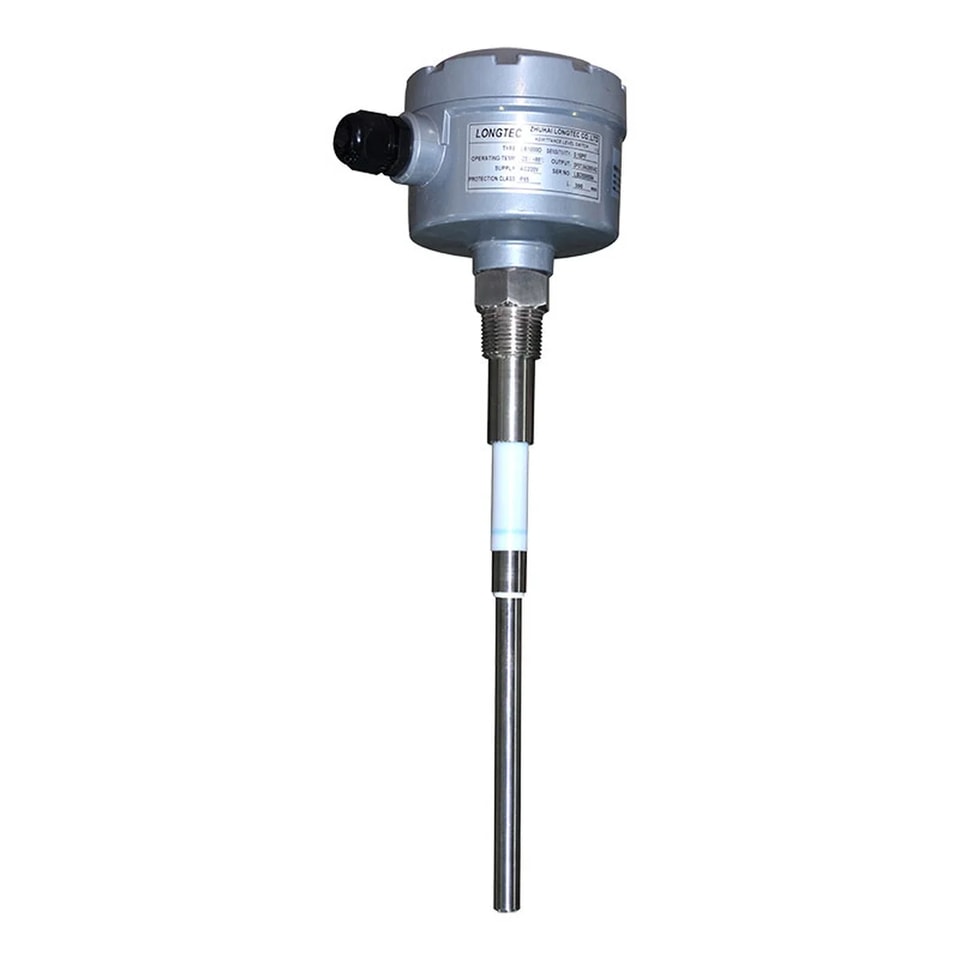
The CRV100 is a capacitance level meter for continuous measurement in silos and tanks. The probe and the vessel wall form a capacitor, and the capacitance changes as product rises around the probe; the electronics convert that change into a 4-20 mA signal or a switching output. Because the probe can be a rigid rod or a flexible steel cable, the same instrument covers a 1 m day tank and a 15 m silo, and the cable version is supplied on a reel so it can be cut to the height of the vessel on site. Installation is a single mounting hole: open it, lower the probe in, fix it and the instrument is ready, with no calibration and no commissioning routine. The design is deliberately insensitive to the things that spoil other level devices in bulk service: adhesion on the probe, vapour in the headspace, moisture content in the product, variation in bulk density and changes in temperature do not shift the reading.
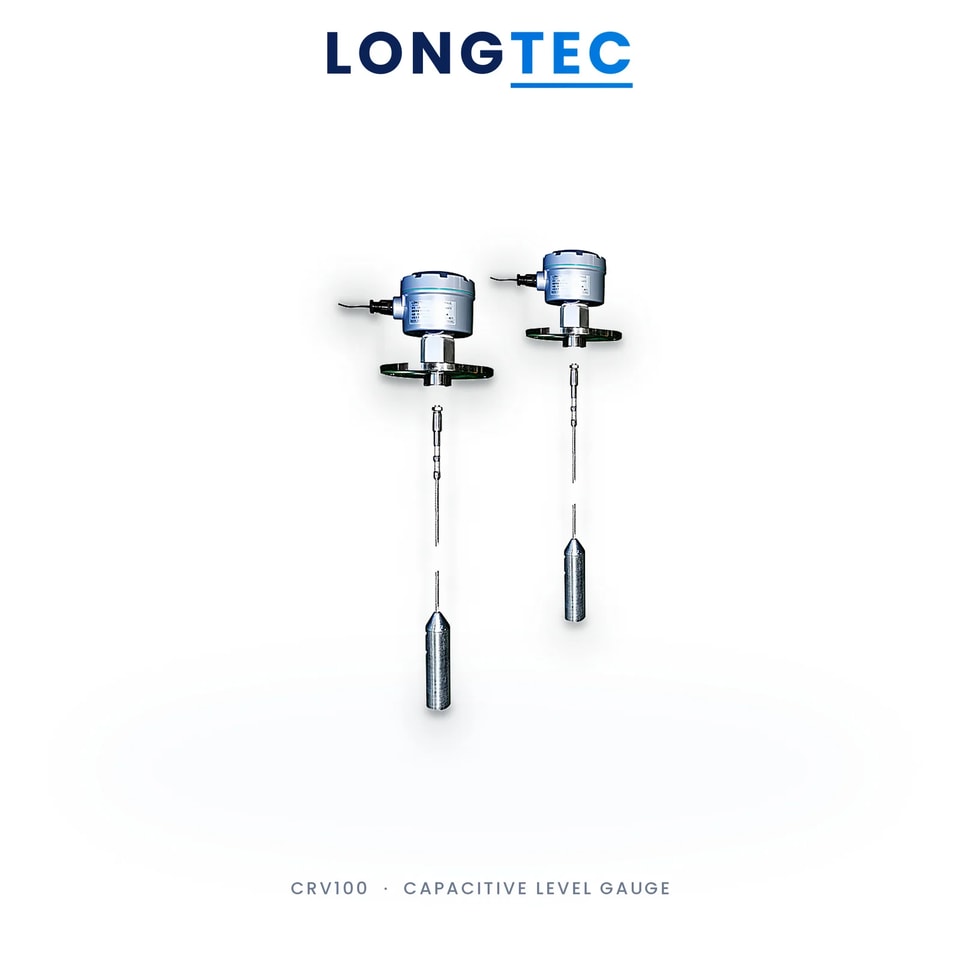
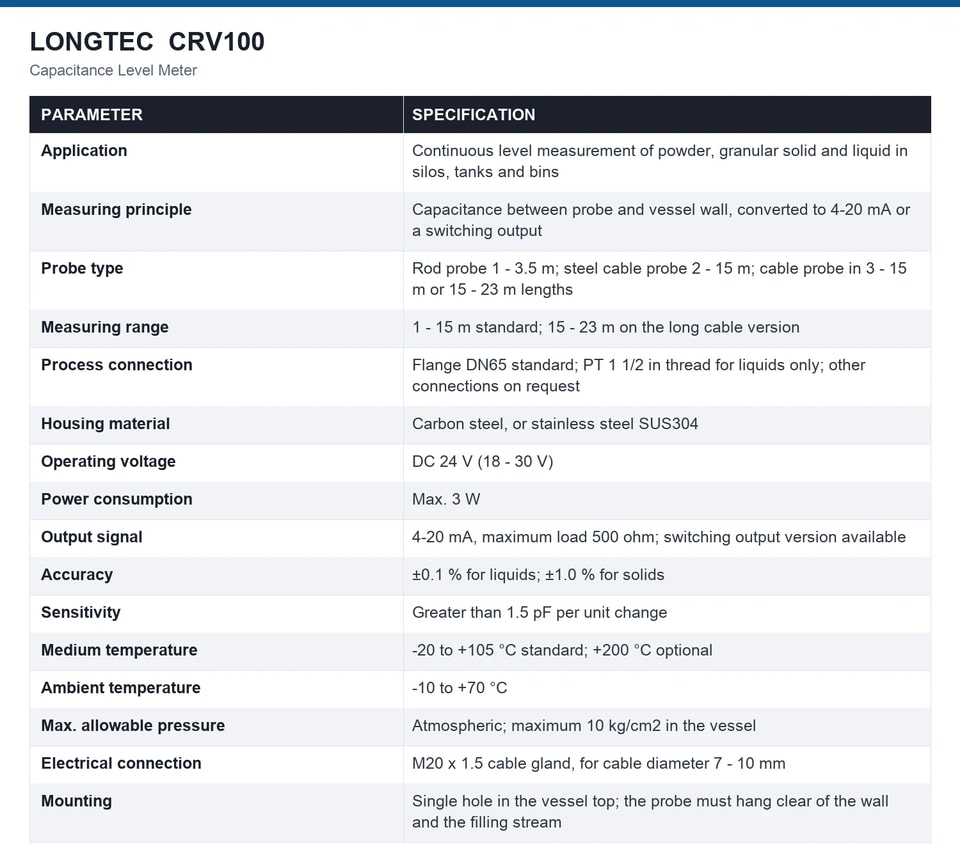
· Rod probe from 1 to 3.5 m or steel cable probe from 2 to 15 m, so one instrument family covers small tanks and tall silos.
· Ready for use after installation: no calibration and no commissioning routine, only a single mounting hole.
· Probe adhesion, vapour in the headspace, moisture content and bulk density variation do not affect the measurement result.
· Two-wire 4-20 mA output with 500 ohm maximum load, or a switching output version for alarm and interlock duties.
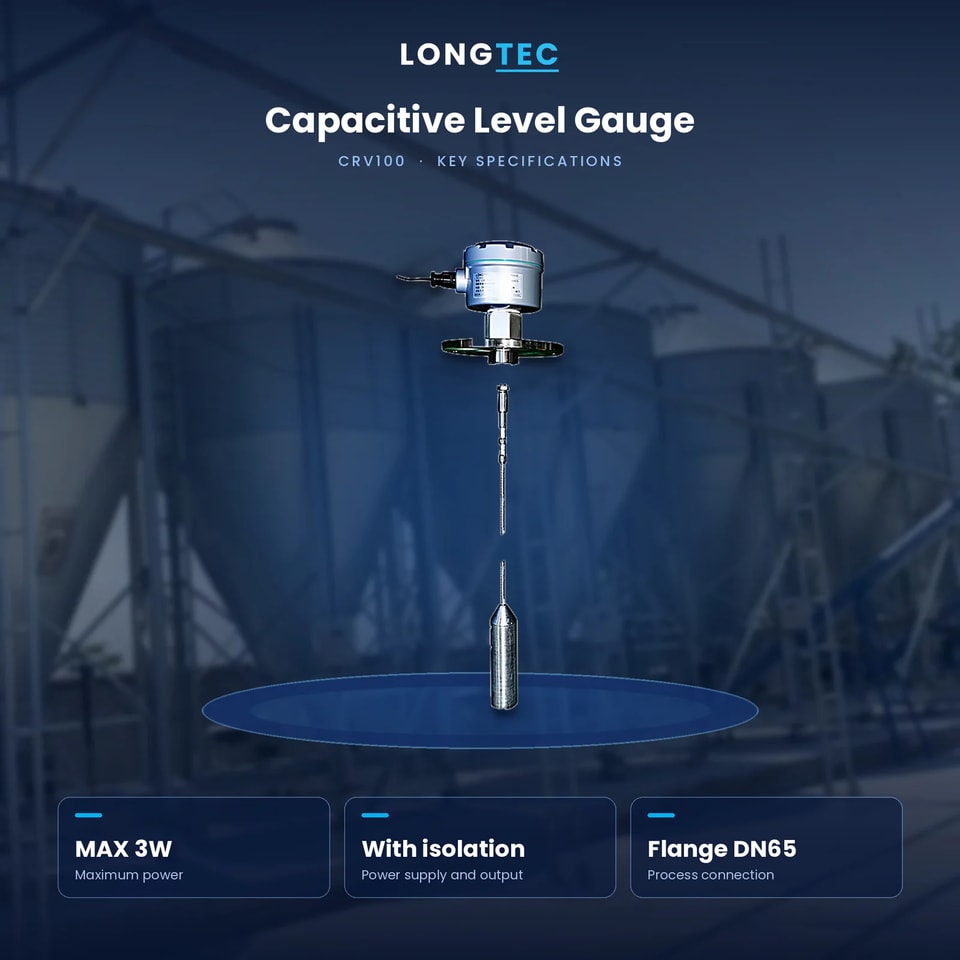
· Medium temperature from -20 to +105 °C as standard and up to +200 °C as an option, in a flange DN65 process connection.
· Can be configured with the CRV-8A or CRV-8D capacitance level display for a local reading at the silo.
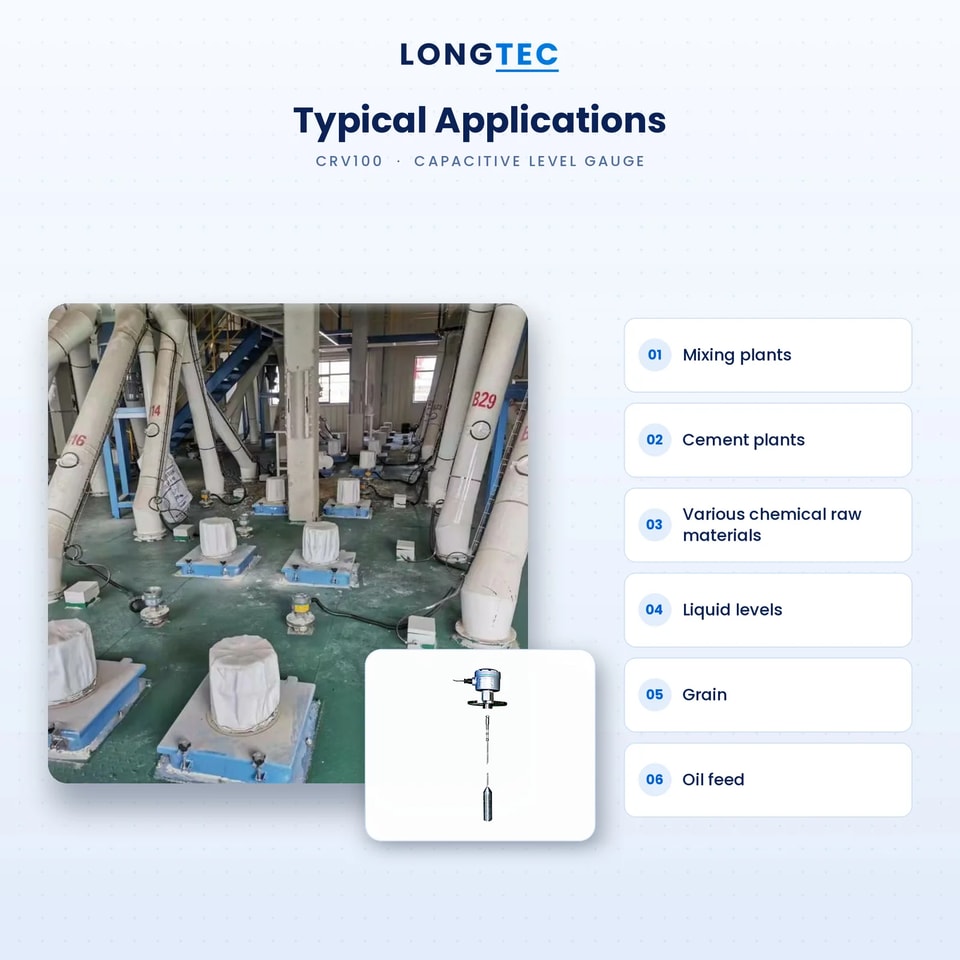
The CRV100 measures powder and bulk solid levels in cement, lime, fly ash, sand, plastic pellets, grain, flour and chemical powders, and liquid levels in water, oil, solvents and process tanks. It is used in cement plants, power stations, chemical works, oil depots, flour and feed mills, food processing and water treatment, wherever a continuous 4-20 mA level signal is needed and the product is either dusty or sticky.
How does a capacitance level meter work?
The probe and the vessel wall act as the two plates of a capacitor. Product rising around the probe changes the capacitance in proportion to the covered length, and the electronics turn that into a 4-20 mA signal. Because the probe is the electrode, the measurement covers the whole length of the probe, not just a point.
Rod or cable probe?
Use the rod probe from 1 to 3.5 m where the silo is short and the probe can hang rigid and straight. Use the steel cable from 2 to 15 m for tall silos, and the long cable version up to 23 m for the tallest bins; the cable can be shortened on site to suit the vessel.
What about material sticking to the probe?
Adhesion on the probe does not change the measurement result on this design, and vapour in the headspace, moisture content in the product and variation in bulk density are also stated as non-influencing. For a product that builds a thick, conductive crust, clean the probe during scheduled shutdowns.
Can it be used in a pressure vessel?
The standard instrument is for atmospheric vessels and for a maximum allowable pressure of 10 kg/cm2. If your vessel is classified or runs at a higher pressure, tell us the design pressure and the flange rating so the process connection can be matched.
How is the output configured?
The standard version gives 4-20 mA with a maximum load of 500 ohm, two-wire from a DC 24 V supply. A switching output version is available for alarm and interlock duties, and the instrument can be supplied with the CRV-8A or CRV-8D capacitance level display for a local reading at the silo.
Solutions & Support
We go the extra mile to thoroughly analyze each project and deliver tailored business solutions that meet your specific requirements.
Contact US
×