
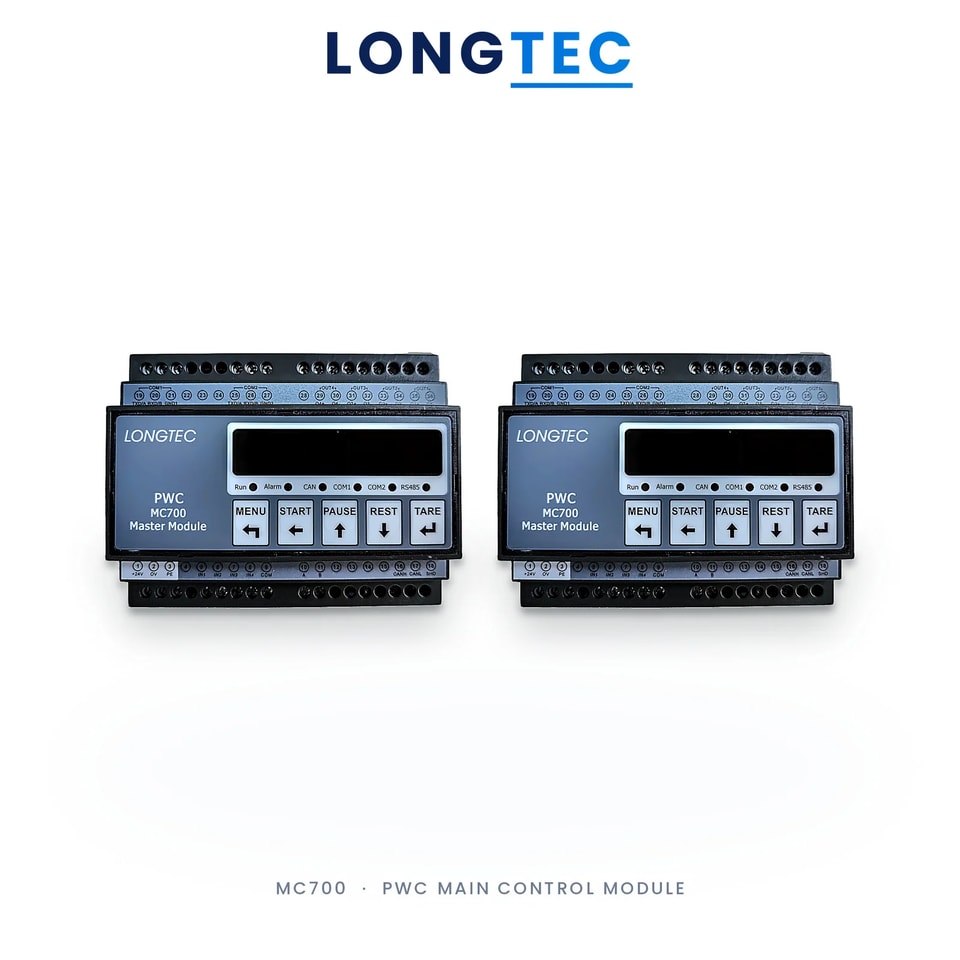
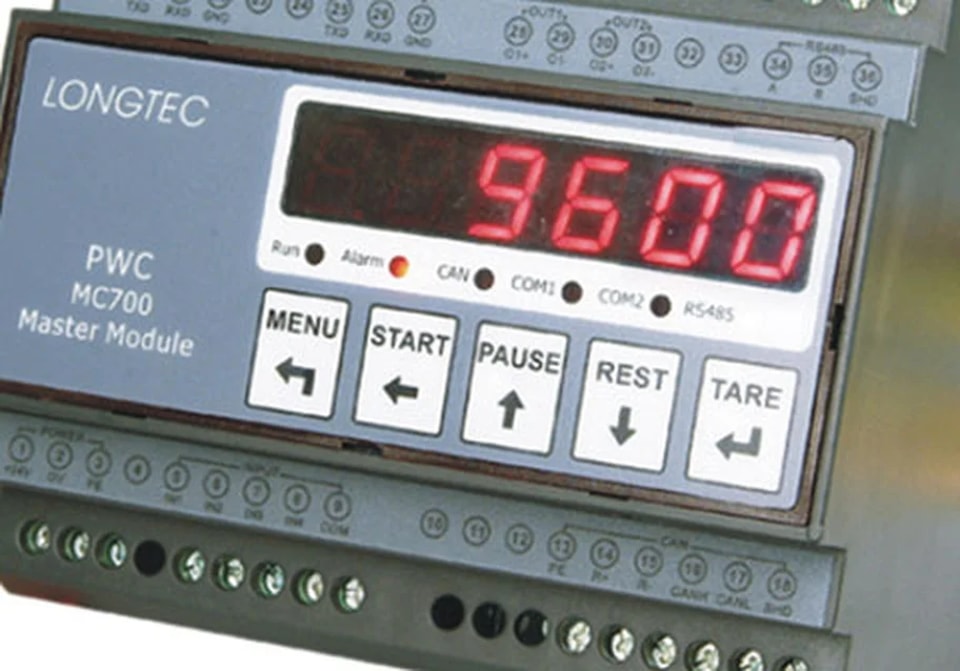
MC700 PWC Main Control Module
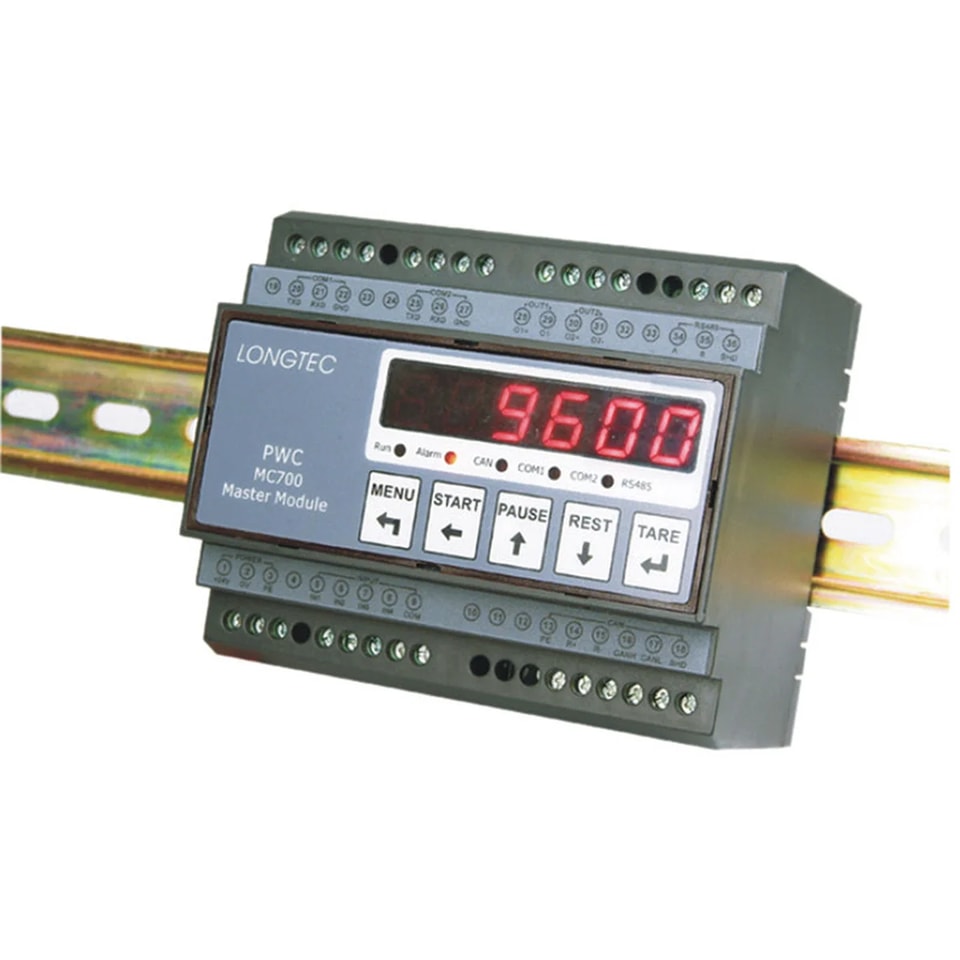
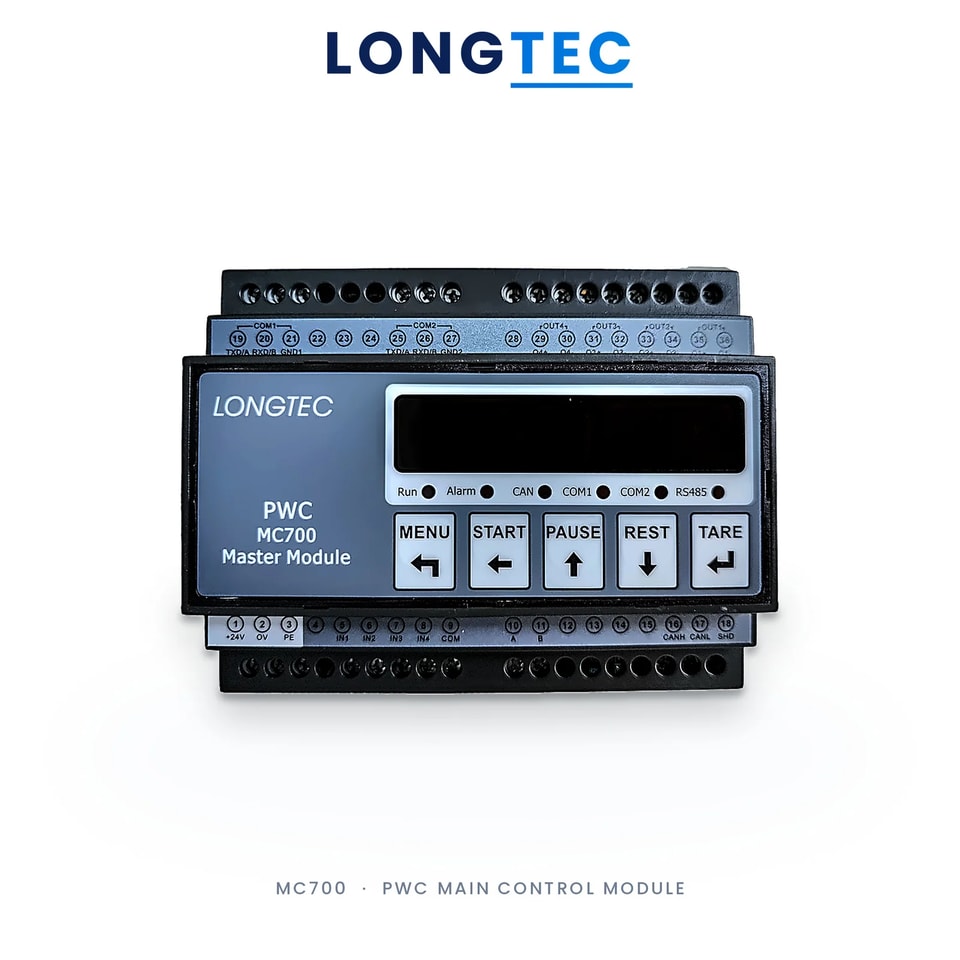
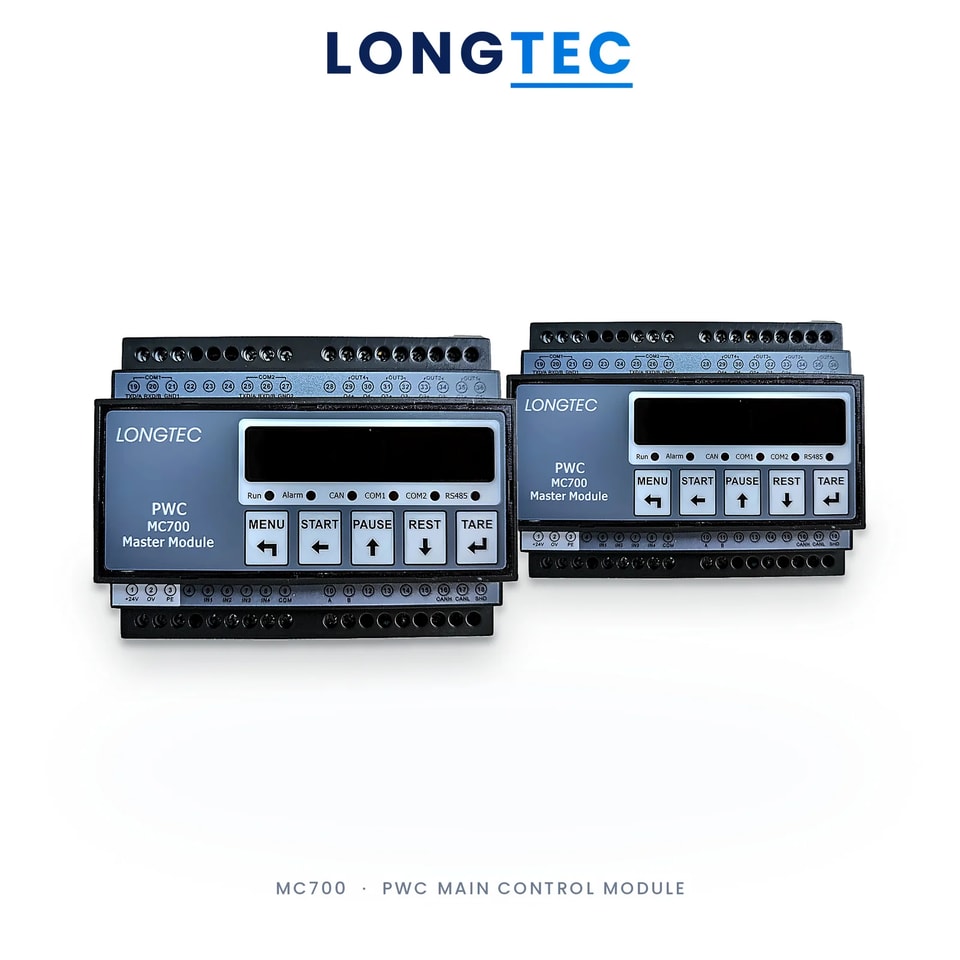
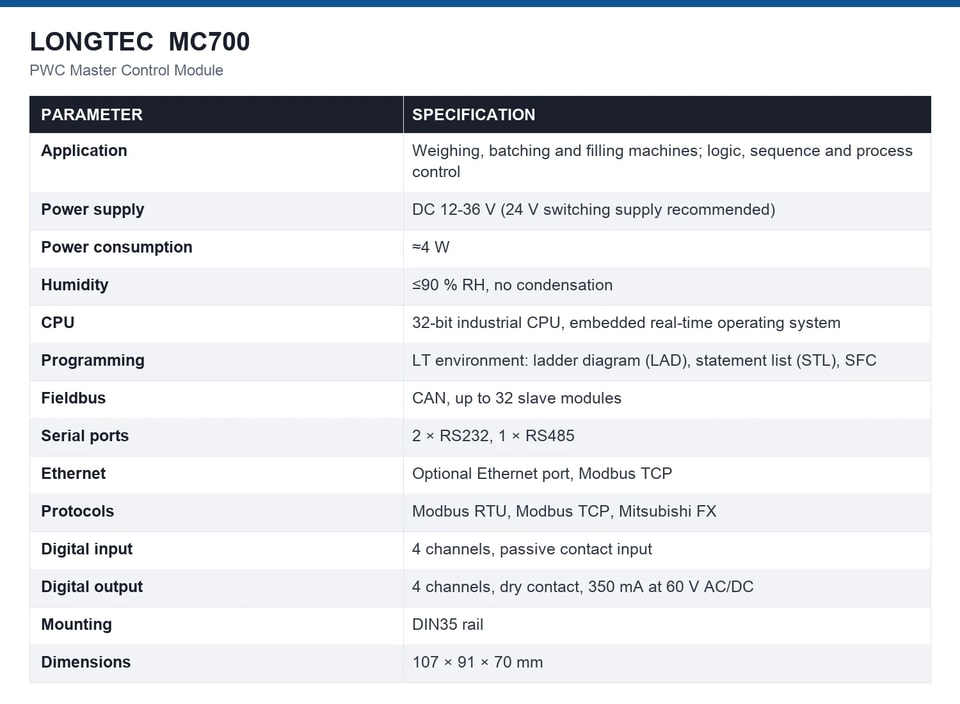
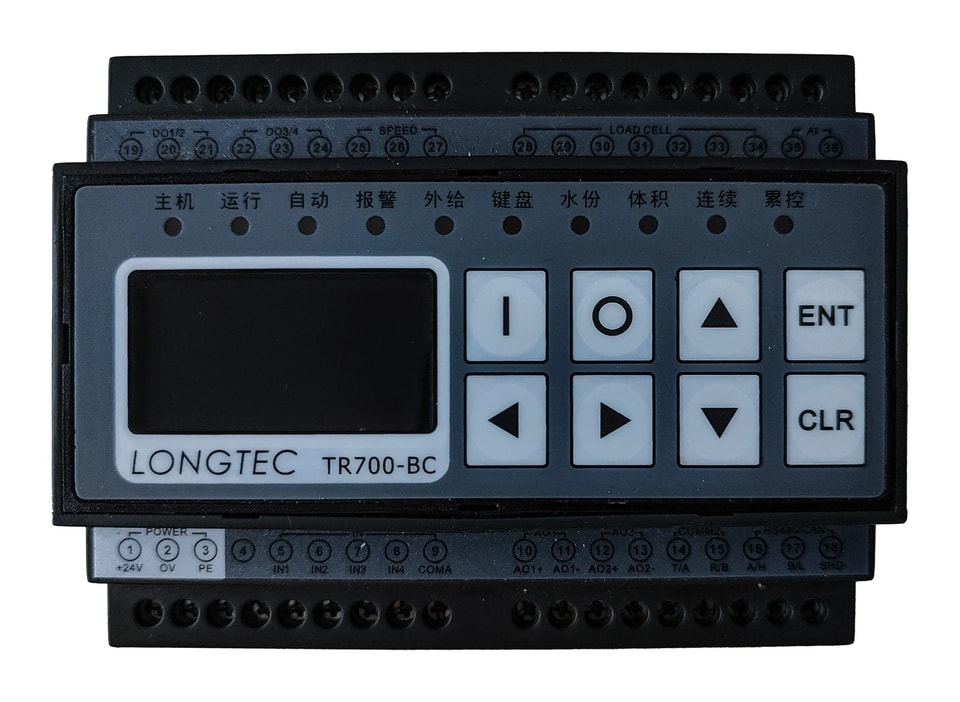
The LONGTEC MC700 is a programmable master module that puts weighing and PLC logic in the same DIN-rail package. Instead of a weighing indicator talking to a separate PLC over a cable, the MC700 collects weight from up to 32 slave modules on CAN and runs the sequence itself: fill, dribble, settle, discharge, alarm. Programming uses the LT environment with ladder diagram, statement list or SFC, so a control engineer can write the batch logic in the language they already know. The module carries three serial ports, CAN, optional Ethernet with Modbus TCP, four passive contact inputs and four dry-contact outputs rated 350 mA at 60 V. A 32-bit industrial CPU with an embedded real-time system keeps the scan short enough for fast filling and checkweighing, and the 107 mm DIN-rail housing fits a standard cabinet next to the drives.
· Combines weighing signal processing and PLC logic in one DIN-rail module, removing the link between an indicator and a separate PLC.
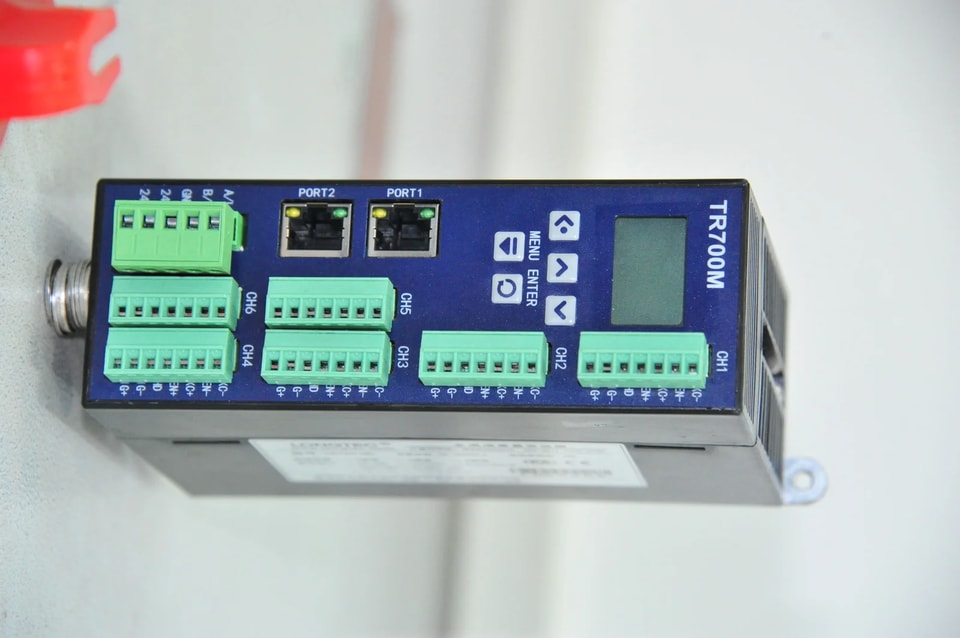
· Drives up to 32 weighing slave modules over CAN, for distributed or centralised installation on the same machine.
· Programmed in the LT environment with ladder diagram, statement list or SFC, using the syntax control engineers already know.
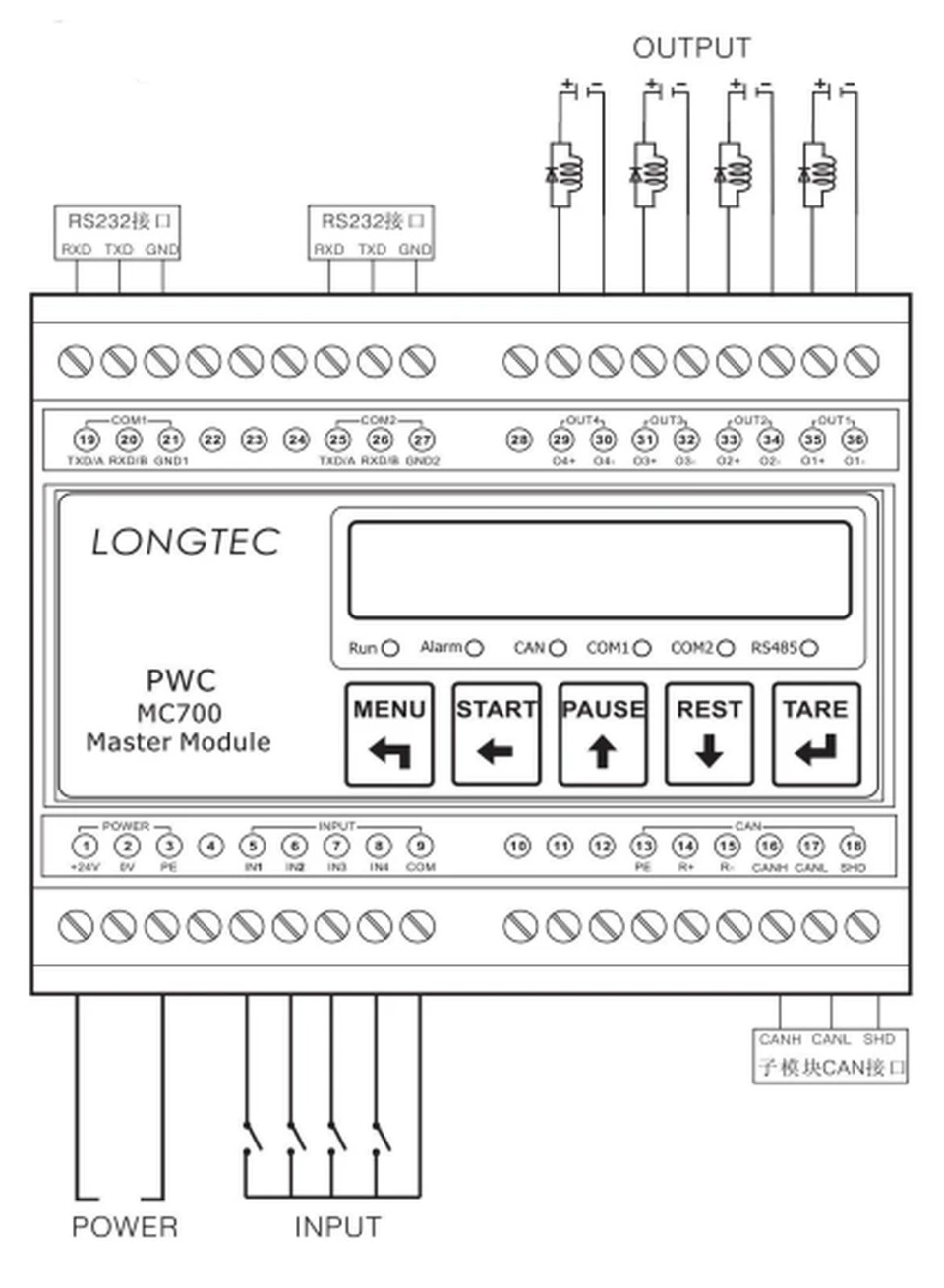
· Four passive contact inputs and four dry-contact outputs rated 350 mA at 60 V AC/DC handle valves, relays and sensors directly.
· Two RS232, one RS485 and an optional Ethernet port support Modbus RTU, Modbus TCP and Mitsubishi FX protocols.
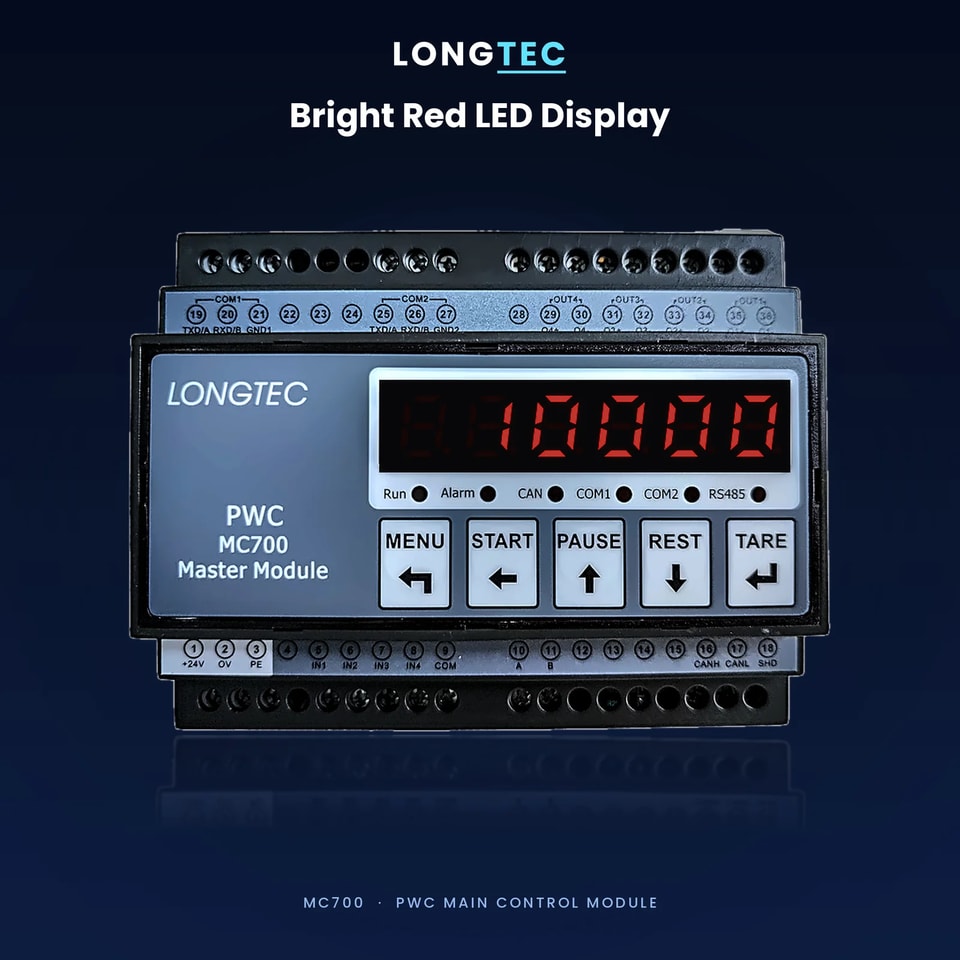
· 32-bit industrial CPU with embedded real-time operating system keeps the scan fast for filling, dosing and checkweighing.
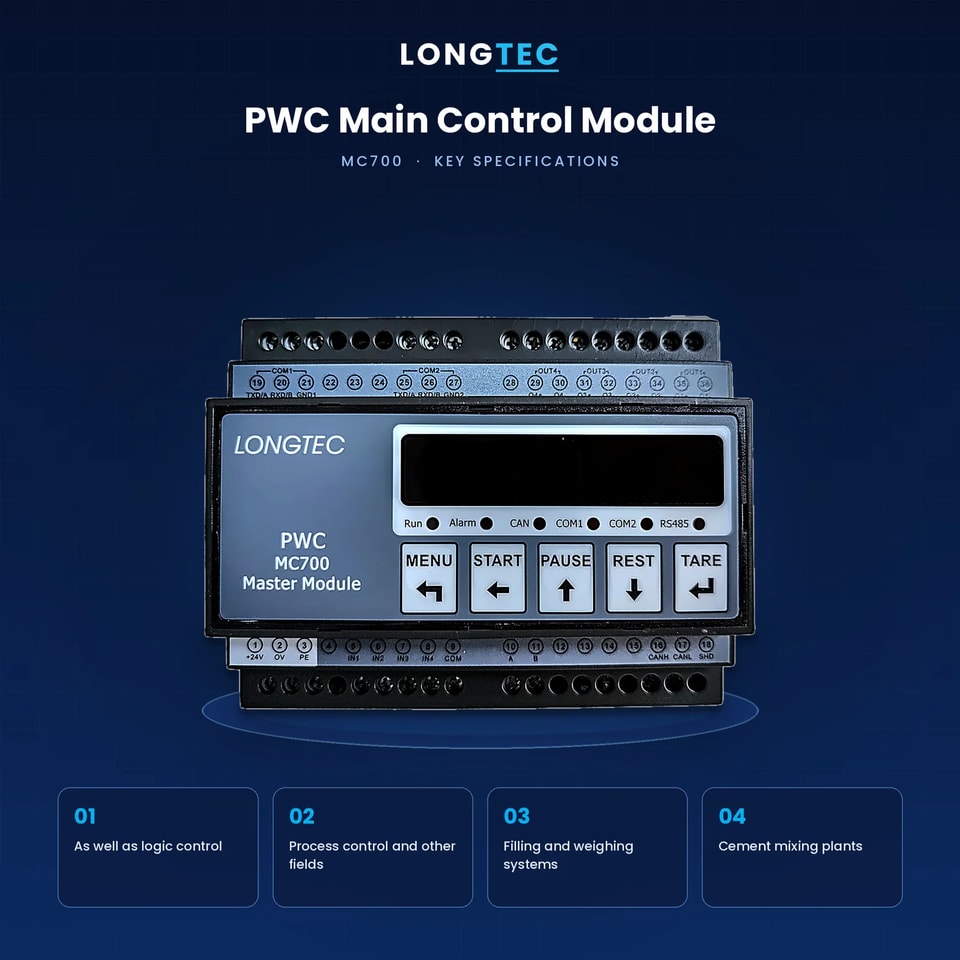
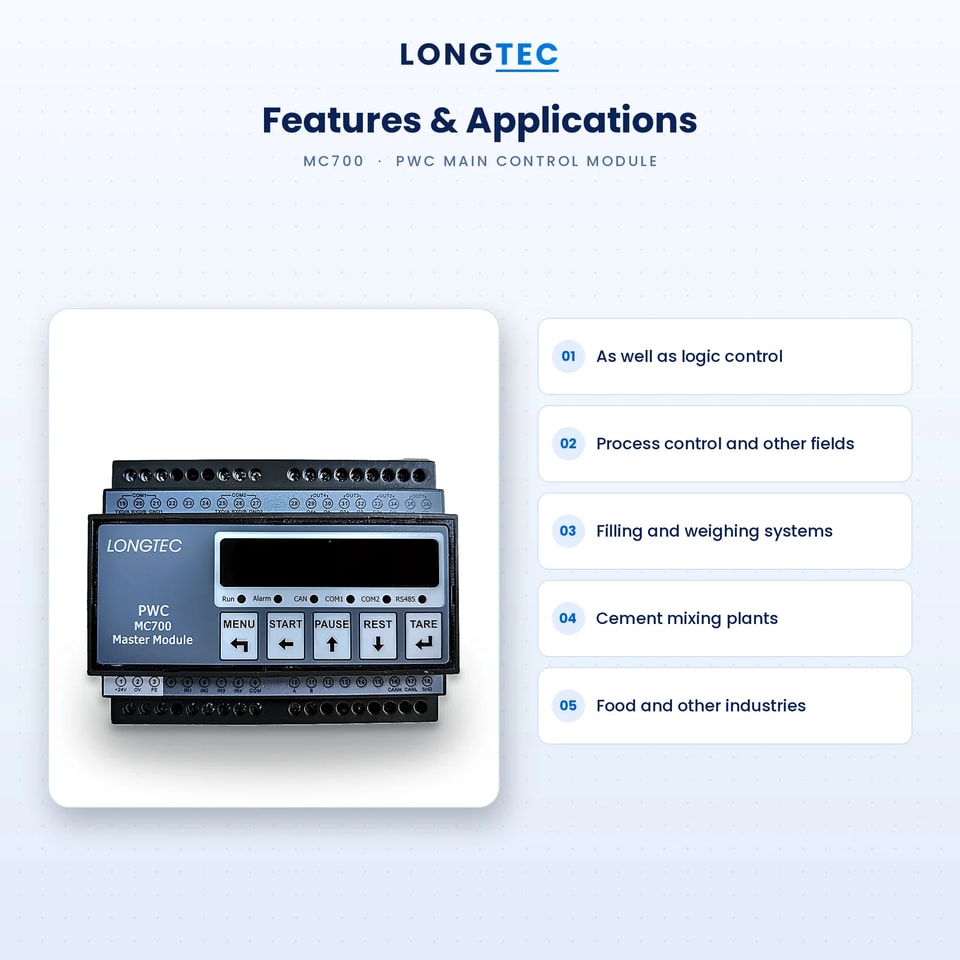
MC700 modules are used as the control head of batching and filling systems: rapid packaging machines, filling and weighing lines, cement and dry mortar mixing plants, chemical coatings, textile and food production, and any line where weight has to drive a sequence rather than simply be displayed. Distributed installations use the CAN bus to spread weighing slaves along the machine and keep cable runs short, while a single centralised cabinet can hold the master and its slaves on one rail.
Do I still need a separate PLC with the MC700?
In most batching and filling machines, no. The MC700 runs the weighing sequence itself with ladder, STL or SFC logic and has four inputs and four outputs on board. A larger PLC is only needed when the machine logic goes well beyond the weighing sequence.
How many weighing modules can it control?
Up to 32 slave modules on the CAN bus. They can be spread along the machine for distributed installation, or grouped in one cabinet, and the master sees them as one system.
What programming background is needed?
Standard PLC experience. The LT environment accepts ladder diagram, statement list and SFC with mainstream PLC syntax, so an engineer who programs a small PLC can commission the MC700 without learning a proprietary language.
Which protocols can it speak to the plant network?
Modbus RTU on the serial ports, Modbus TCP when the Ethernet option is fitted, and Mitsubishi FX protocol for connecting to existing Mitsubishi equipment.
How is it mounted and wired?
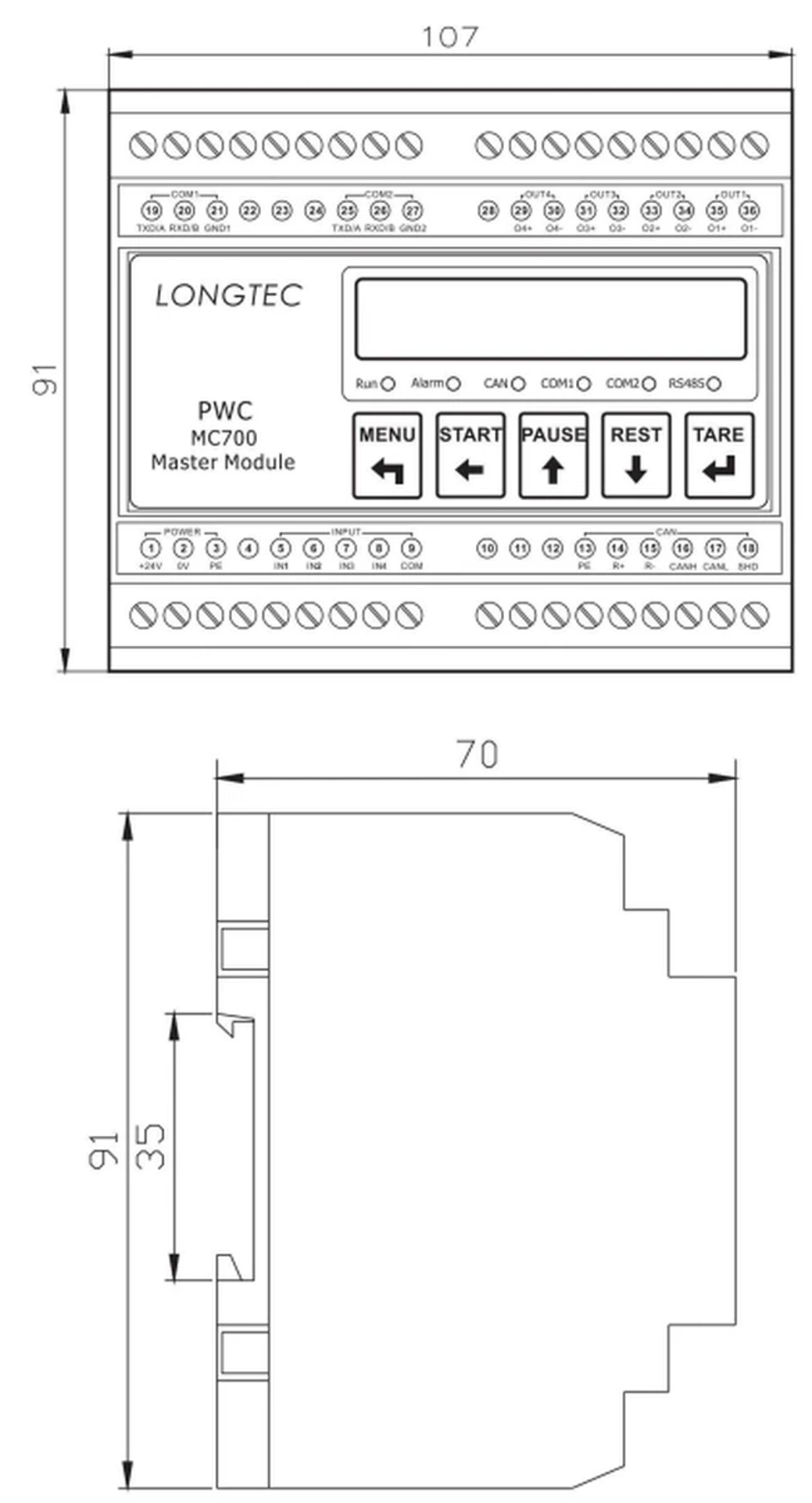
On a standard DIN35 rail, 107 mm wide and 70 mm deep. Power, inputs and outputs are on pluggable screw terminals, and the CAN bus is daisy-chained between the master and its slaves.
Solutions & Support
We go the extra mile to thoroughly analyze each project and deliver tailored business solutions that meet your specific requirements.
Contact US
×