
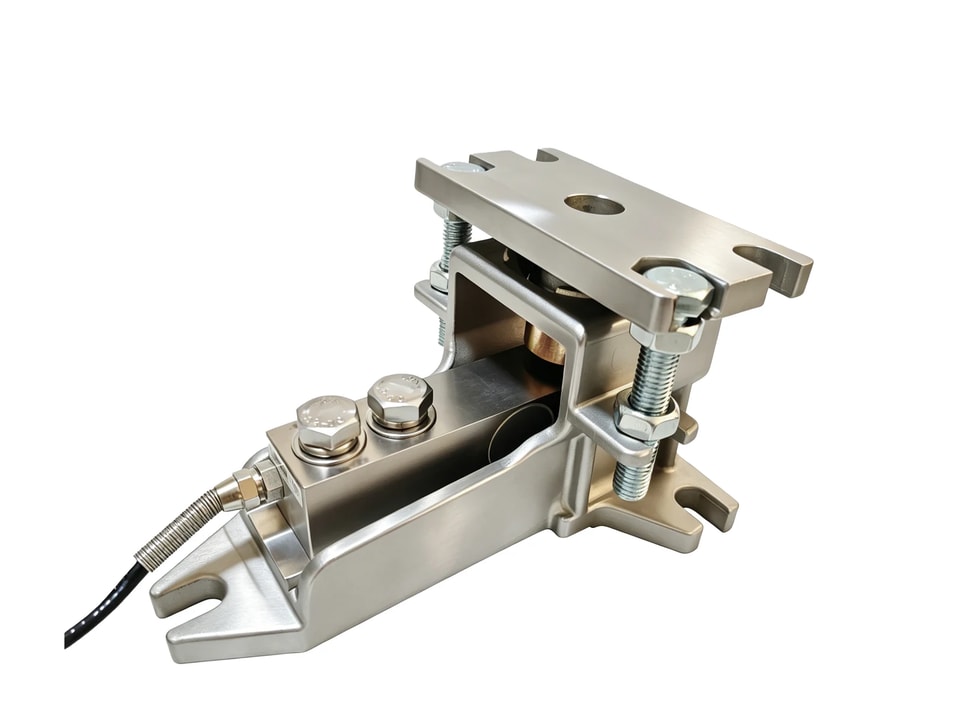
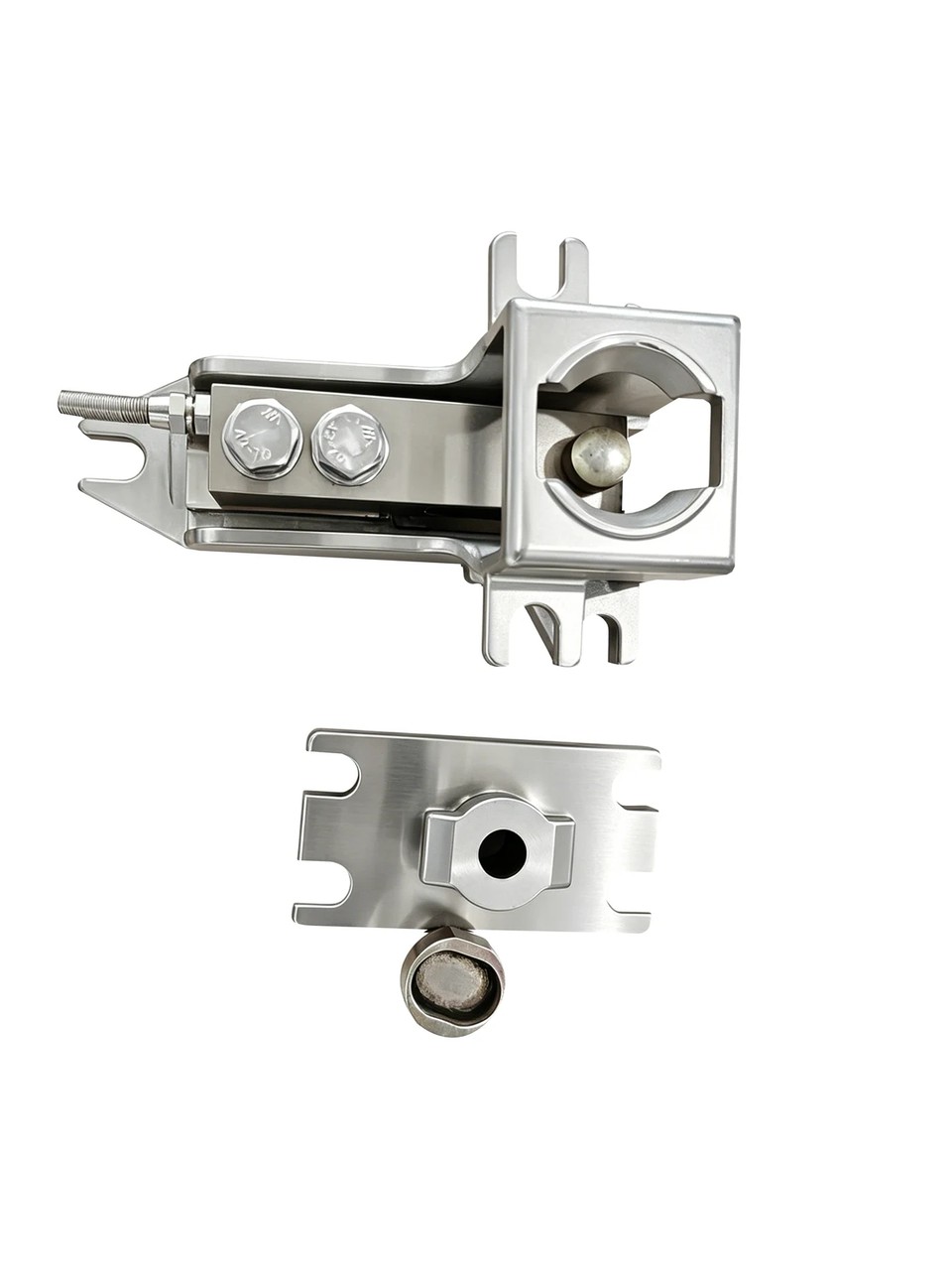
LM02/LM03 Load Cell Module
LM02 and LM03 are weighing modules: a mechanical assembly that carries a compression load cell and sits under the leg of a tank, silo or hopper, so that the vessel itself becomes the weighing platform. A module of this kind takes the vertical load, keeps the load cell aligned, allows the vessel to move with thermal expansion and prevents the vessel from lifting when it is empty or when wind acts on it. Three or four modules support one vessel and their signals are summed in a junction box, which gives a level reading by weight, a batch total or a loss-in-weight signal without cutting into the tank. The range, material grade, protection class and mounting dimensions are selected per project; the current datasheet is issued with the quotation.
· Mechanical module that houses a compression load cell, turning a tank, silo or hopper into a weighing vessel.
· Keeps the load cell aligned and allows thermal movement of the vessel, so the reading stays stable over the temperature cycle.
· Anti-lift design holds the vessel down when it is empty or when wind load acts on a large silo.
· Three or four modules per vessel, summed in a junction box, giving level by weight, batch total or loss-in-weight.
· Service is possible from the leg rather than the tank wall, which shortens downtime when a load cell has to be replaced.
· Range, material grade, protection class and mounting are selected per project, with the datasheet issued alongside the quotation.
Weighing modules are used wherever a tank, silo, hopper or reactor has to be weighed as a whole: batching plants that dose from several silos, feed mills with ingredient bins, concrete and asphalt plants, chemical reactors with level-by-weight, and food plants that need a washdown-proof weighing point. Because the vessel is weighed directly, the customer avoids load cells welded onto the tank wall and gets a weighing point that can be serviced by lowering the leg.
What exactly does a weighing module do?
It is the mechanical interface between the vessel leg and the load cell. It carries the vertical load into a compression load cell, keeps that load cell aligned, allows the vessel to expand and contract with temperature, and stops the vessel from lifting off when the weight is removed.
How many modules does one tank need?
Small vessels use three modules, larger vessels four, and the choice follows the load distribution and the wind and seismic requirement of the site. Please send the vessel weight, the maximum content weight and the leg layout, and we will propose the number and the capacity per module.
Which is the difference between LM02 and LM03?
Both are weighing modules of the same family and are selected per project. Because the published material is limited to the model designation, please confirm the capacity, the material grade and the mounting dimensions with us against your vessel, and we will quote the matching version.
Can the modules be used in a batching system?
Yes. The modules are summed through a junction box into a weighing transmitter or indicator, which then handles the batching logic, the tolerance check and the totaliser. This is the normal configuration for dosing from several silos into one scale.
Can you send a drawing and the load cell data?
Yes. Send the vessel drawing, the leg position and the required capacity, and we will return the module drawing, the load cell datasheet and the quotation. We do not publish a fixed specification because the assembly is configured per project.
Solutions & Support
We go the extra mile to thoroughly analyze each project and deliver tailored business solutions that meet your specific requirements.
Contact US
×