

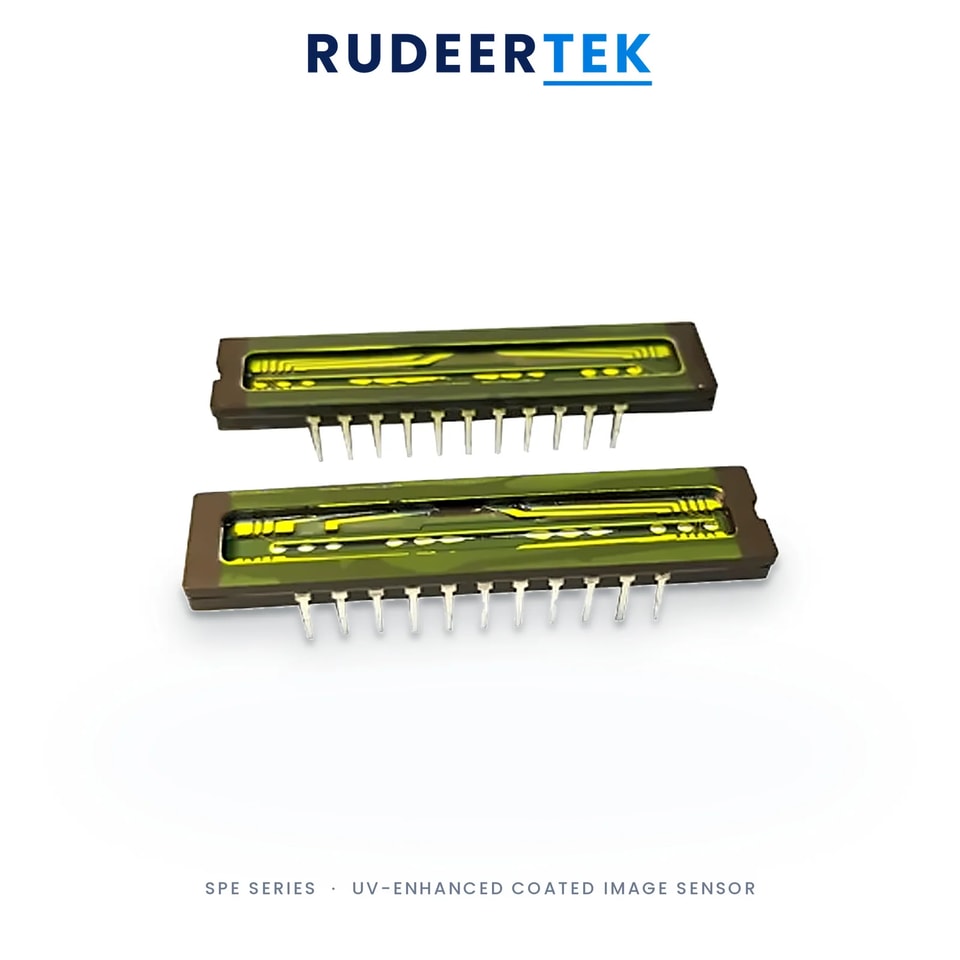
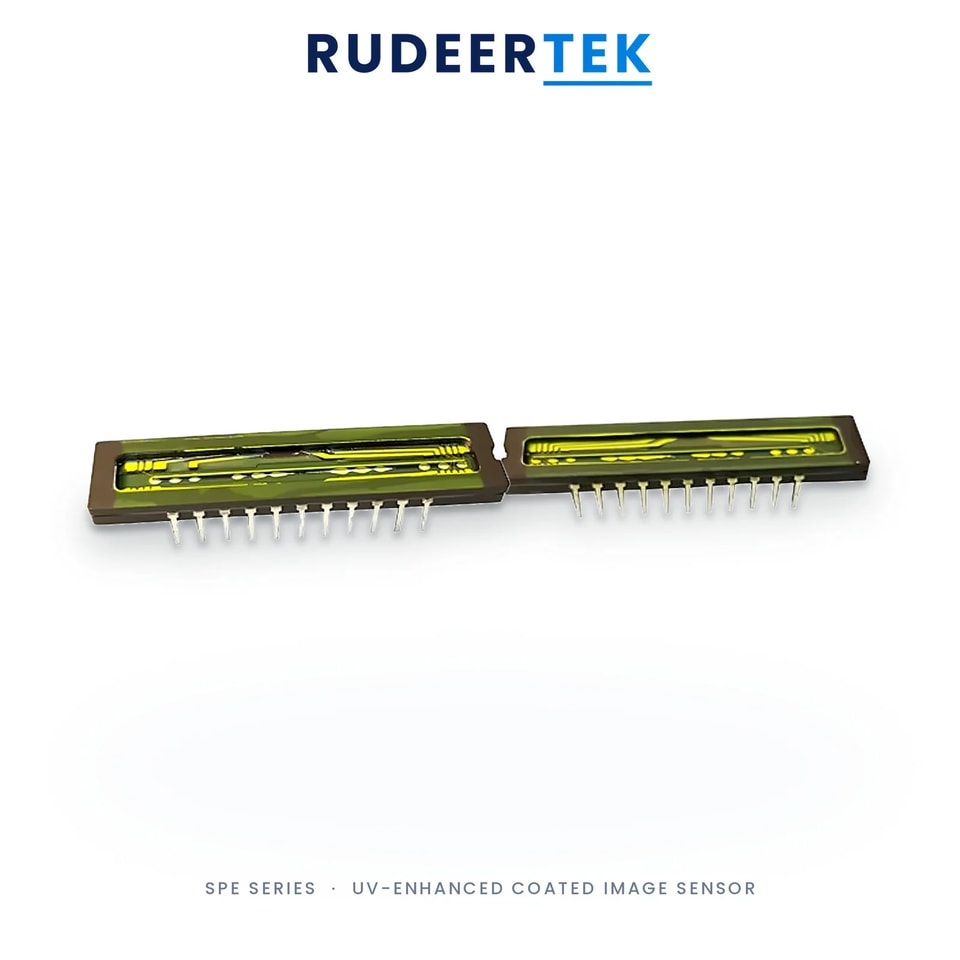
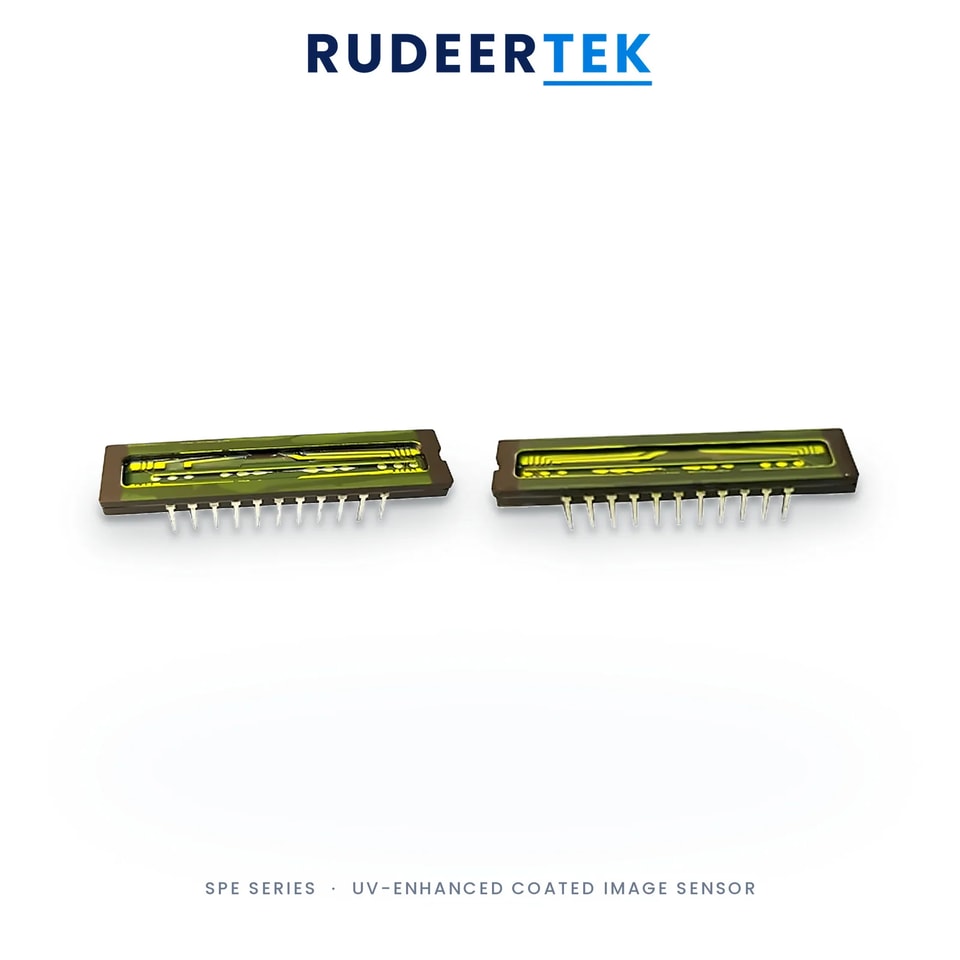
SPE Series UV-Enhanced Coated Image Sensor
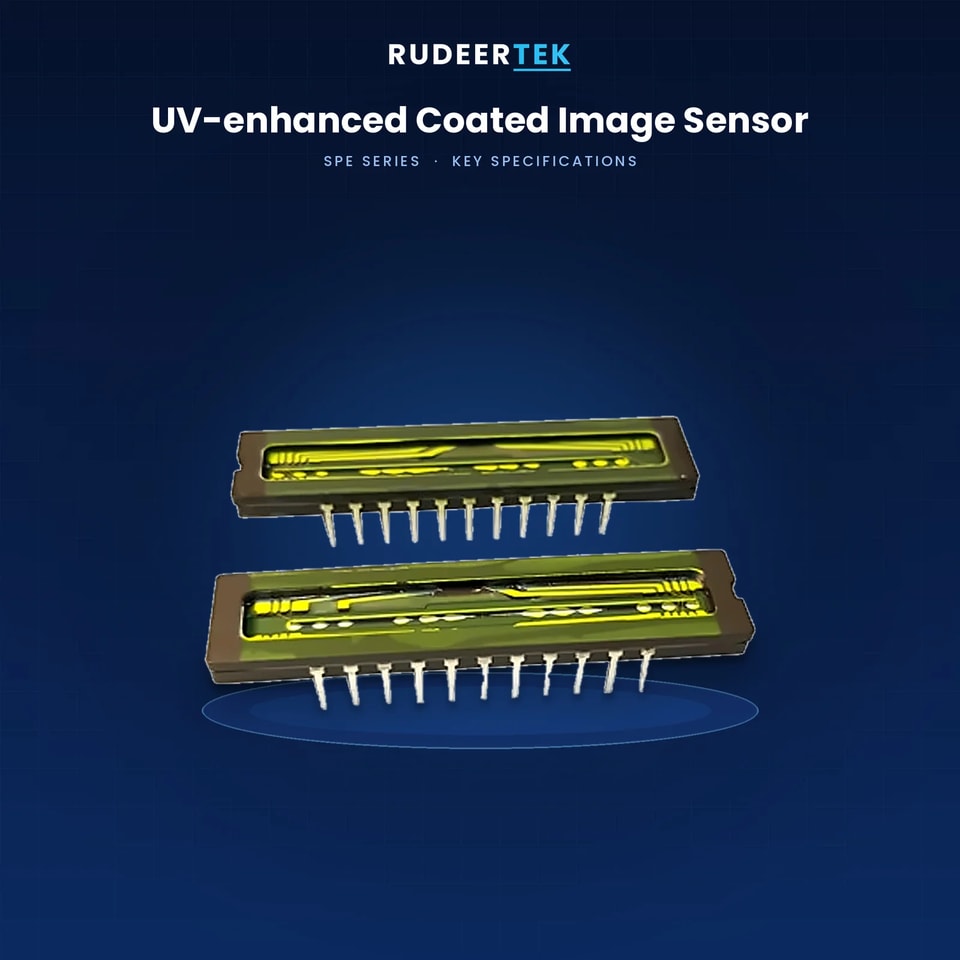
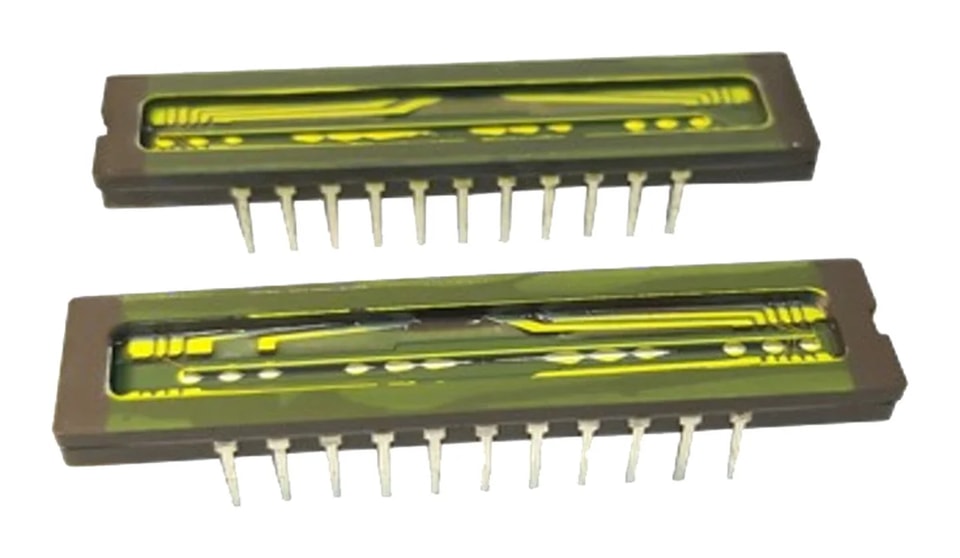
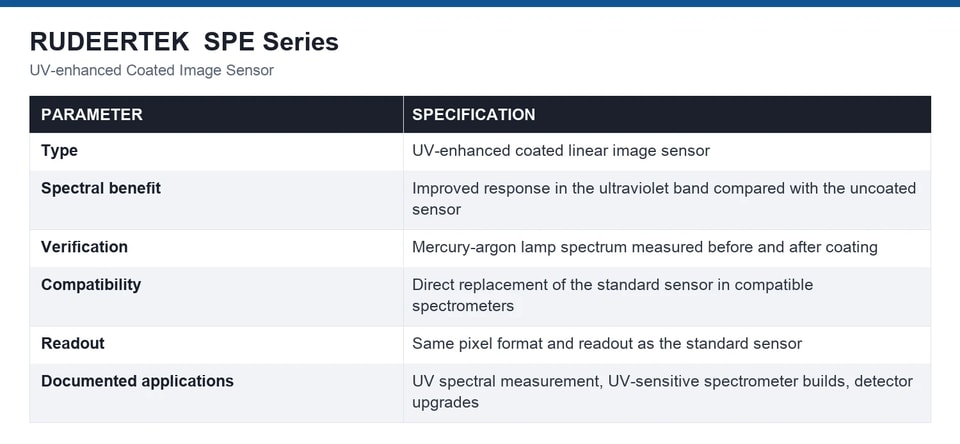
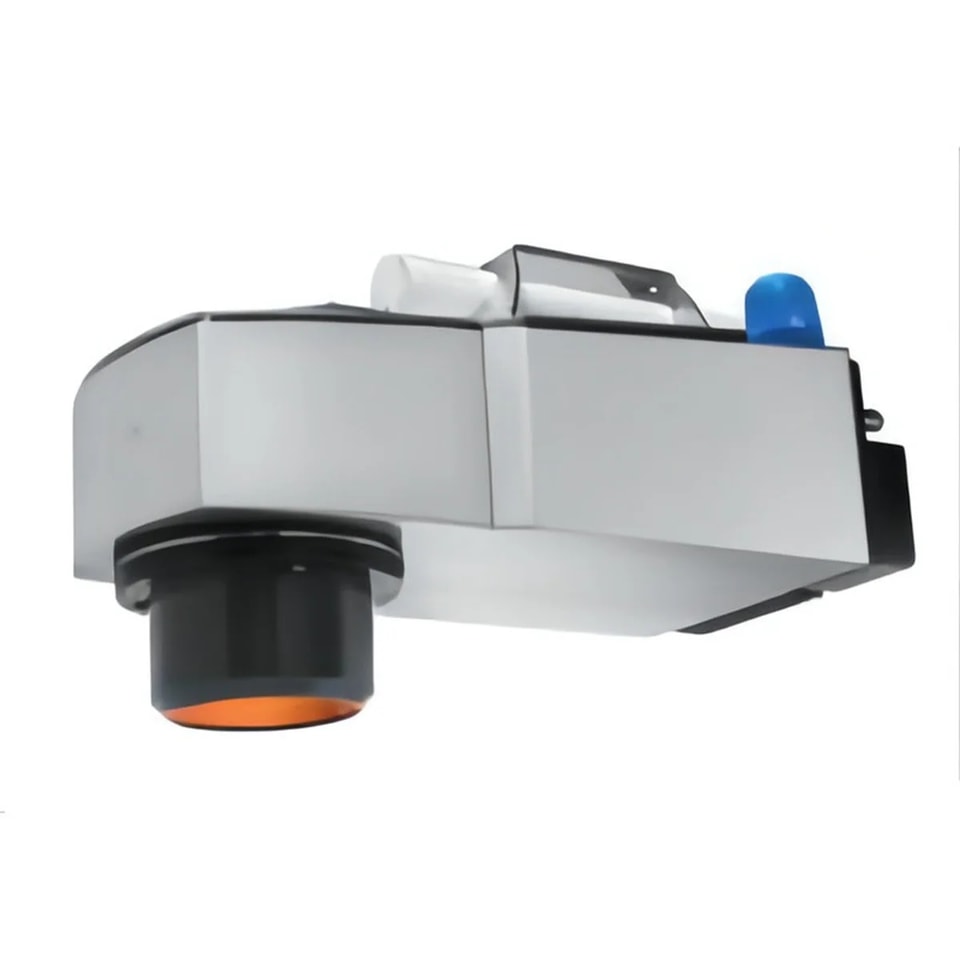
The SPE series is a UV-enhanced coated image sensor for spectrometers. A standard silicon sensor loses most of its response below about 350 nm, because the polysilicon gate structure absorbs the ultraviolet before it reaches the silicon; the SPE treatment applies a UV-transparent conversion coating over the array, which absorbs the short-wavelength photons and re-emits them into the silicon below. The result is a sensor that keeps the visible response of the standard part while gaining usable sensitivity in the ultraviolet, which is what makes a compact CCD spectrometer practical for 200 to 350 nm work. The manufacturer verifies the effect directly, by comparing the mercury-argon lamp spectrum of the coated sensor with the uncoated one, and the part is a direct replacement for the standard sensor in compatible spectrometers.
· UV-transparent conversion coating raises the sensor response in the ultraviolet without changing the visible performance.
· Direct replacement for the standard sensor in compatible spectrometers, so an existing instrument can be upgraded.
· Verified against a mercury-argon lamp spectrum before and after coating, so the improvement is measured and not claimed.
· Recovers the 200 to 350 nm region that a standard polysilicon-gate sensor absorbs before it reaches the silicon.
· Keeps the same pixel format and readout, so the acquisition electronics and the software do not change.
· Suits UV absorbance at 254 nm, protein measurement at 260 and 280 nm, and UV curing lamp inspection.
The SPE series is used in ultraviolet spectral measurement, in UV-sensitive spectrometer builds, and as a detector upgrade for existing spectrometers that are weak below 350 nm. Typical duties are UV absorbance and water analysis at 254 nm, protein and nucleic acid measurement at 260 and 280 nm, ozone and SO2 monitoring, UV curing lamp inspection, and HPLC detection in the short-wavelength ultraviolet.
How does a coating improve UV response?
A standard front-illuminated sensor has a polysilicon gate structure that absorbs ultraviolet light before it reaches the silicon. The conversion coating absorbs the UV photon and re-emits a longer-wavelength photon into the silicon underneath, so light that was lost is partly recovered, while the visible response stays as it was.
How much improvement is there?
The improvement is a response curve, not a single number, and it is largest at the short-wavelength end where the uncoated sensor is weakest. The manufacturer verifies it by measuring the mercury-argon spectrum of the same sensor before and after coating, which is the honest way to state the gain: ask for that comparison for your model.
Can I fit it to my existing spectrometer?
If your instrument uses the same sensor package and pixel format, the SPE part is a direct replacement. Confirm the package, the pixel count and the readout before ordering, because the coating does not change the electrical interface.
Does it affect the visible range?
The visible response is essentially unchanged, so the instrument does not lose performance where it already worked. That is the point of a conversion coating rather than a different sensor material.
What about long-term stability?
A conversion coating is applied at wafer level and is stable in normal service, but it is a UV-exposed part: for a lamp-based instrument running continuously, the sensor and the coating see the same UV dose as the sample path. Re-run the reference scan on the schedule your method specifies.
Solutions & Support
We go the extra mile to thoroughly analyze each project and deliver tailored business solutions that meet your specific requirements.
Contact US
×