
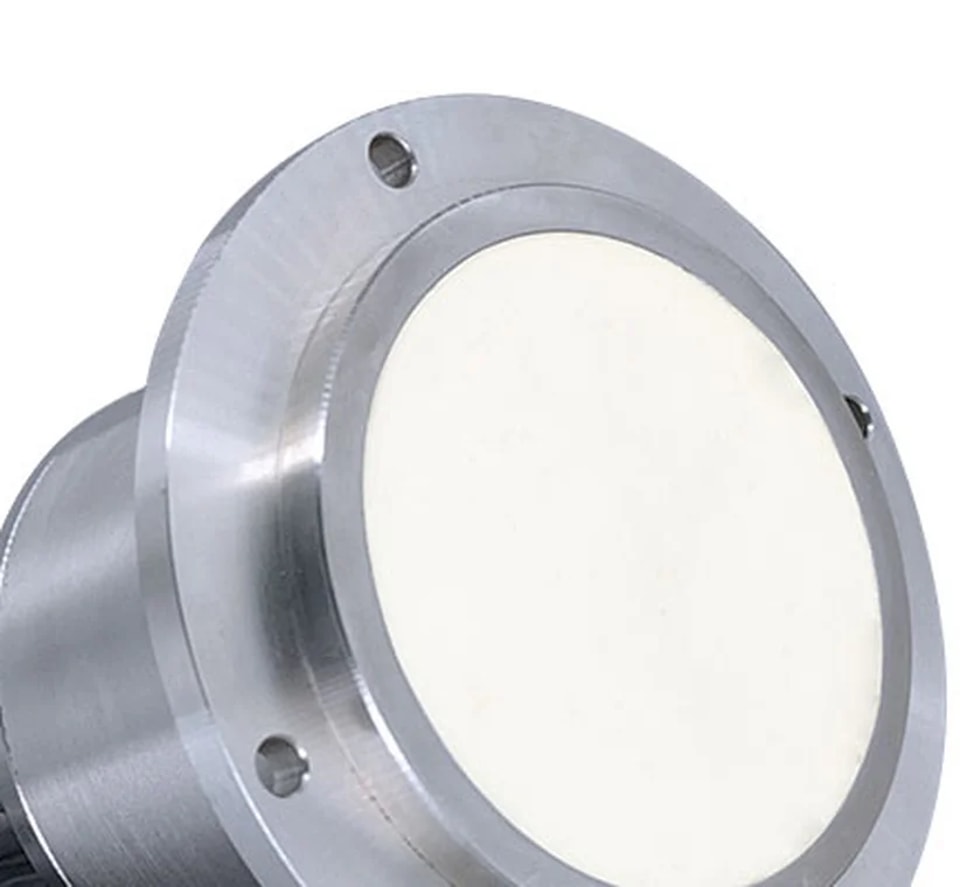
HV200 Online High-Frequency Radar Moisture Analyzer
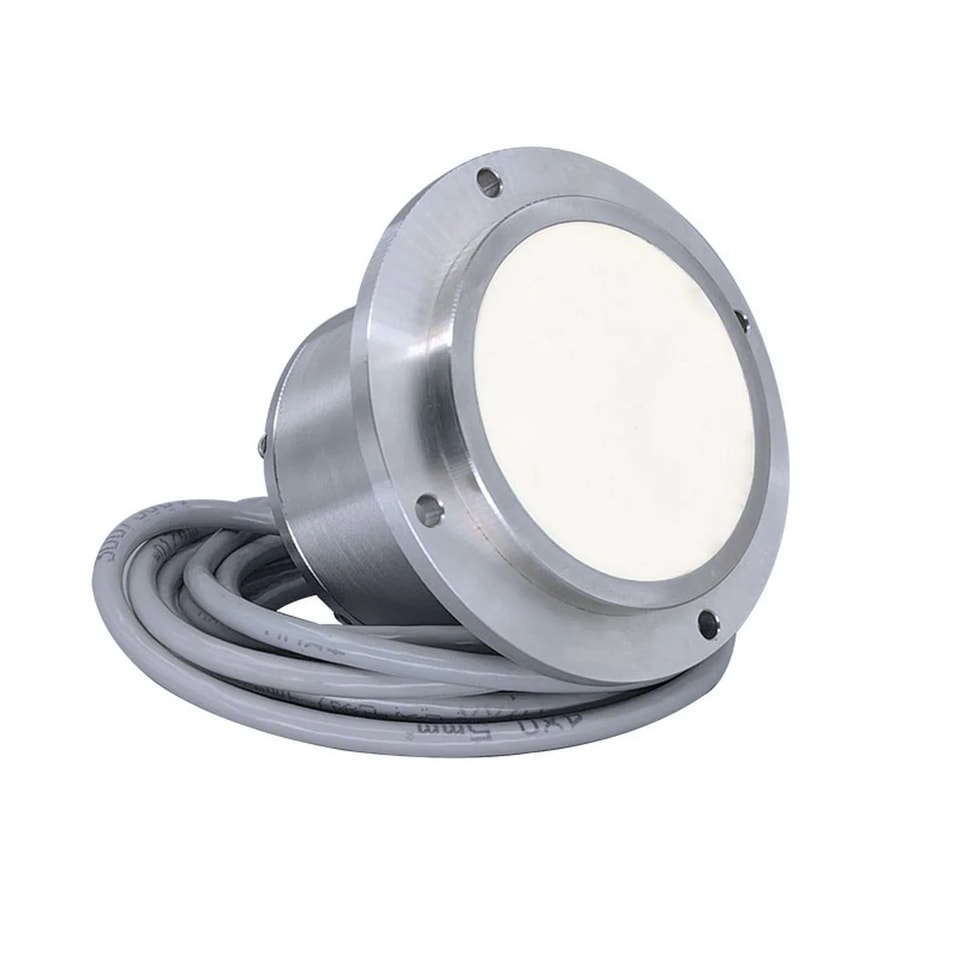
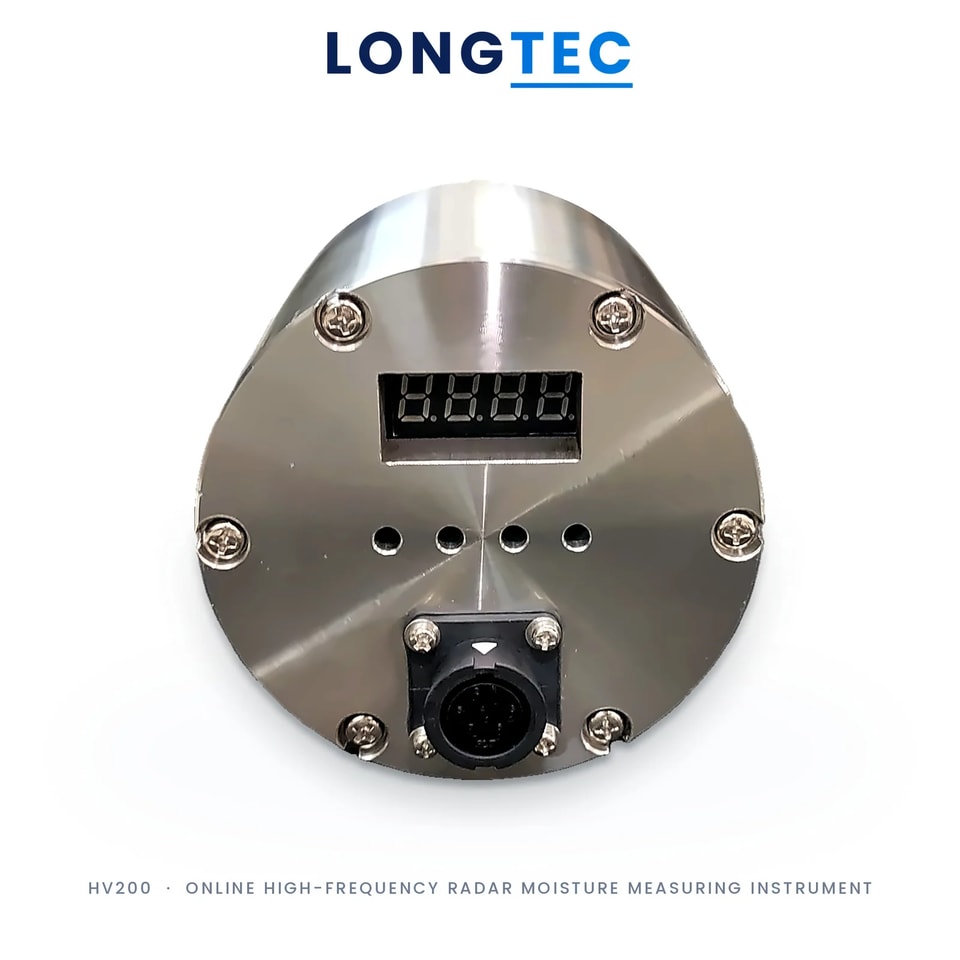
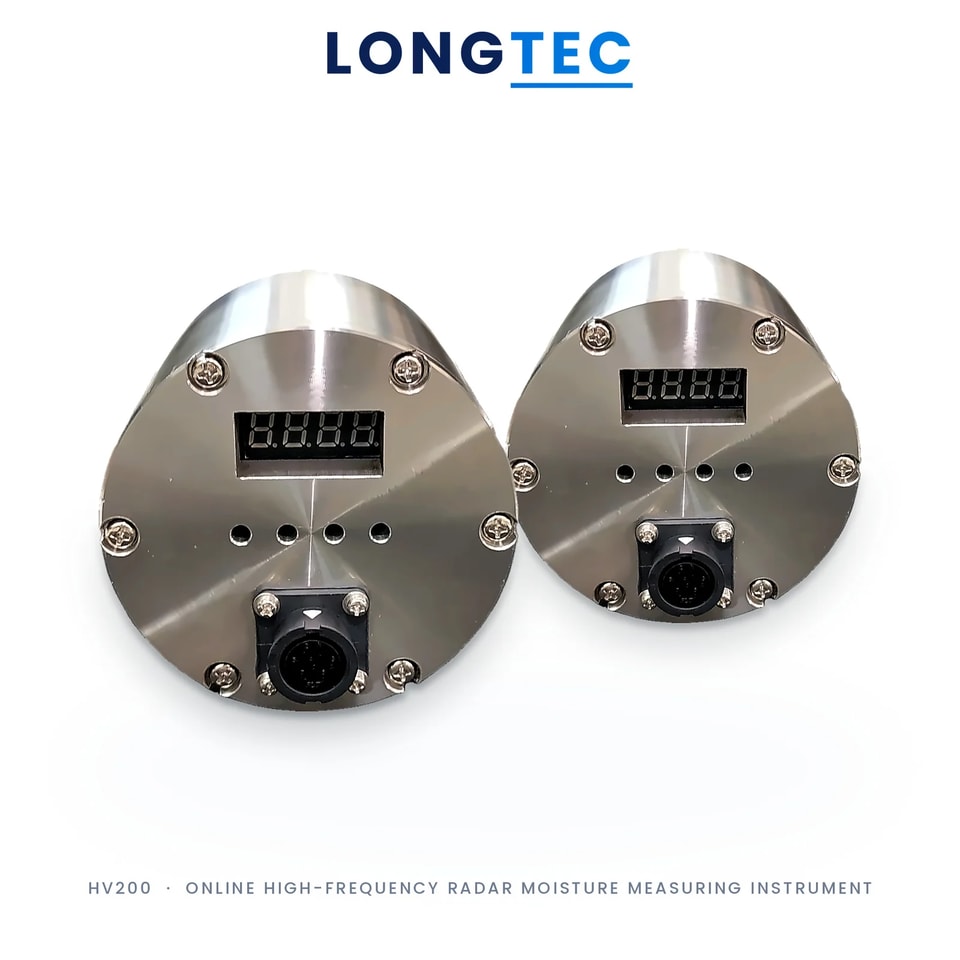
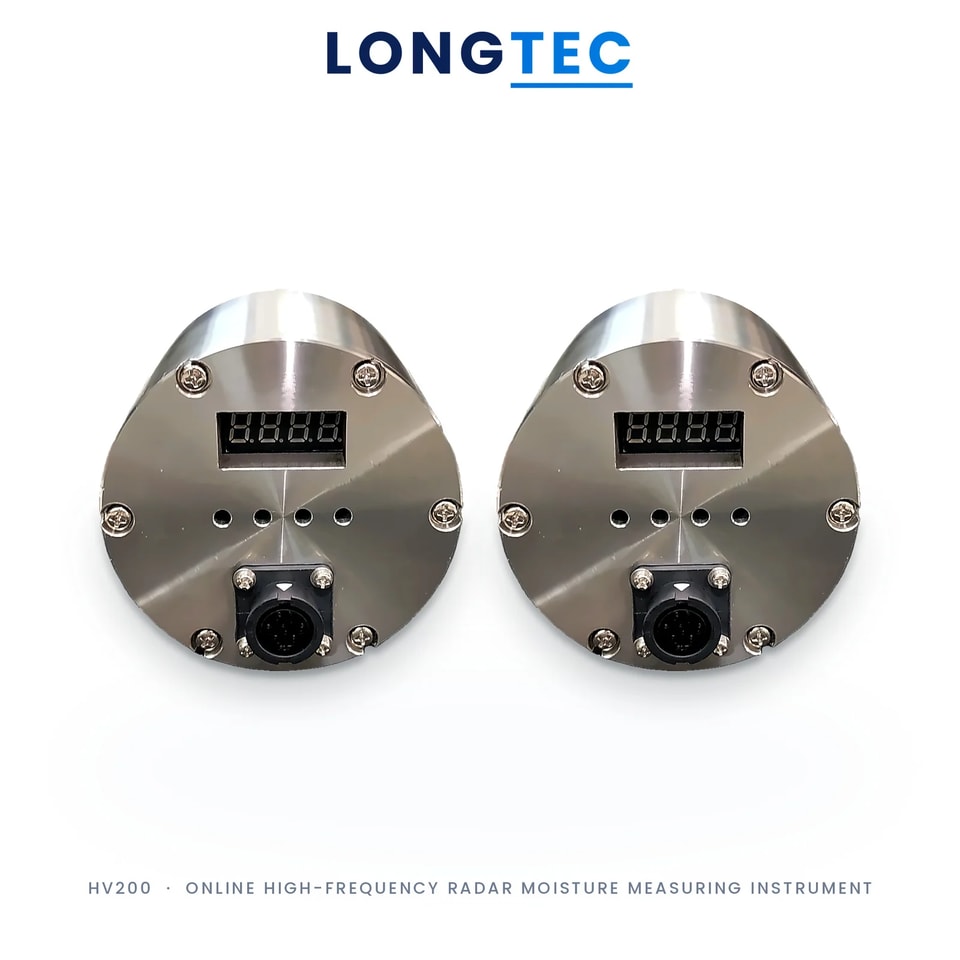
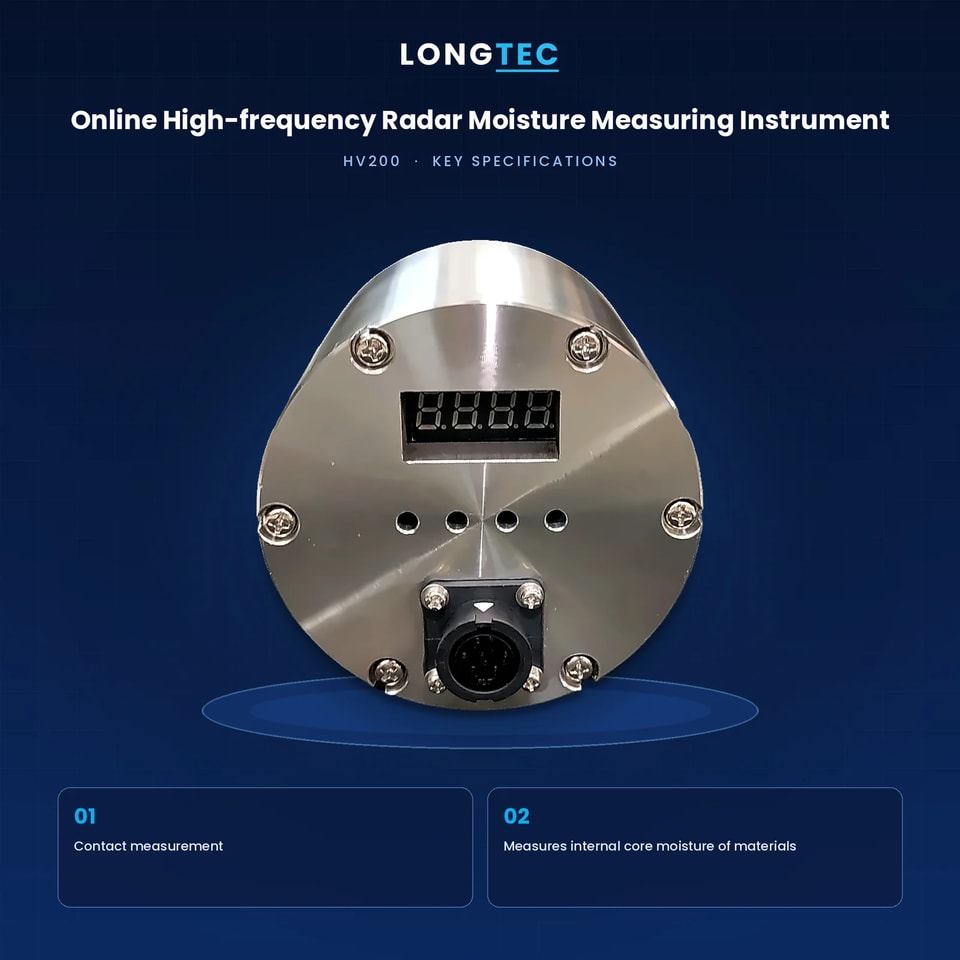
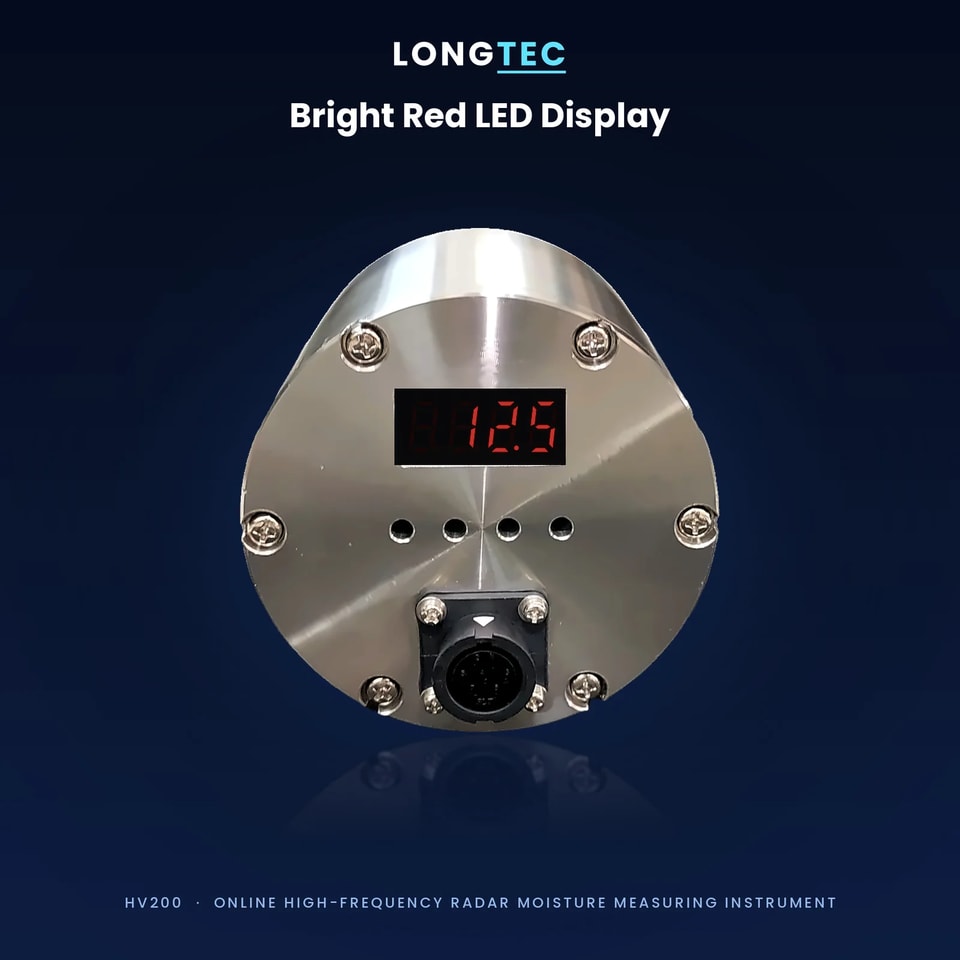
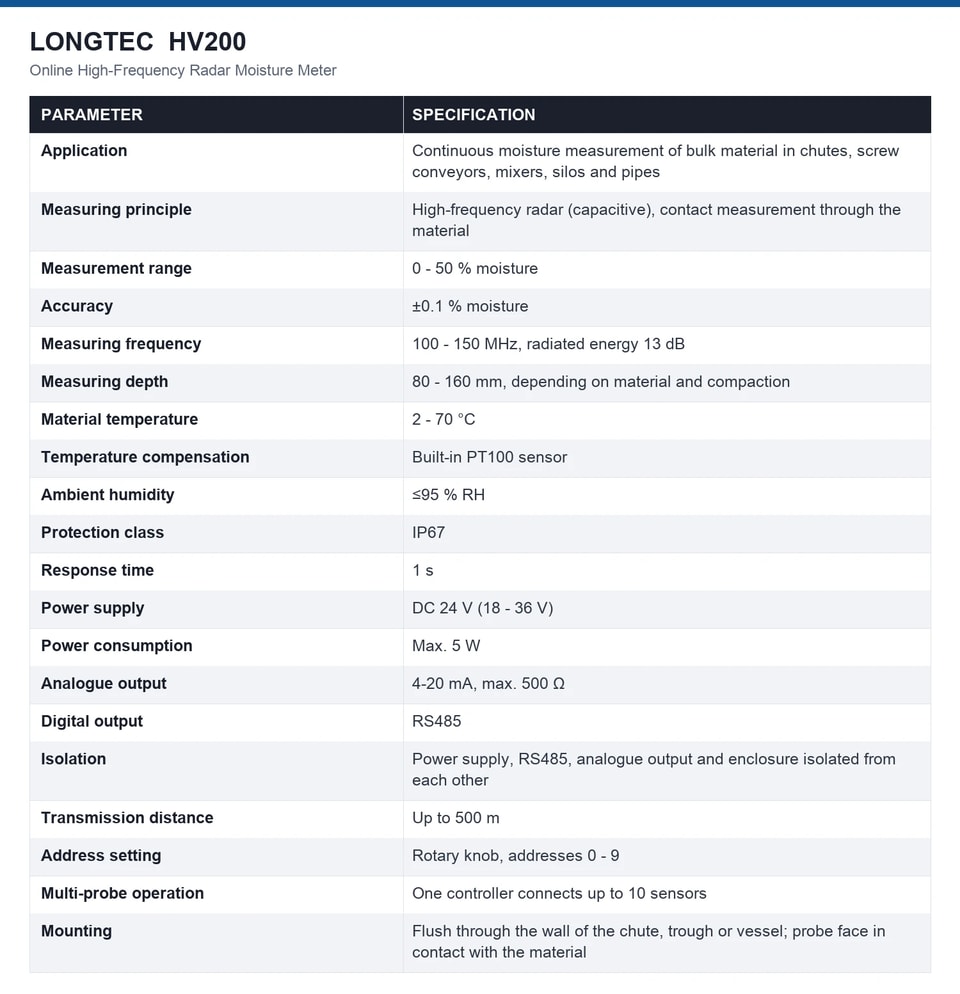
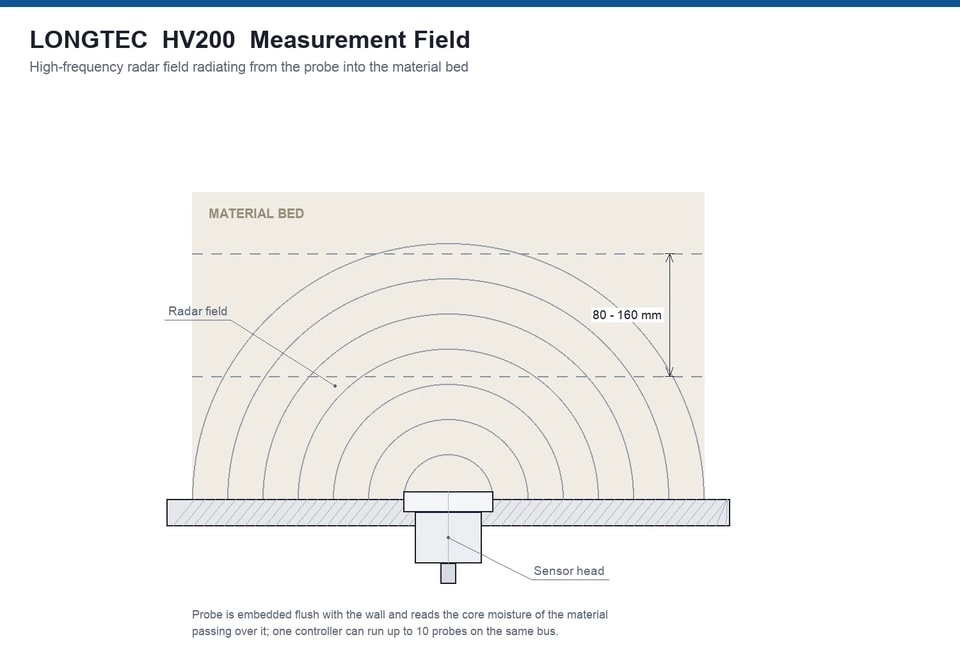
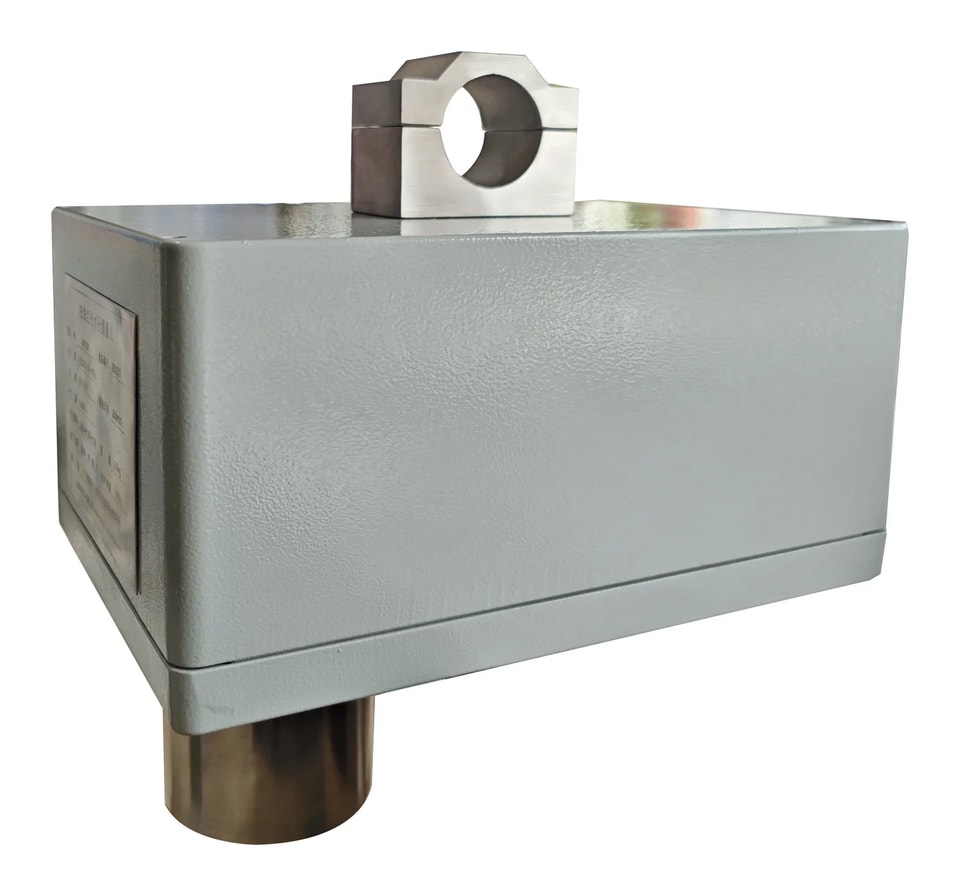
The LONGTEC HV200 is a flush-mounted probe that reads moisture from inside the material, not from its surface. It radiates a 100-150 MHz field into the product and measures how the dielectric properties of the material change with water content, reaching a measuring depth of 80-160 mm depending on the material and how tightly it is packed. That depth is what separates it from an infrared gauge: a wet skin on the outside of a lump, or a dry crust on a briquette, does not move the reading, because most of the field is measuring the core. The probe is a sealed stainless head that mounts through the wall of a chute, a screw conveyor trough, a mixer or a silo, so material flows over the sensing face and keeps it clean. Colour, particle size, dust and steam do not affect the result, and a built-in PT100 compensates the reading for material temperature between 2 and 70 °C. One controller can run up to 10 probes on a single bus, with the address set by a knob, which suits a plant where moisture is measured at several points along the same line. Output is 4-20 mA with RS485, and power, communication, analogue output and enclosure are isolated from each other.
· Reads 80-160 mm into the material, so surface wetness or a dry crust does not distort the moisture value.
· 100-150 MHz radar field is unaffected by material colour, particle size, dust or steam on site.
· Flush stainless probe mounts through the wall of a chute, trough, mixer or silo and is cleaned by the material flow.
· IP67 sealed head with DC 24 V supply at 5 W, wired on a four-wire loop with 4-20 mA and RS485 output.
· One controller runs up to 10 probes on the same bus, with the address selected by a rotary knob.
· Built-in PT100 temperature compensation covers material from 2 to 70 °C, with ±0.1 % moisture resolution.
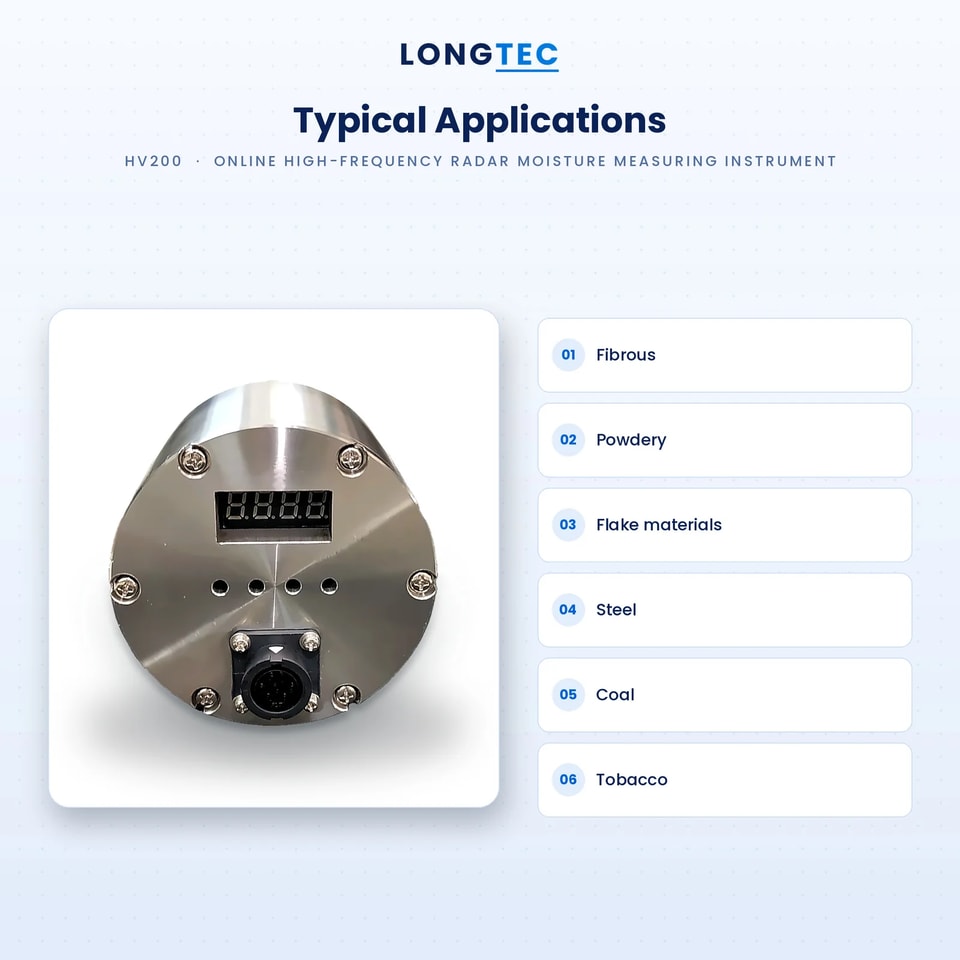
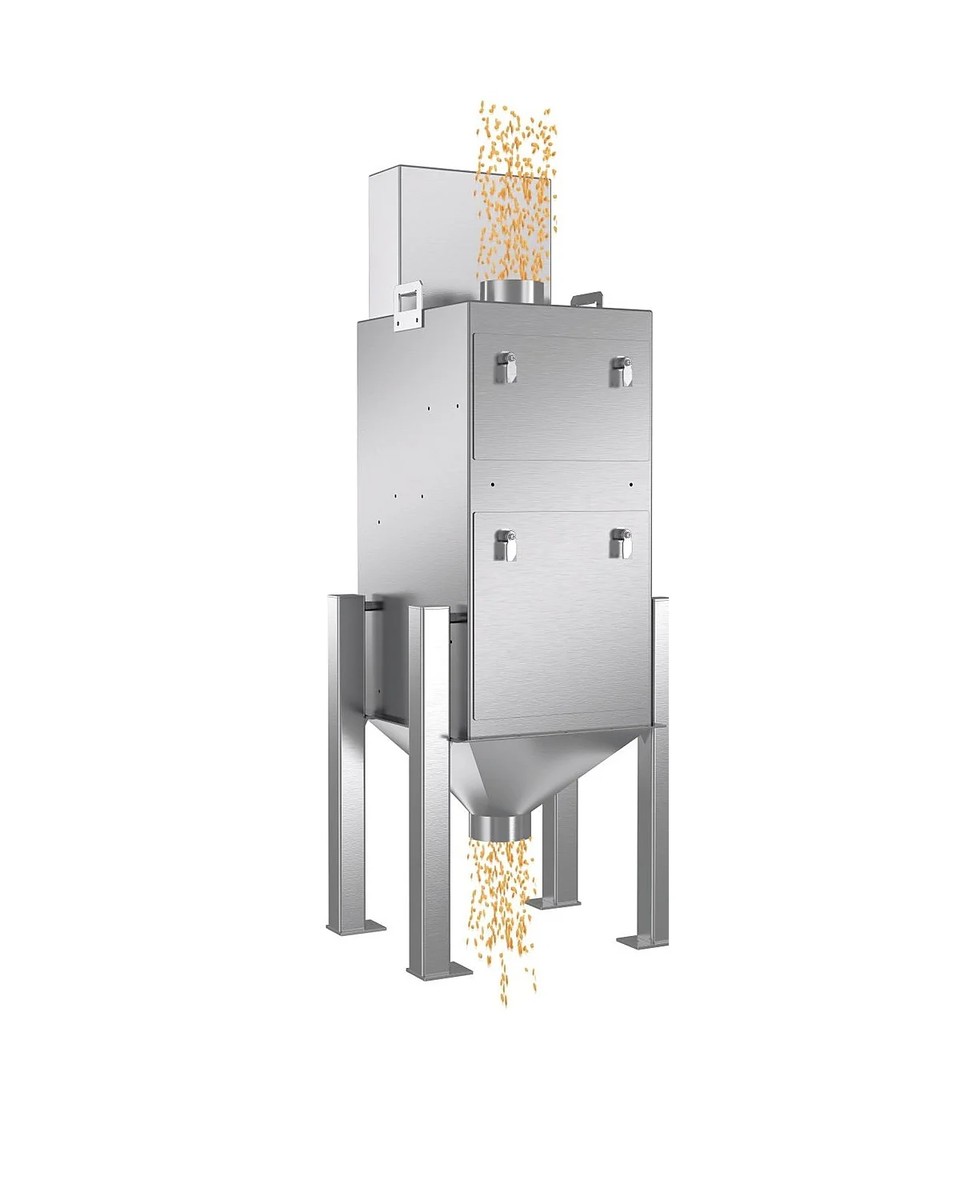
The HV200 is used where the moisture of a bulk material has to be controlled continuously inside the process: coal and coke on belts and in bunkers, steel and sintering raw mix, tobacco, paper pulp and wood fibre, grain, feed and food powders, chemicals and minerals, and construction materials such as sand and aggregate. It fits belt conveyors, screw feeders, mixers and blenders, silos, hoppers and gravity pipes, and the 4-20 mA signal can drive water addition, dryer setpoints or blending ratios directly.
How is this different from an infrared moisture meter?
The HV200 measures inside the material to a depth of 80-160 mm, while an infrared gauge only sees the surface layer. That makes the HV200 the better choice for lumpy, coarse or variable material, and for anything with a dry skin or surface condensation.
Will dust, steam or colour affect the reading?
No. The measurement is a dielectric one at 100-150 MHz, so colour, particle size, dust in the air and steam have no direct effect. Temperature does affect the dielectric response, which is why the probe carries a PT100 and compensates automatically.
Where is the probe mounted?
Flush with the wall of a chute, a screw conveyor trough, a mixer or a silo, with the sensing face exposed to the flowing material. The material passing over the face keeps it clean, and the probe is normally fitted on a welded boss or a flange plate.
Can I use several probes on one line?
Yes. One controller handles up to 10 probes on the same RS485 bus, and each probe address is set with a rotary knob from 0 to 9. That is how a plant covers several measuring points, for example before and after a dryer, without buying a separate controller for each one.
What does the control room need to provide?
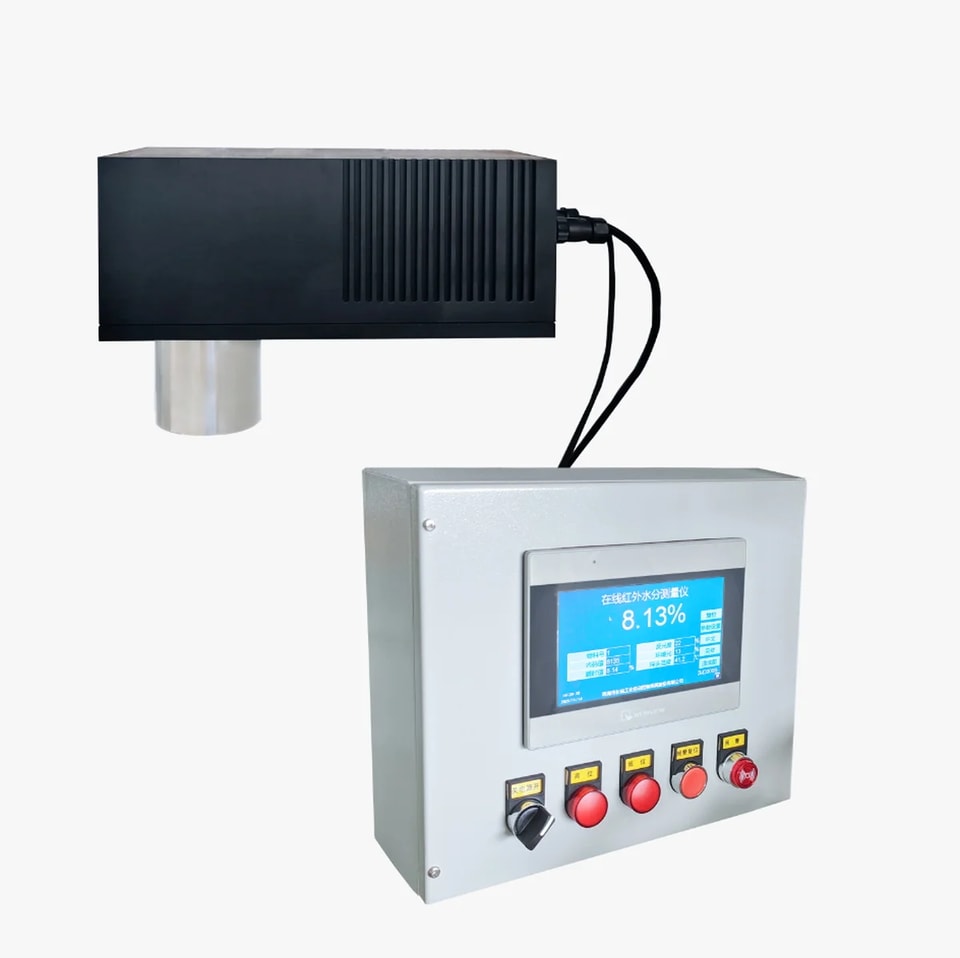
A 24 V DC supply and a 4-20 mA analogue input, or an RS485 Modbus link. Power, communication, analogue output and the housing are isolated from each other, so the loop can be earthed at the control cabinet without creating a ground loop at the probe.
Solutions & Support
We go the extra mile to thoroughly analyze each project and deliver tailored business solutions that meet your specific requirements.
Contact US
×