
SLAK Portable Miniature Spectrometer
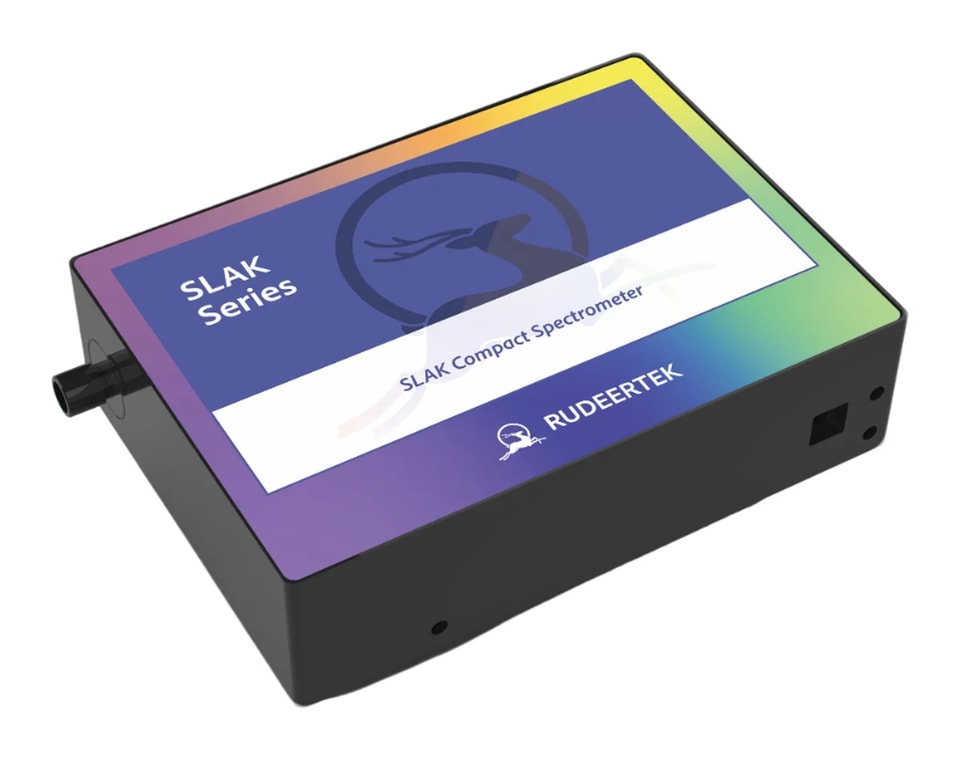
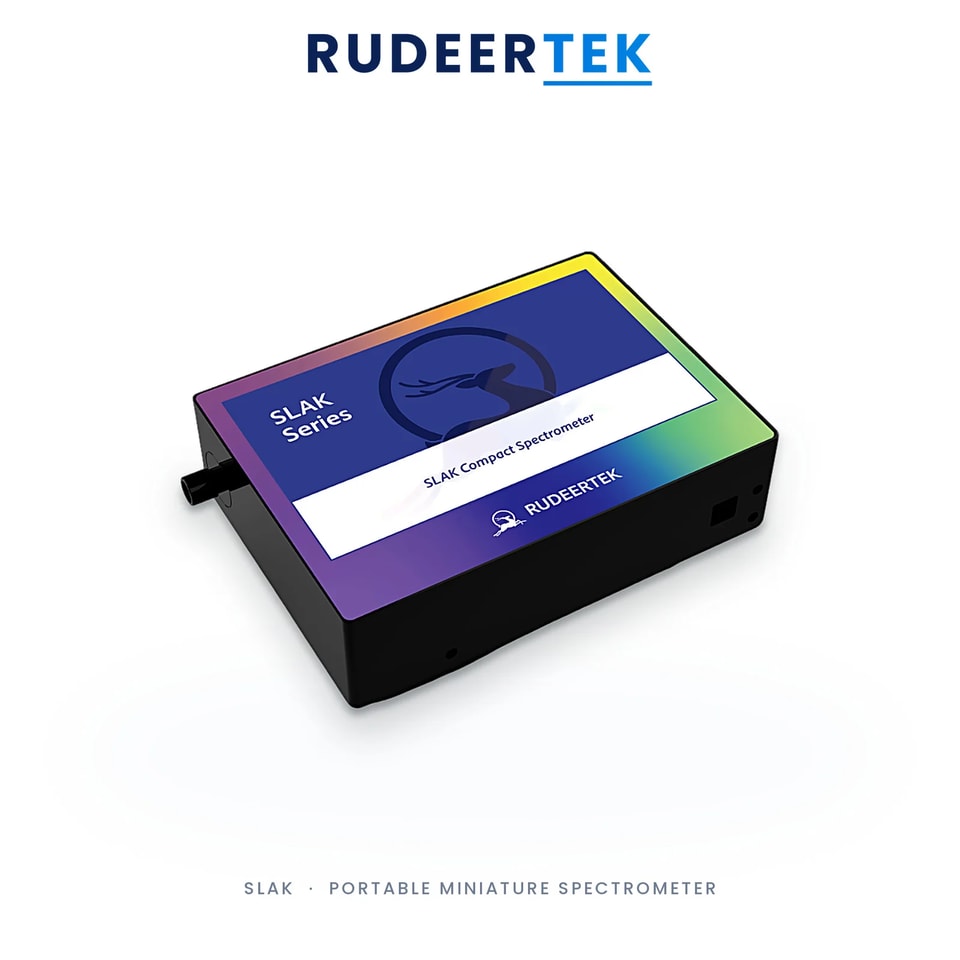
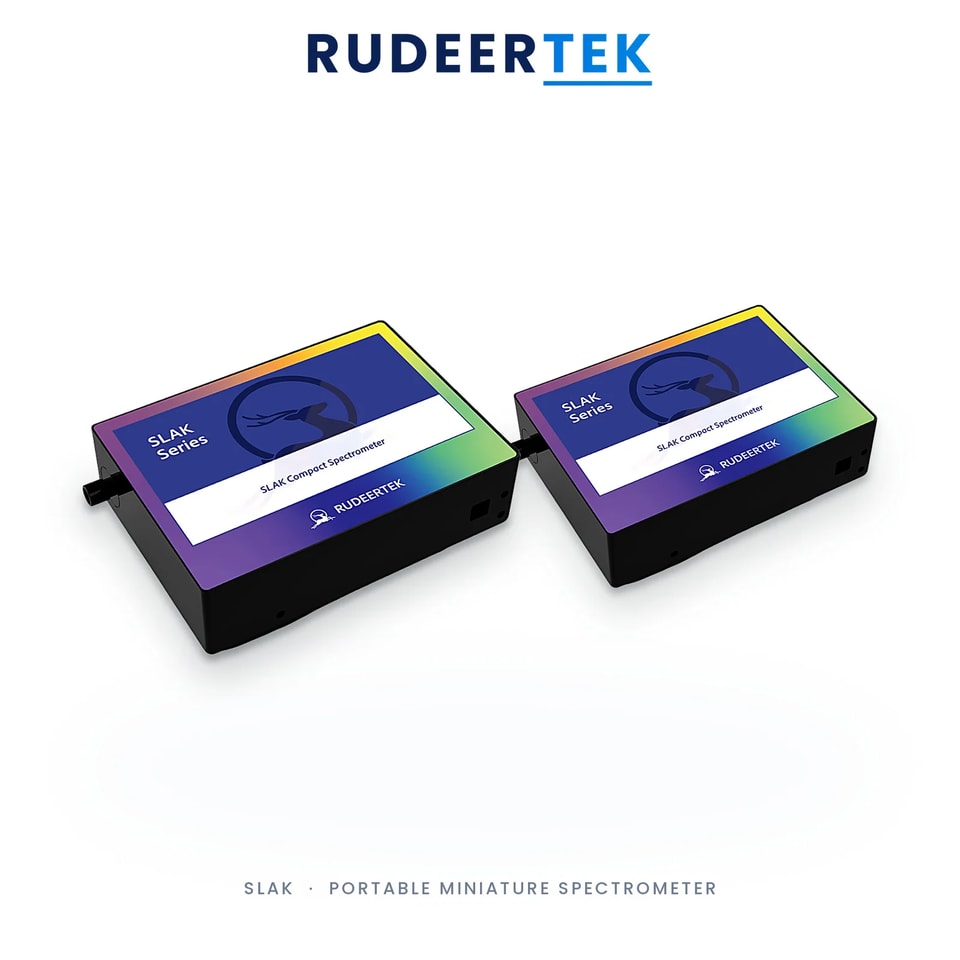
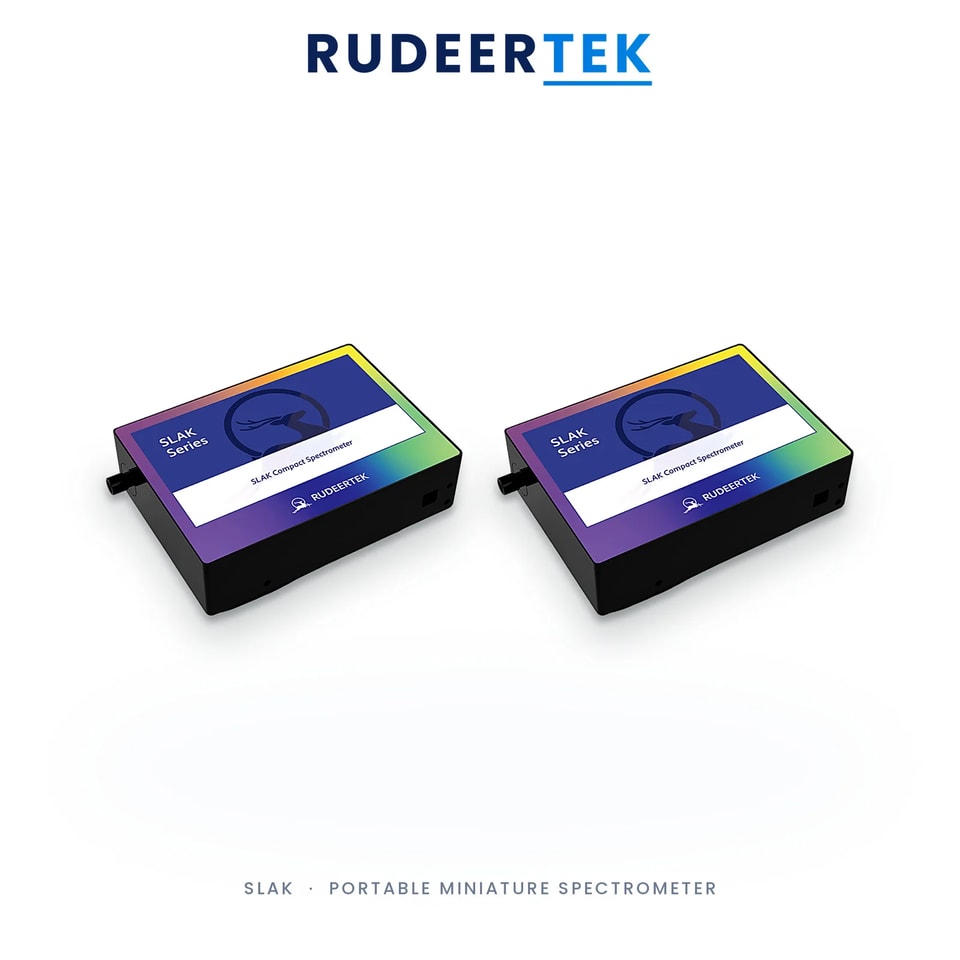
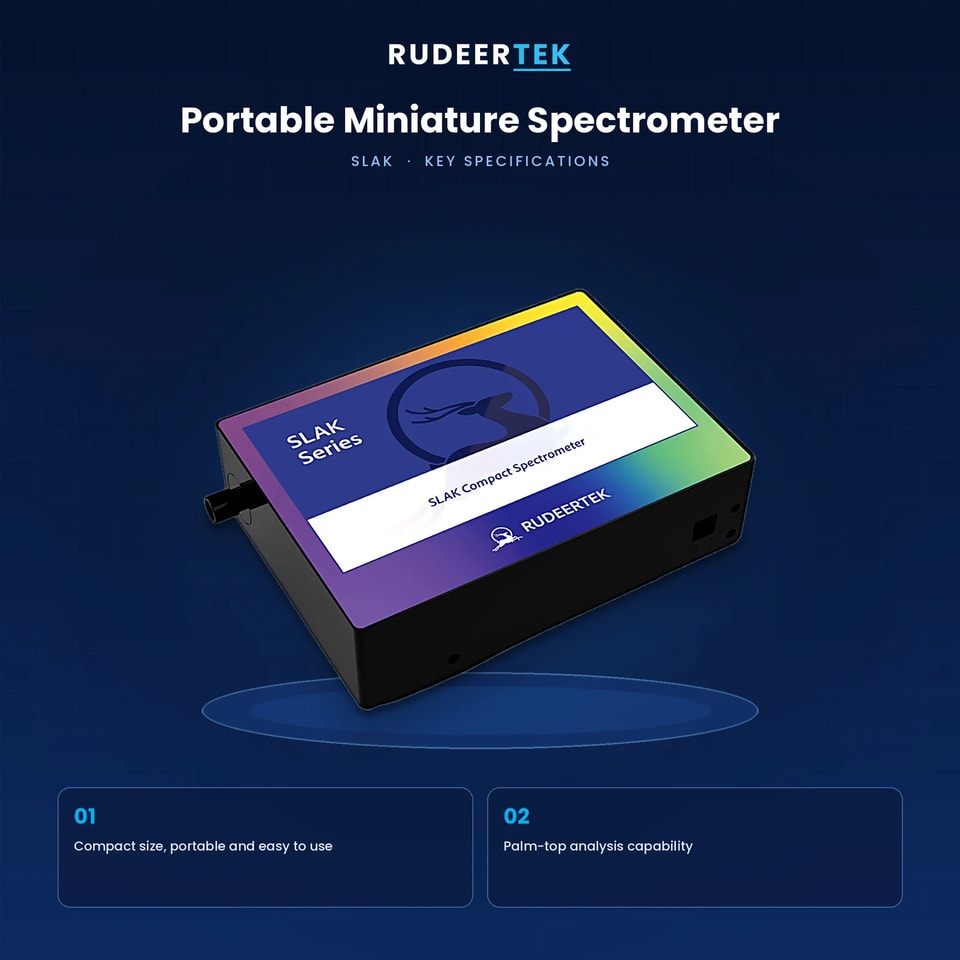
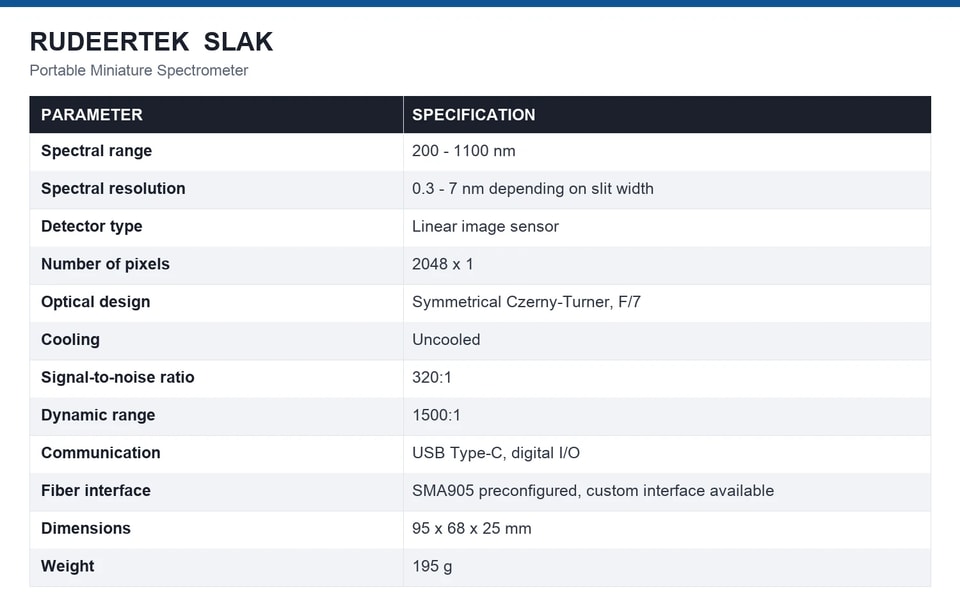
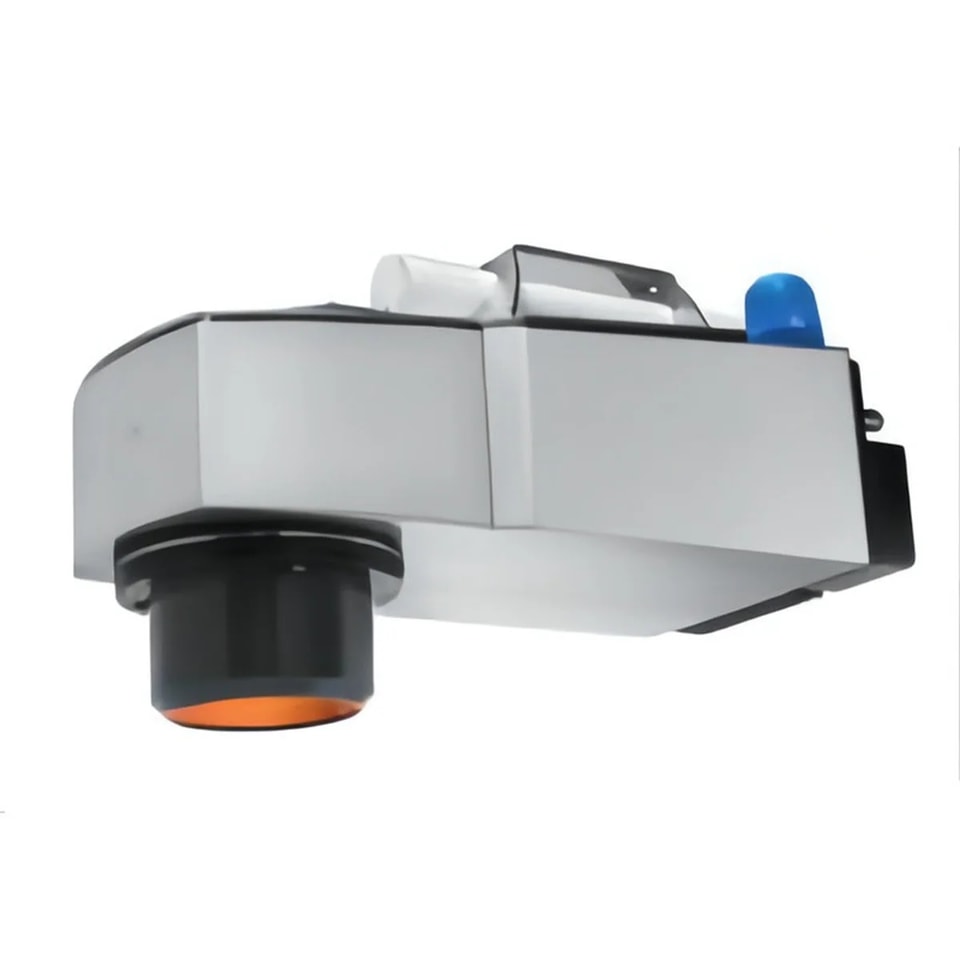
The SLAK is a portable miniature spectrometer in a 95 x 68 x 25 mm housing that weighs 195 g, small enough to carry in a pocket and robust enough to use in the field. Inside is a 2048-pixel linear image sensor behind a symmetrical Czerny-Turner bench at F/7, covering 200 to 1100 nm with a spectral resolution of 0.3 to 7 nm. The F/7 aperture is a deliberate choice: it gives a longer depth of focus and less sensitivity to fiber alignment than a fast bench, which is what a handheld instrument needs when the fiber is plugged in by hand. The signal-to-noise ratio is 320:1, the dynamic range 1500:1, and the connection is USB Type-C with digital I/O, so it runs from the same port as a phone or a laptop. The fiber interface is a preconfigured SMA905, and a custom interface can be specified.
· 195 g and 95 x 68 x 25 mm, small enough to carry and to build into a handheld instrument.
· 200 to 1100 nm coverage with a 2048-pixel sensor and 0.3 to 7 nm resolution, for UV, visible and near-infrared work.
· F/7 symmetrical Czerny-Turner bench gives a longer depth of focus and tolerance to fiber alignment than a fast bench.
· USB Type-C connection with digital I/O, so it runs from a laptop or a phone port without a separate supply.
· 320:1 signal-to-noise ratio and 1500:1 dynamic range, enough for absorbance and colour measurement.
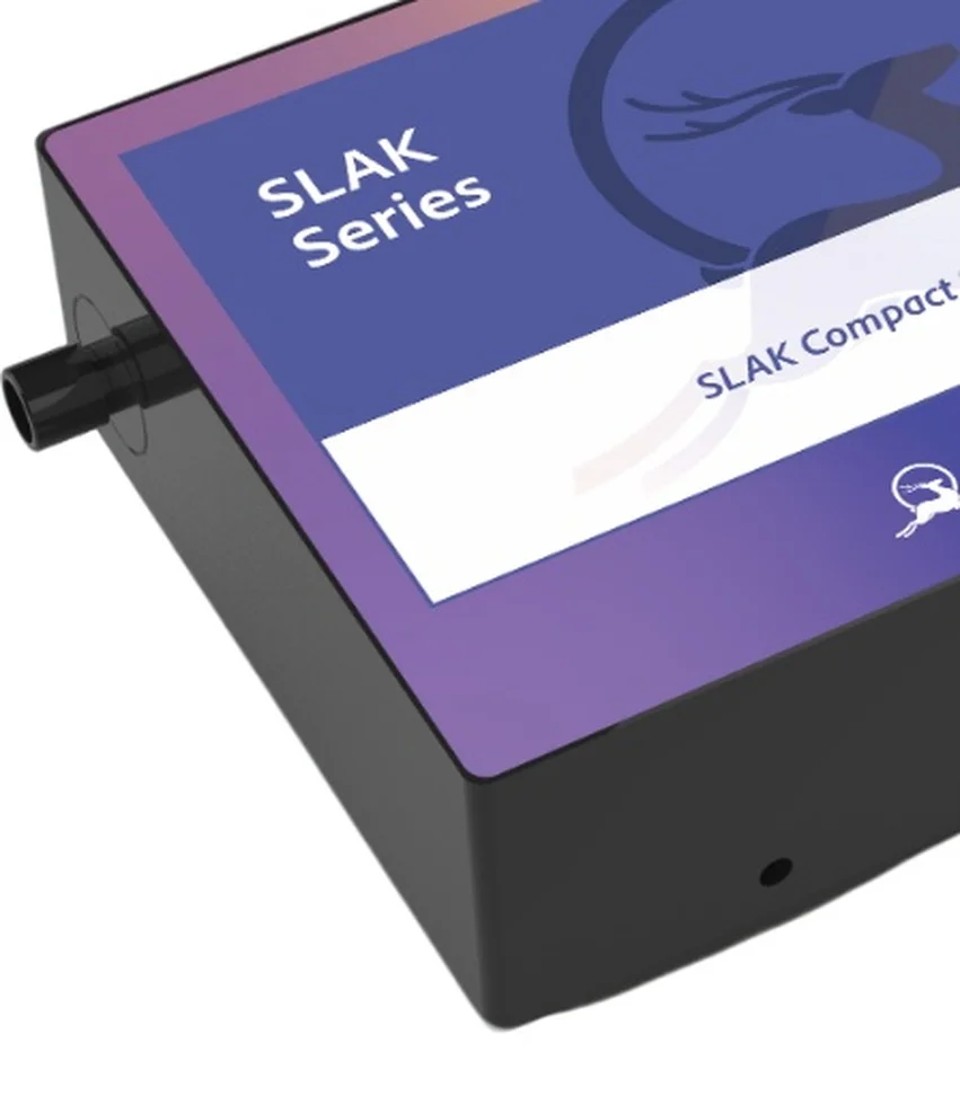
· Preconfigured SMA905 fiber interface, with a custom interface available for OEM integration.
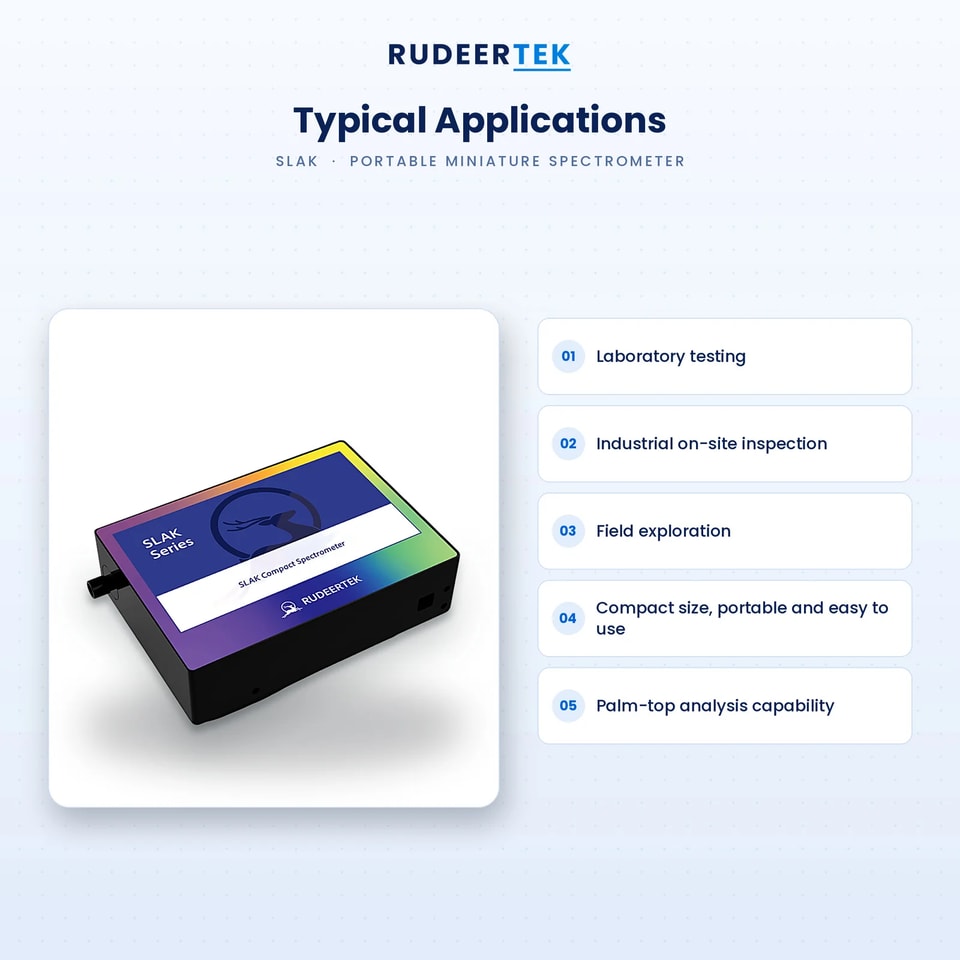
The SLAK is used for field and on-the-spot measurement: LED and lamp spectral testing, colour and display inspection, water quality screening with test strips or reagents, agricultural and food checks, UV and visible transmission of glass and film, counterfeit and material verification, and teaching demonstrations. Because it runs from USB Type-C and weighs 195 g, it is also used inside portable instruments and hand-held analysers where a full-size spectrometer would not fit.
Is 195 g really usable in the field?
Yes. The housing is a solid module of 95 x 68 x 25 mm, and it is powered and read through USB Type-C, so a laptop or a tablet is the whole system. There is no separate controller box and no external supply.
Why F/7 instead of F/4 like the laboratory models?
A slower aperture gives a longer depth of focus and much more tolerance to fiber alignment and to a hand-held probe. In a portable instrument that tolerance is worth more than the light throughput, because the sample interface is never as rigid as a laboratory bench.
What resolution do I get?
0.3 to 7 nm depending on the slit, the same trade-off as any Czerny-Turner bench: narrow slit for resolution, wide slit for light. For LED and colour measurement a 50 um slit is the usual choice.
Can it be built into my own product?
Yes. The module is small, runs from USB Type-C and has digital I/O, and the SMA905 interface can be replaced with a custom one. That is what makes it usable as the spectral engine of a handheld analyser.
Does it need a computer to work?
It needs a host with a USB Type-C port to power it and to read the data, which can be a laptop, a tablet or an embedded board. The acquisition software runs on the host, not inside the module.
Solutions & Support
We go the extra mile to thoroughly analyze each project and deliver tailored business solutions that meet your specific requirements.
Contact US
×