

MCS Multi-Channel Spectrometer
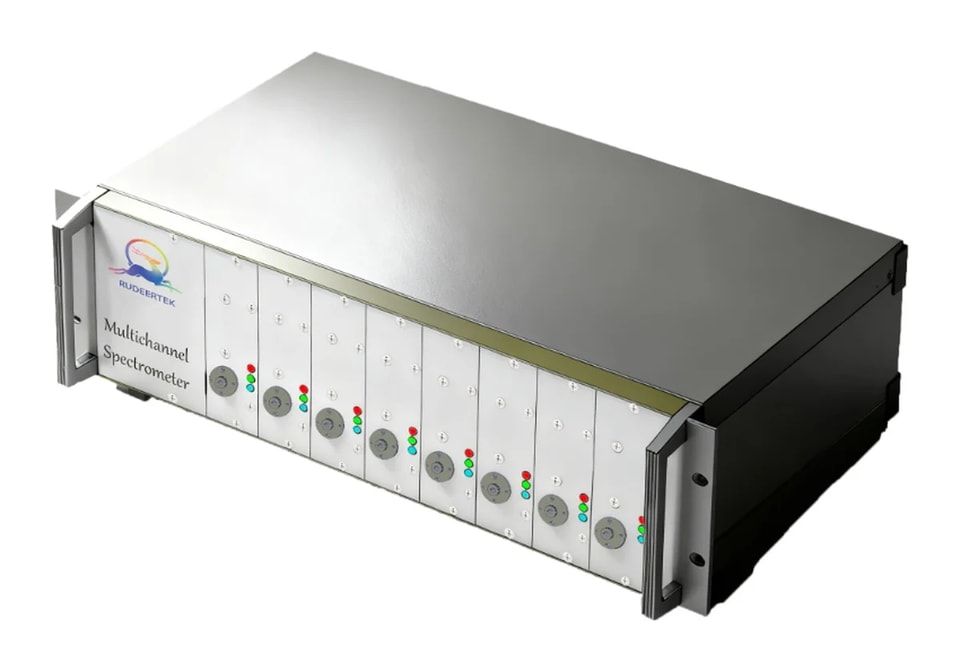
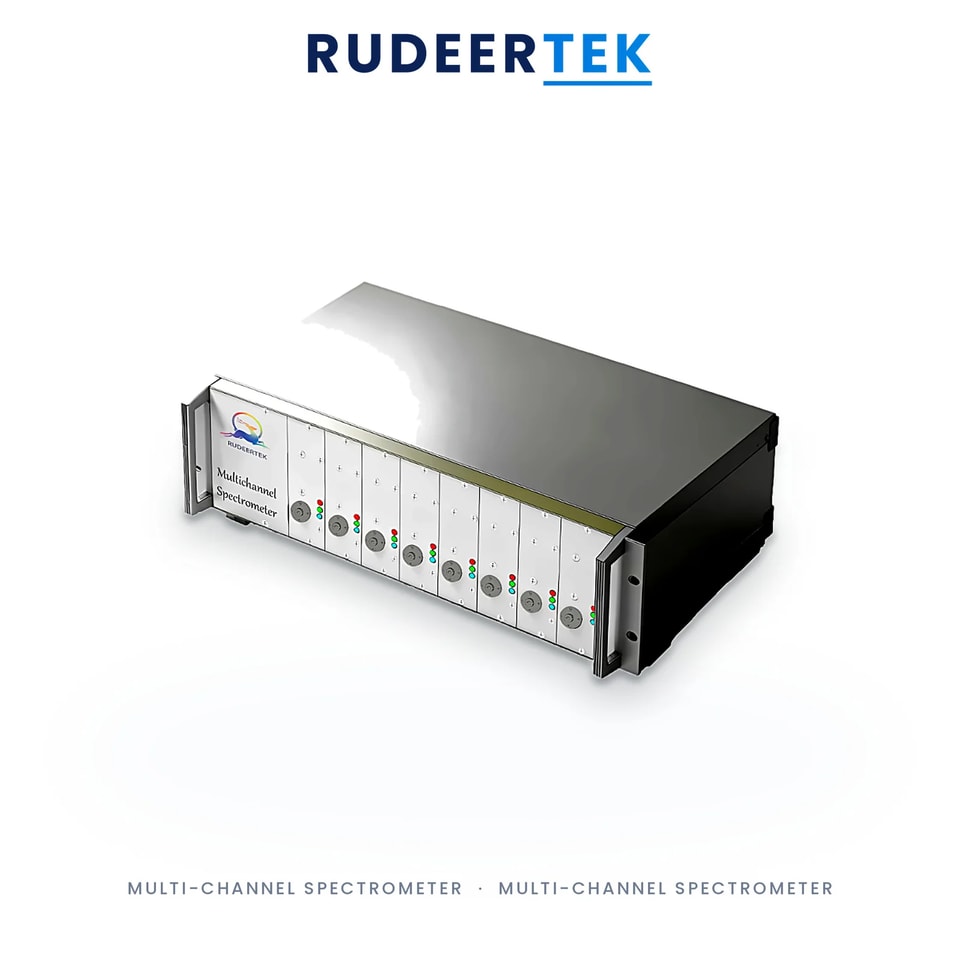
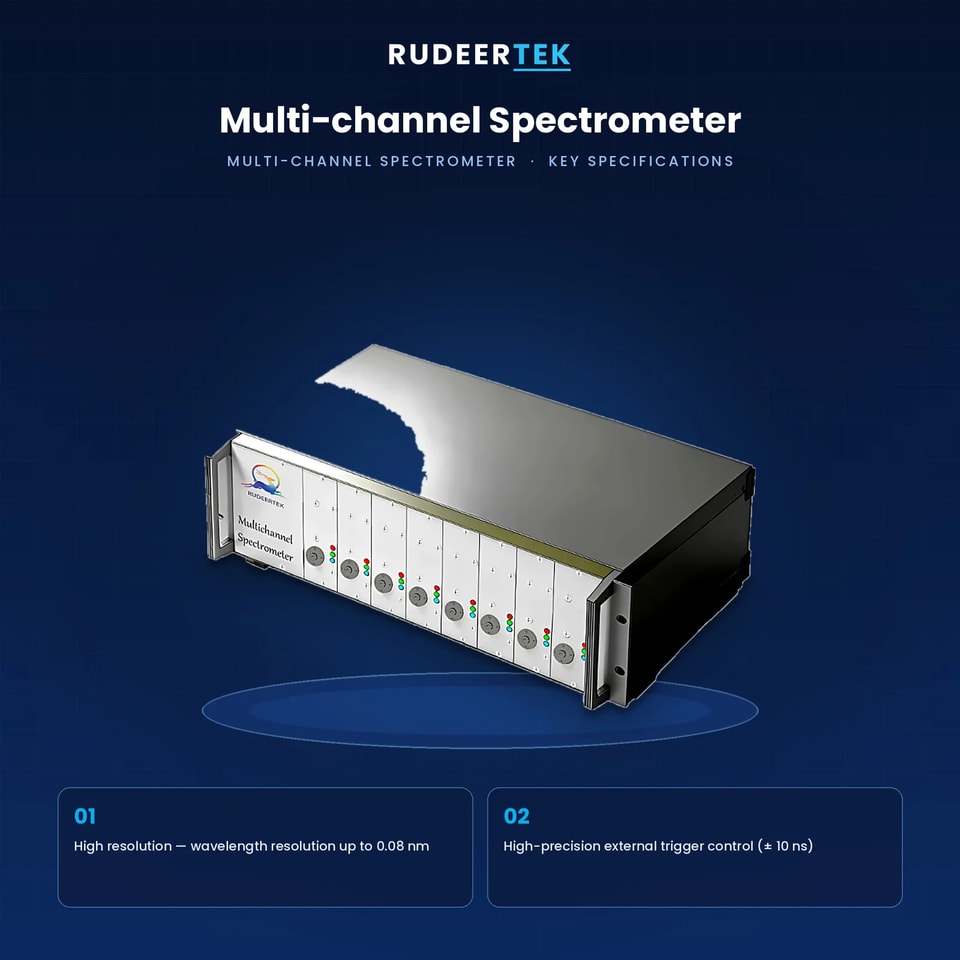
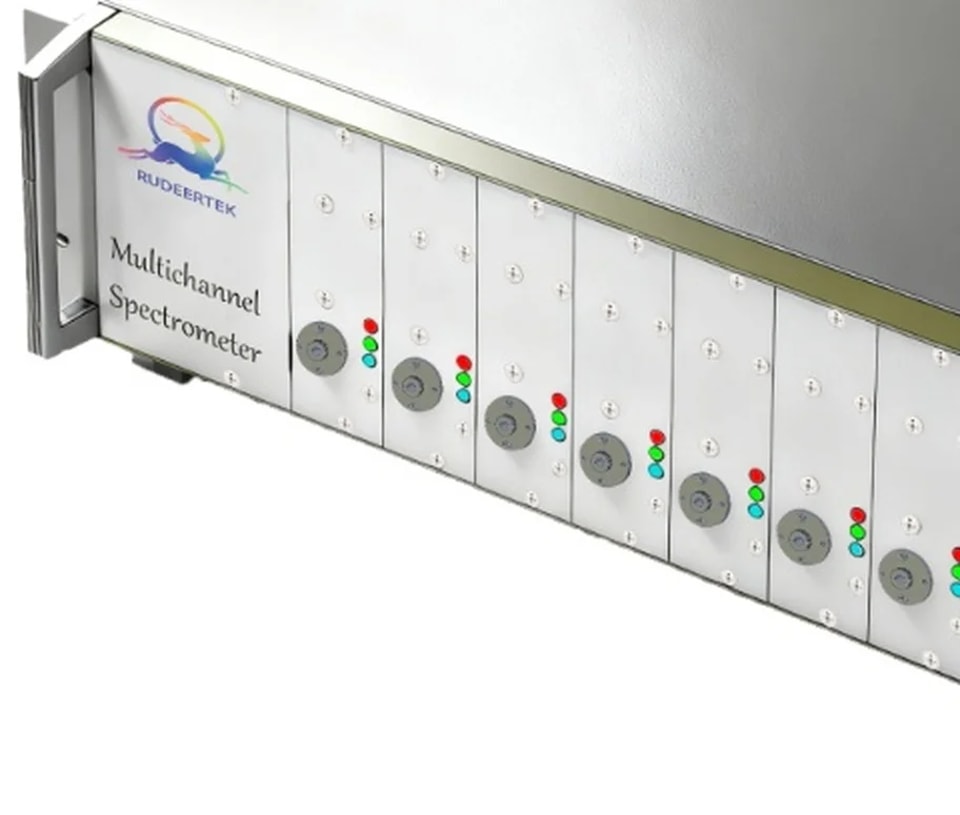
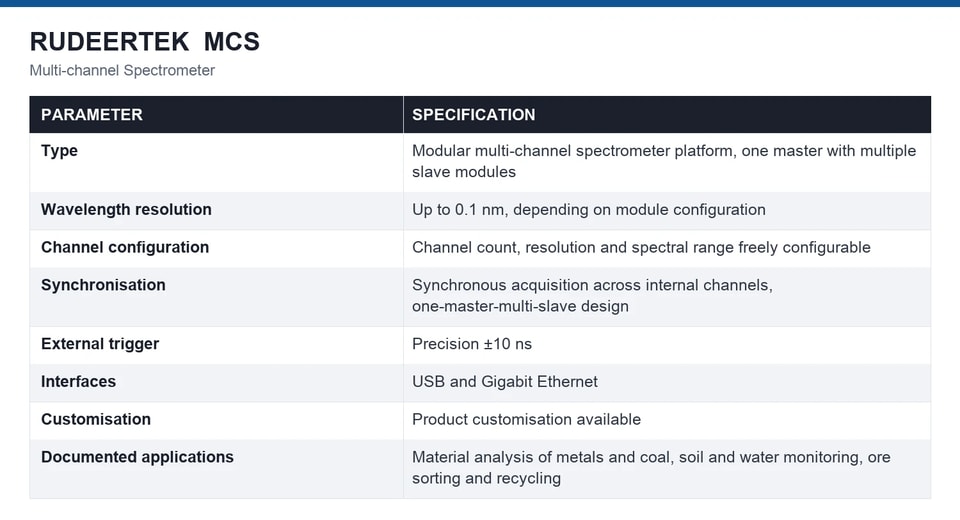
The MCS is a modular multi-channel spectrometer platform rather than a single instrument. A master unit carries several spectrometer modules, each with its own optical specification and its own fiber input, and the channels are acquired synchronously so that several wavelength ranges, several sample points or several optical paths are measured in the same time window. Channel count, resolution and spectral range are configured to the application, and resolution can reach 0.1 nm and below because each module only has to cover its own band. An external trigger with ±10 ns precision lets the acquisition be locked to a conveyor encoder, a pulsed source or another instrument, which is what a sorting line or a process monitor needs, and the platform offers USB and Gigabit Ethernet so the data rate is not the bottleneck. The one-master-multi-slave architecture keeps the channels in step without an external timing box.
· Channel count, spectral range and resolution configured to the application instead of being fixed by one bench.
· Wavelength resolution up to 0.1 nm, because each module only has to cover its own narrow band.
· External trigger with ±10 ns precision, so acquisition locks to an encoder, a pulsed source or another instrument.
· One-master-multi-slave architecture acquires all internal channels synchronously, with no external timing box.
· USB and Gigabit Ethernet interfaces, so high channel counts and fast line rates do not saturate the link.
· Modular design with product customisation, which is what makes it usable as the spectral engine of a sorting machine.
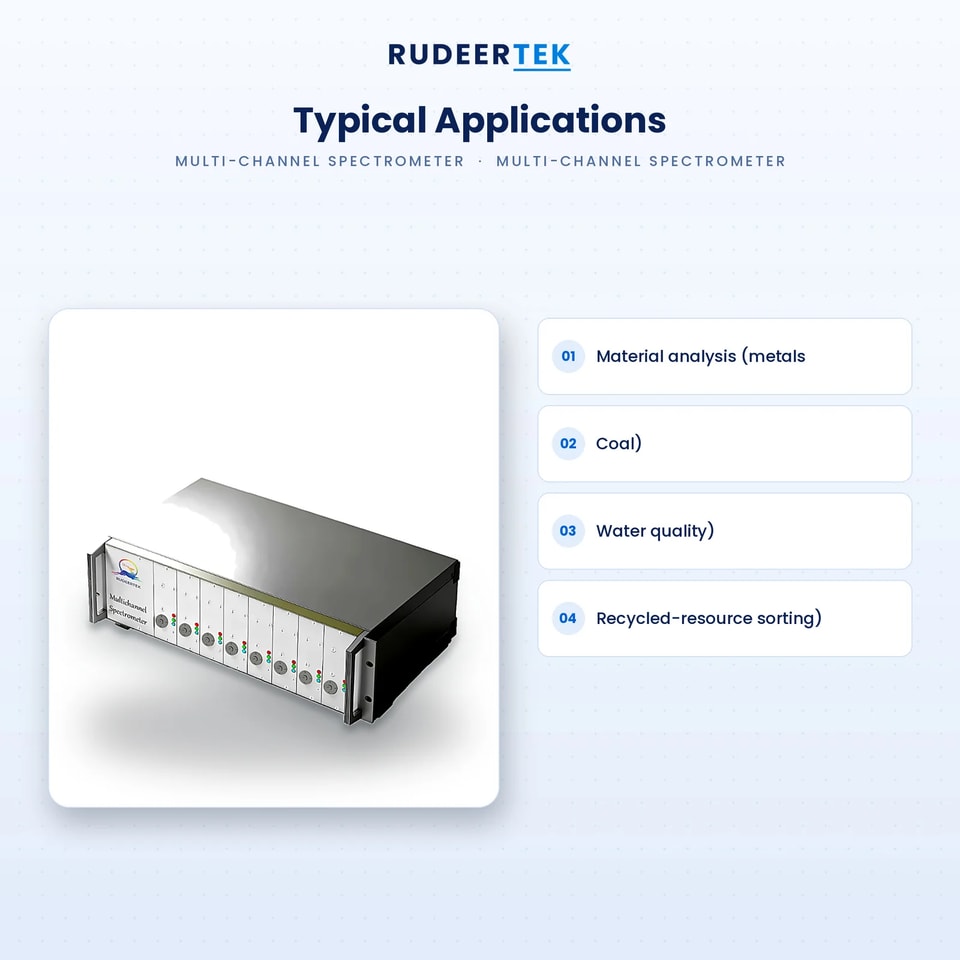
The MCS is used where several spectra have to be measured at once or where a very high resolution is needed over a narrow band: material analysis of metals and coal, environmental monitoring of soil contamination and water quality, industrial process monitoring such as ore sorting and recycling separation, colour and appearance measurement at several points on a web, and OEM instruments that combine several spectral bands in one enclosure.
How many channels can one system have?
The platform is configured to the application, and the master supports multiple slave modules. Tell us how many bands, how many measuring points and what resolution each needs, and the channel count follows from that rather than from a fixed catalogue number.
Why is the resolution better than a single spectrometer?
Because each module covers only its own narrow band. A single bench that spans 200 to 1100 nm has to spread its pixels over 900 nm; a module covering 50 nm puts the same pixels into a fiftieth of the range, so the resolution improves accordingly.
What is the ±10 ns trigger for?
It locks the acquisition to an external event: an encoder pulse on a sorting belt, a laser pulse, or a strobe. On a fast line the difference between a triggered and a free-running acquisition is whether the spectrum belongs to the particle in front of the probe.
Do the channels really acquire at the same time?
Yes, the one-master-multi-slave architecture acquires the internal channels synchronously, so a spectrum from channel 1 and a spectrum from channel 4 belong to the same instant. That matters when the sample is moving or changing.
What interface should I design for?
Either USB or Gigabit Ethernet. Ethernet is the usual choice for a high channel count or a long cable run in a plant, and USB is simpler for a laboratory or an OEM enclosure.
Solutions & Support
We go the extra mile to thoroughly analyze each project and deliver tailored business solutions that meet your specific requirements.
Contact US
×