

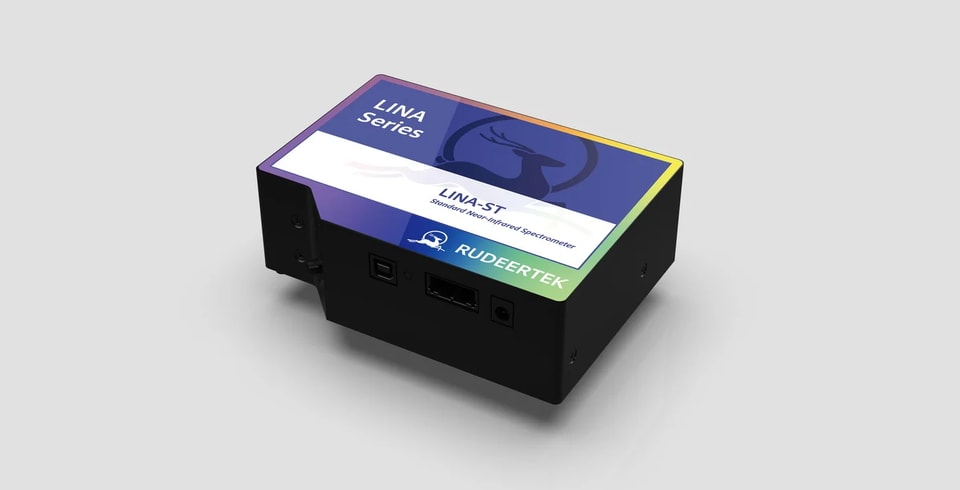
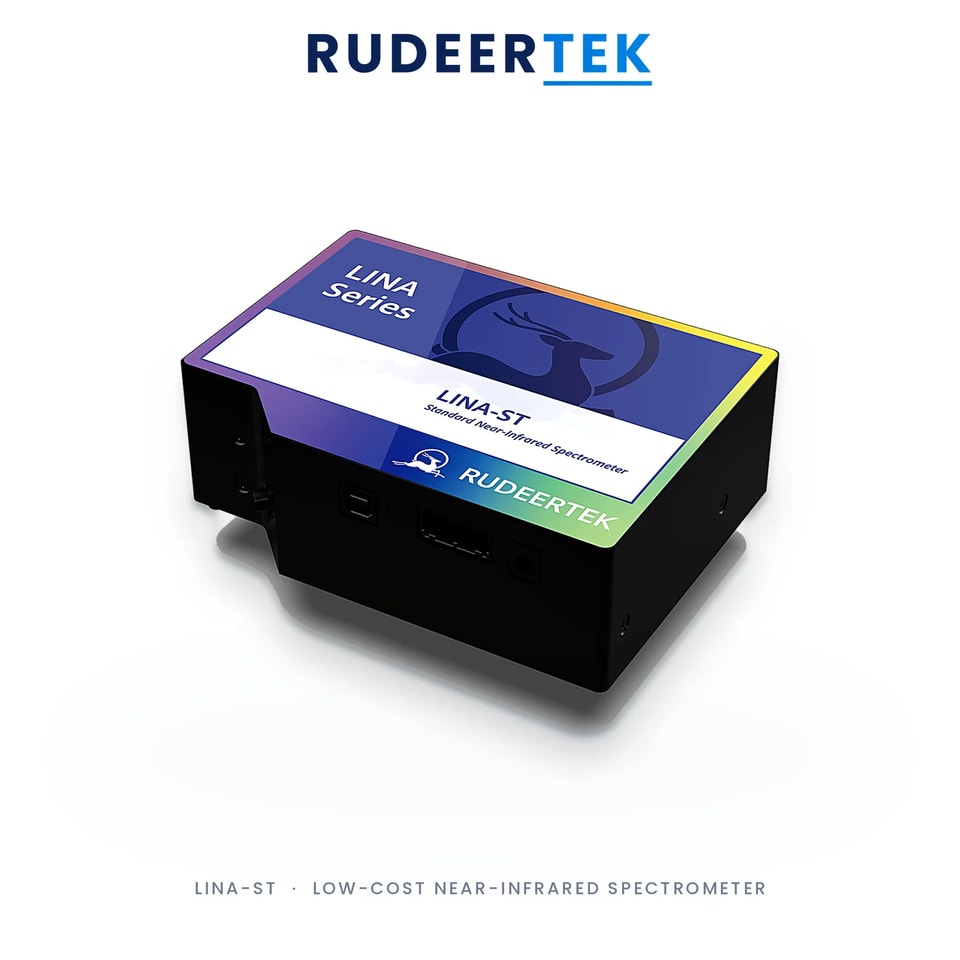
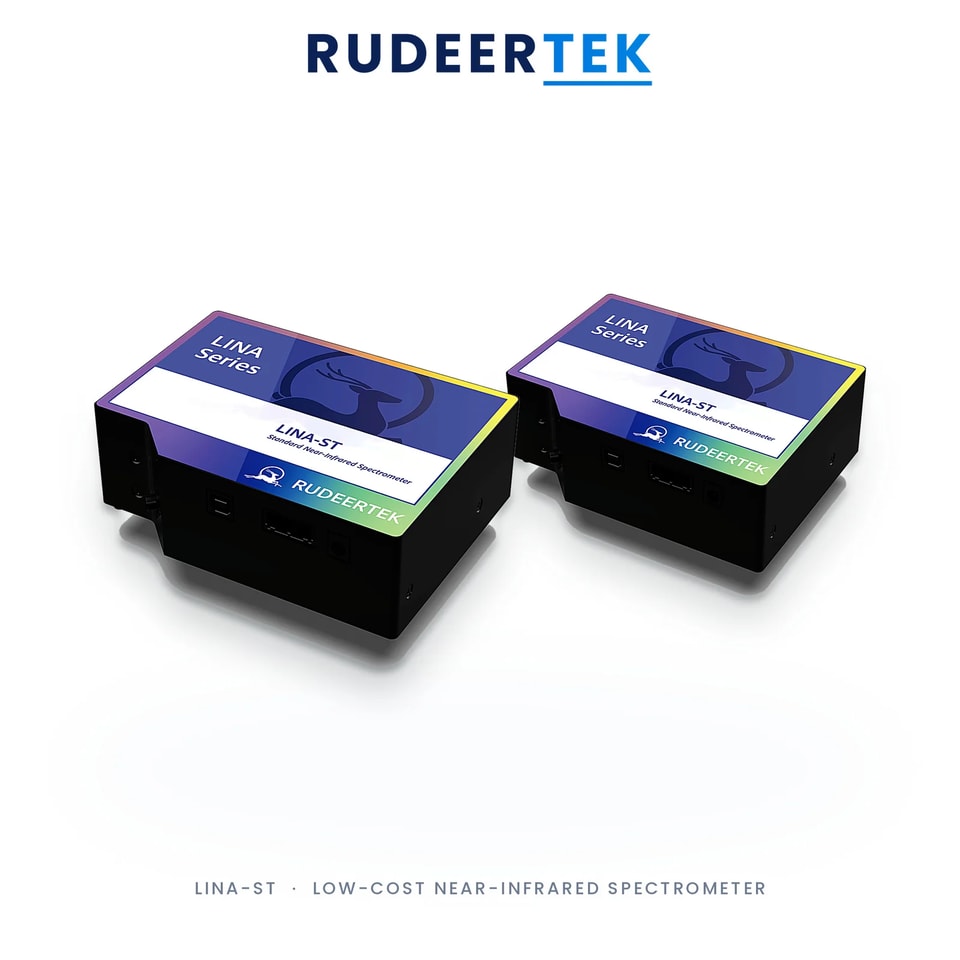
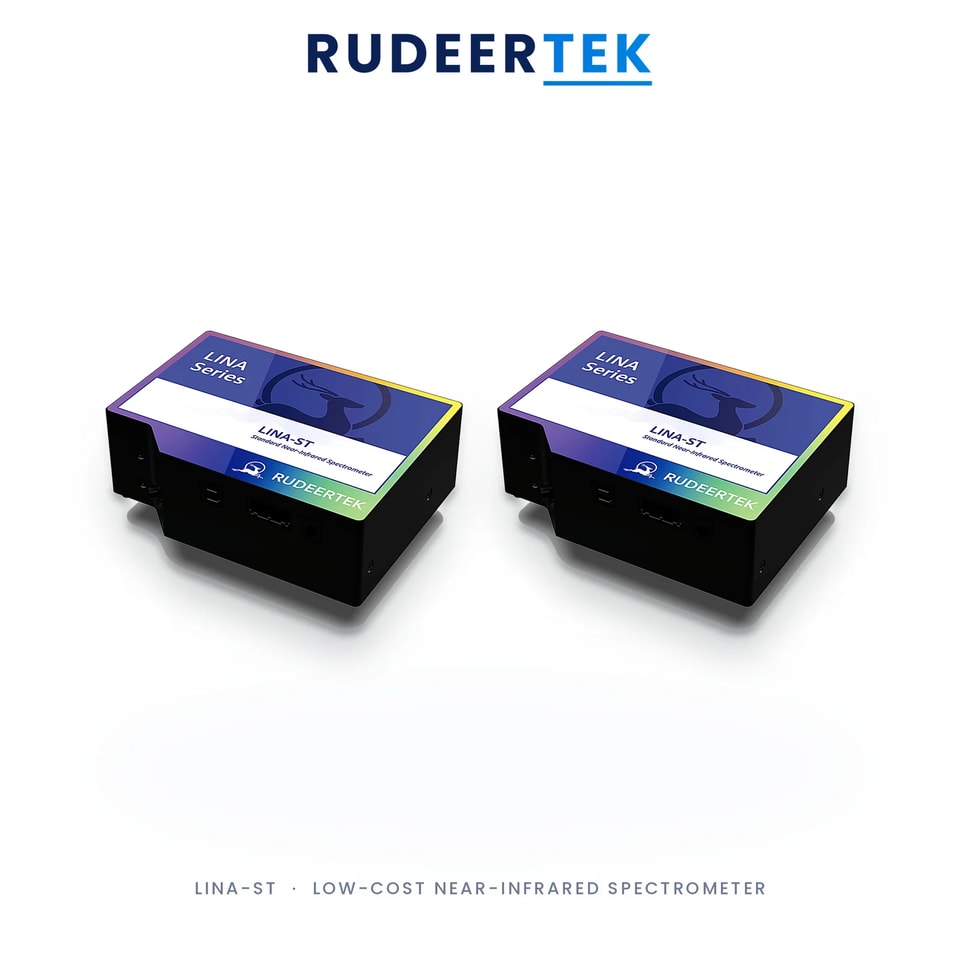
LINA-ST Low-Cost NIR Spectrometer
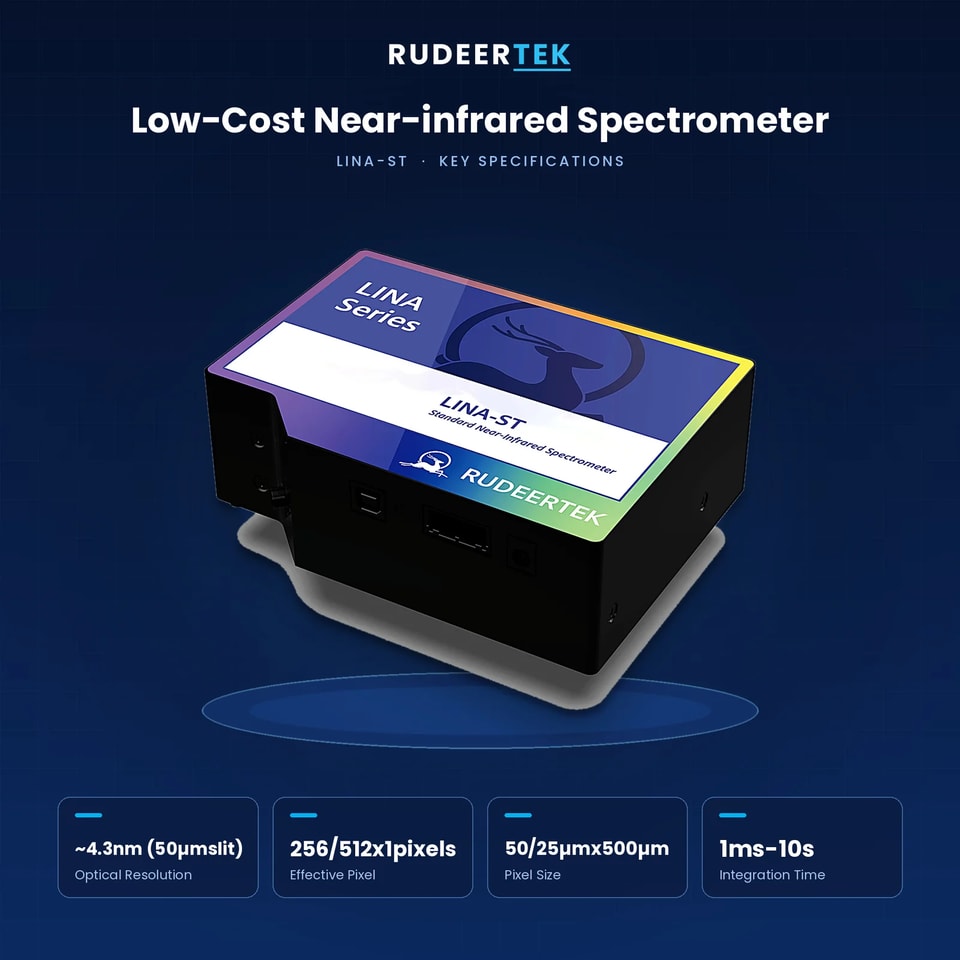
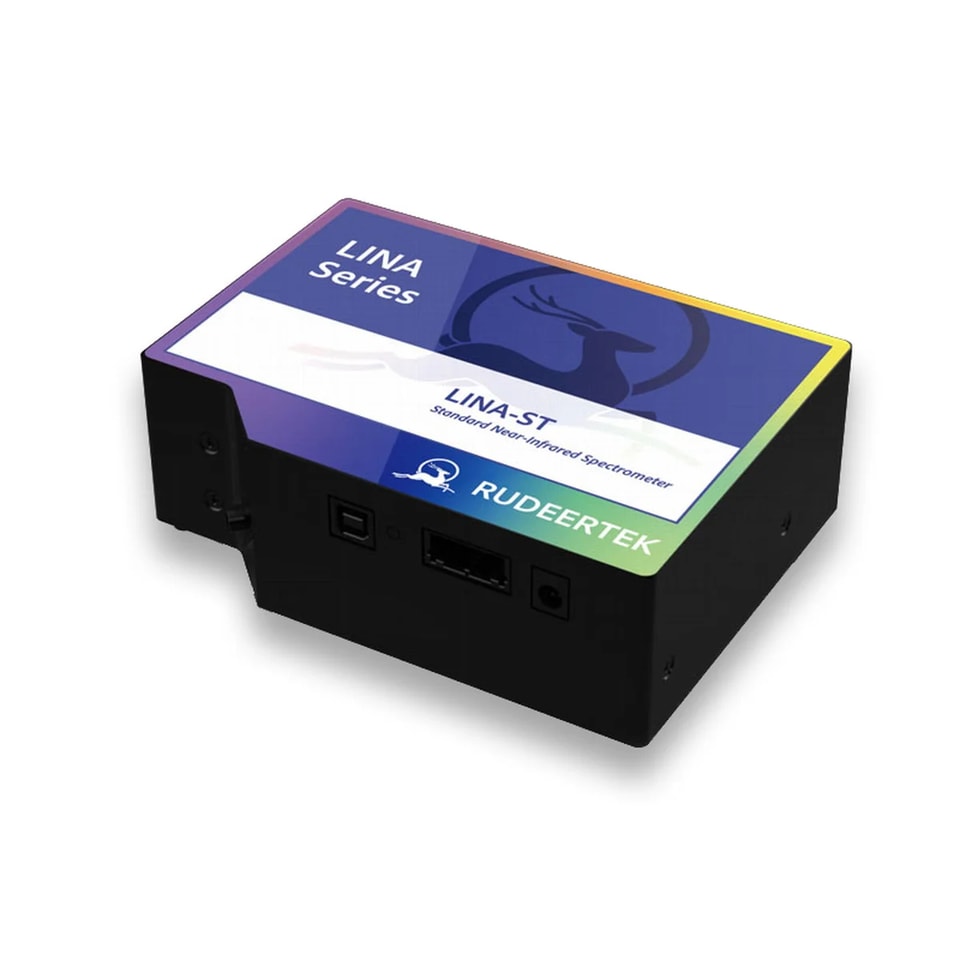
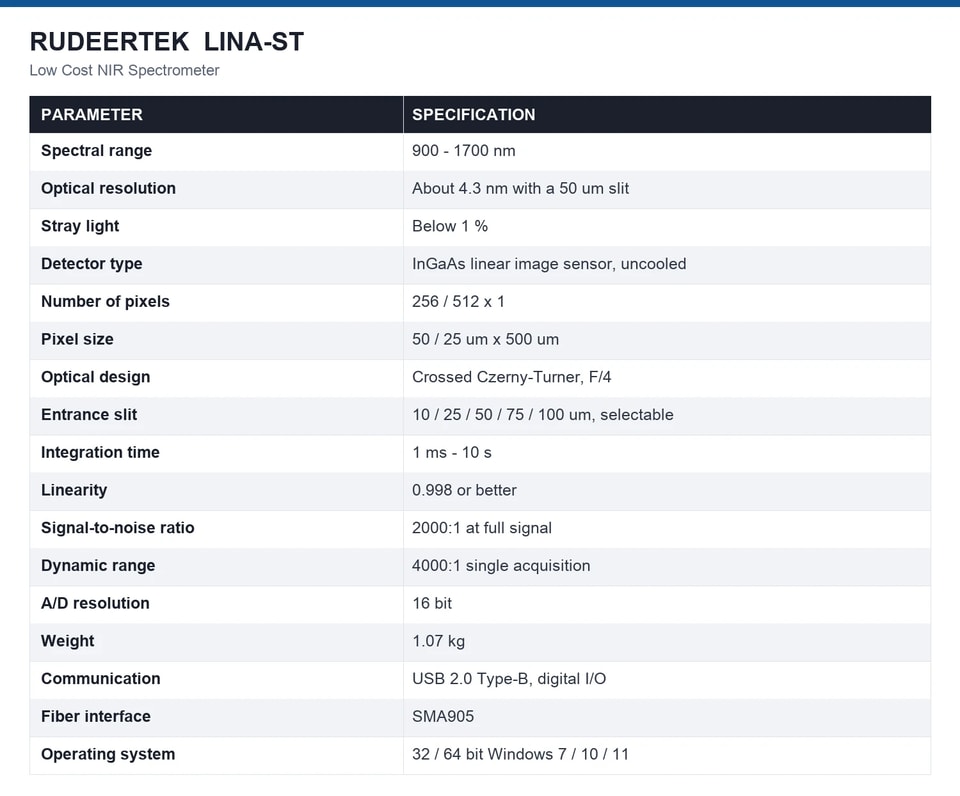
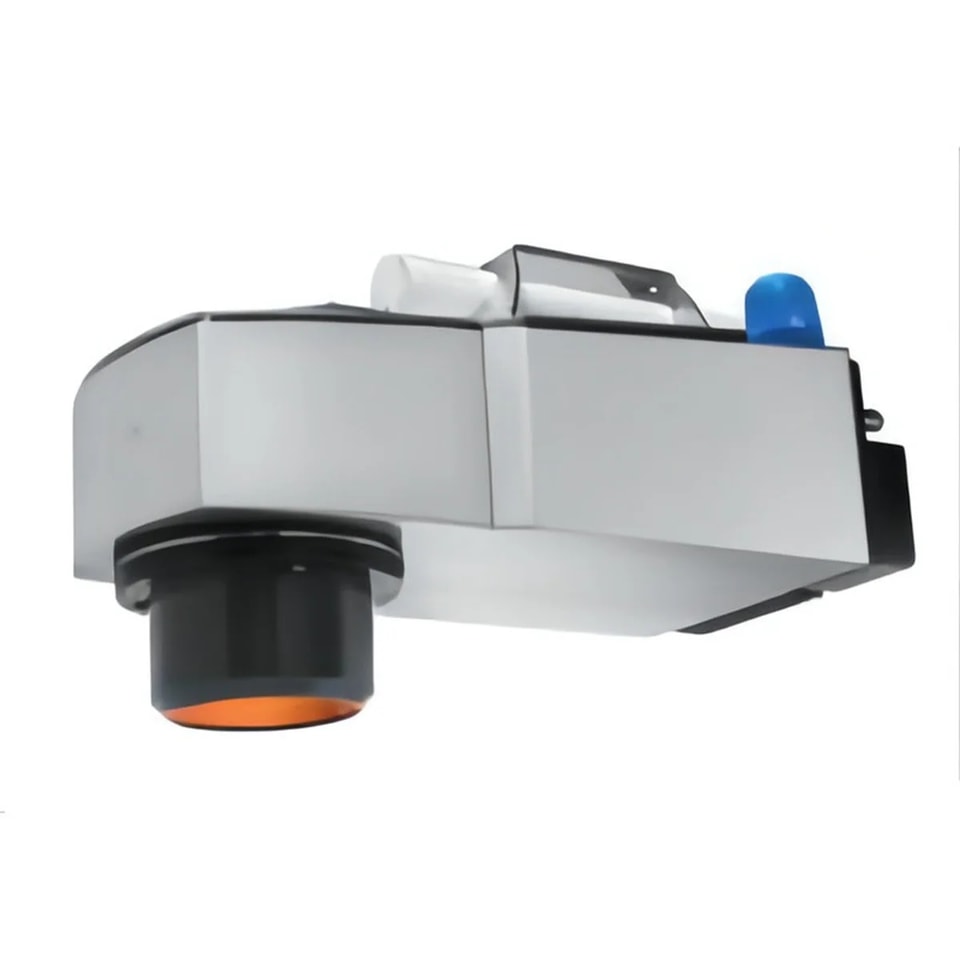
The LINA-ST is the entry point to the LINA near-infrared family: an uncooled InGaAs linear array of 256 or 512 pixels behind a crossed Czerny-Turner bench at F/4, covering 900 to 1700 nm with an optical resolution of about 4.3 nm at a 50 um slit. That band is where the overtone and combination absorptions of moisture, protein, fat, starch and hydrocarbons sit, so the instrument is the natural detector for NIR methods on grain, feed, food powder, polymer and petrochemical products. The 256 or 512 pixel array with 50 x 500 um pixels gives a signal-to-noise ratio of 2000:1 at full signal and a dynamic range of 4000:1 in a single acquisition, which is high for an uncooled instrument because the InGaAs material itself has low dark current at room temperature. Integration time runs from 1 ms to 10 s, the A/D is 16 bit, and the 1.07 kg housing takes an SMA905 fiber and connects over USB 2.0 Type-B.
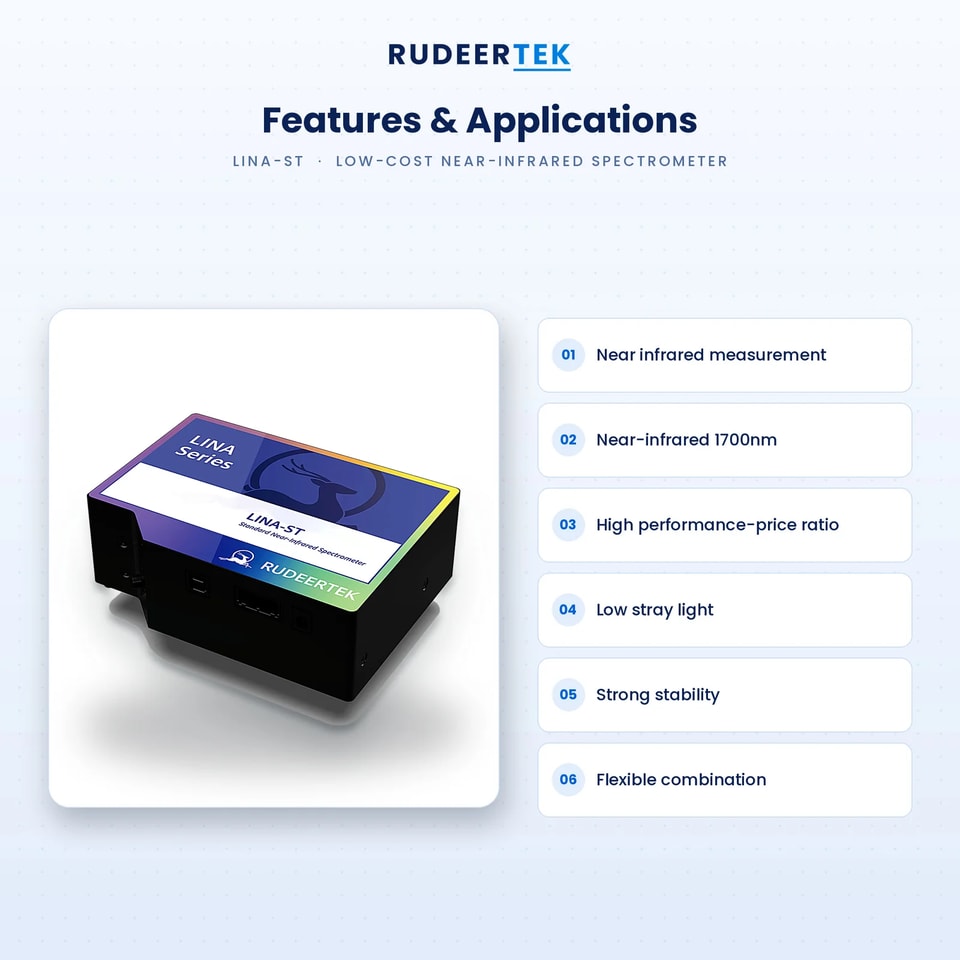
· 900 to 1700 nm InGaAs array covers the overtone bands of moisture, protein, fat, starch and hydrocarbons.
· Uncooled detector with a 2000:1 signal-to-noise ratio at full signal, which is high for a room-temperature InGaAs array.
· 256 or 512 pixels with 50 x 500 um geometry, giving about 4.3 nm resolution at a 50 um slit.
· 4000:1 dynamic range in a single acquisition and a 16-bit A/D, so weak and strong absorption bands share a scan.
· 1 ms to 10 s integration time, so the same module serves a bright transmission measurement and a dim reflectance one.
· 1.07 kg housing with SMA905 input, USB 2.0 Type-B and digital I/O, running on Windows 7, 10 or 11.
The LINA-ST is used for NIR method development and for OEM instruments: grain and oilseed moisture and protein, feed and flour, dairy powder, pharmaceutical blend uniformity, polymer identification and moisture in pellets, textile fibre identification, and hydrocarbon and alcohol measurement. It is also used in the field where a compact, low-cost NIR detector is needed inside a portable analyser, because the uncooled array tolerates a normal ambient temperature without a cooler and its power draw.
What can I measure in 900 to 1700 nm?
The second and third overtones and the combination bands of O-H, C-H and N-H bonds: moisture in grain, powder and pellets, protein and fat in oilseed and feed, starch and sugar, alcohol and hydrocarbon concentration, and polymer identification. It is the standard working band for compact NIR analysers.
Why is it uncooled?
Because InGaAs dark current at room temperature is low enough for a 2000:1 signal-to-noise ratio at full signal in normal integration times, so the instrument needs no cooler, no warm-up delay and less power. For very long integration or very weak signals, the cooled LINA-PRO is the next step.
256 or 512 pixels?
512 pixels halve the wavelength step for the same range, which helps when the absorption bands are narrow or when a derivative pre-treatment is used. 256 pixels are enough for most moisture and protein models and cost less.
What resolution do I get with a 25 um slit?
Better than the 4.3 nm quoted at 50 um, but with less light. For NIR on powders and grain, 50 um is the usual choice because the bands are broad and light throughput matters more than resolution.
Does it need a special light source?
Yes, a tungsten halogen source, which has good output across 900 to 1700 nm. For transmission through a thick sample, a higher-power source such as the GY-HL20 is needed; for reflectance, the standard 5 W source is usually enough.
Solutions & Support
We go the extra mile to thoroughly analyze each project and deliver tailored business solutions that meet your specific requirements.
Contact US
×