

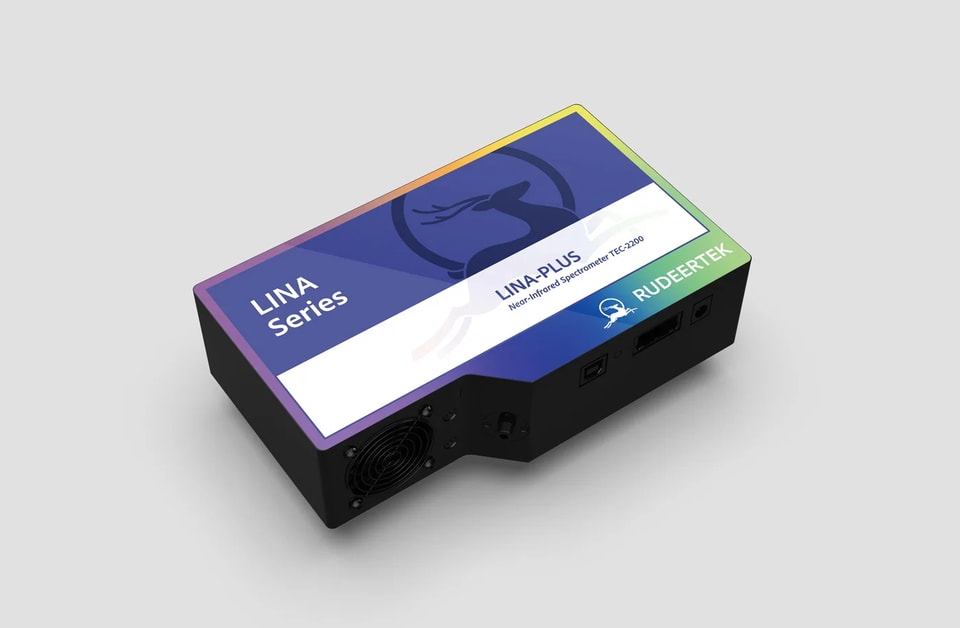
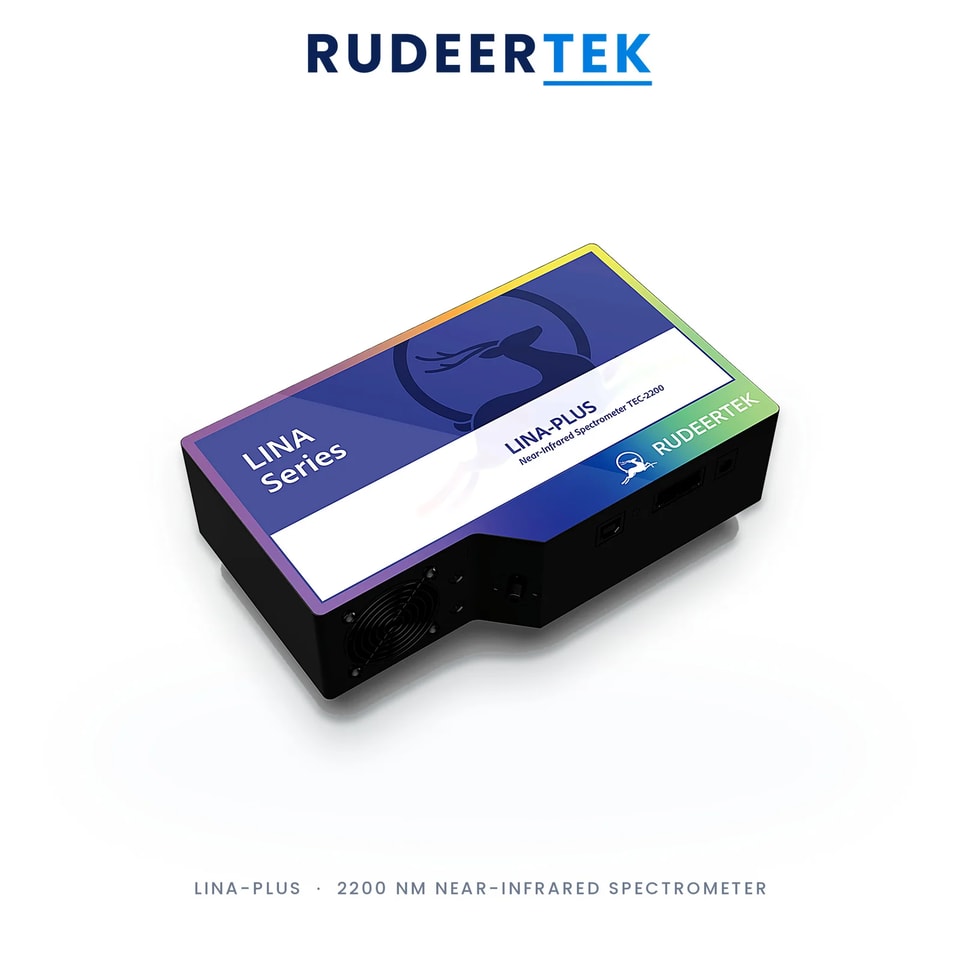
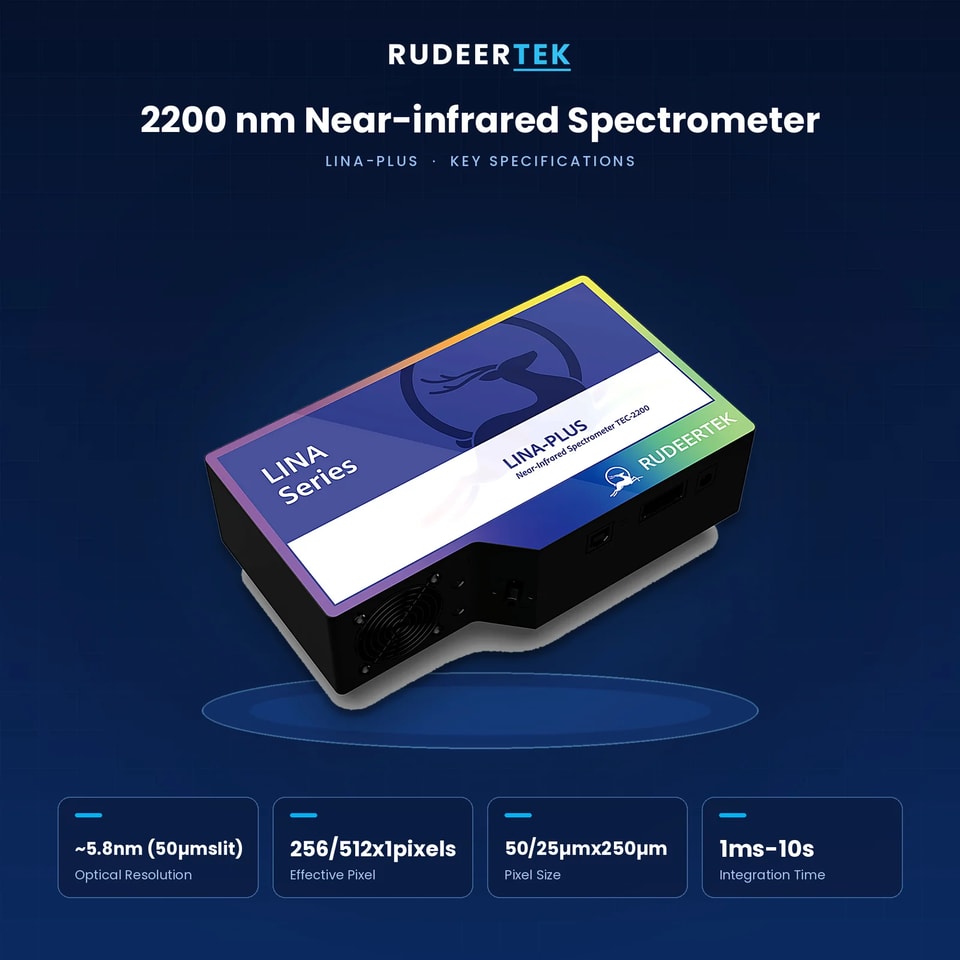
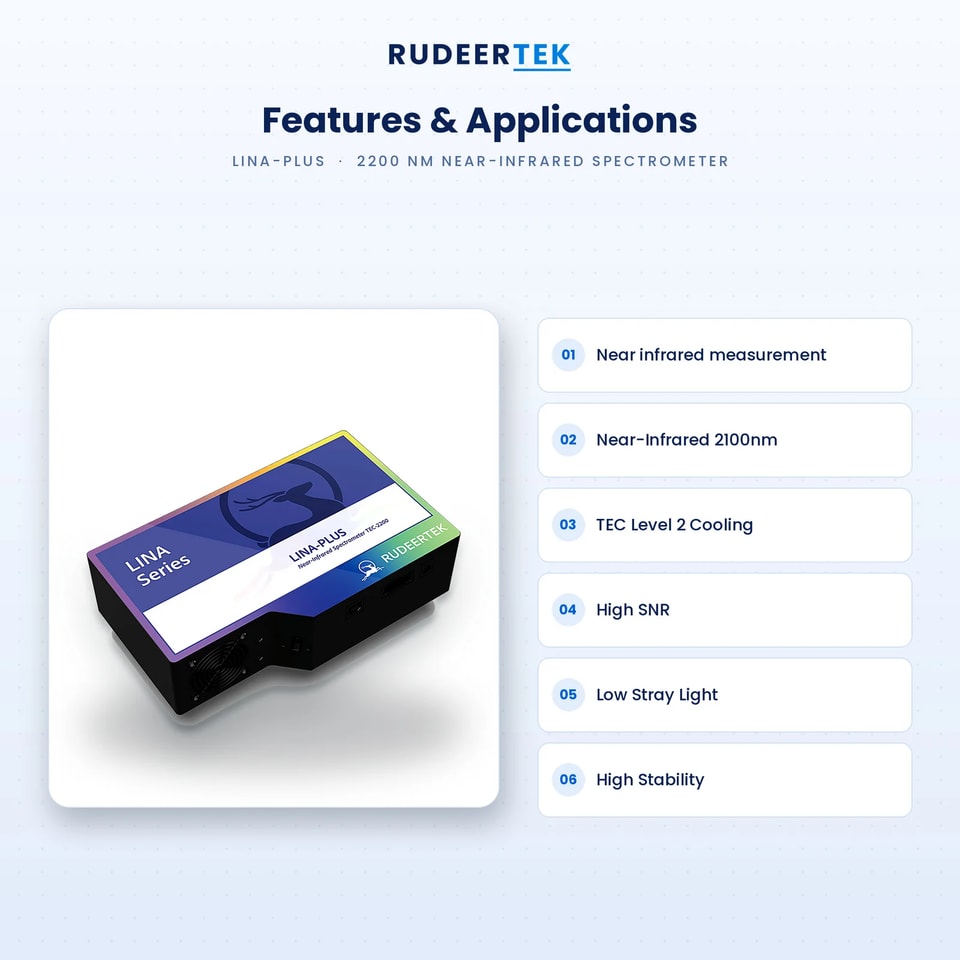
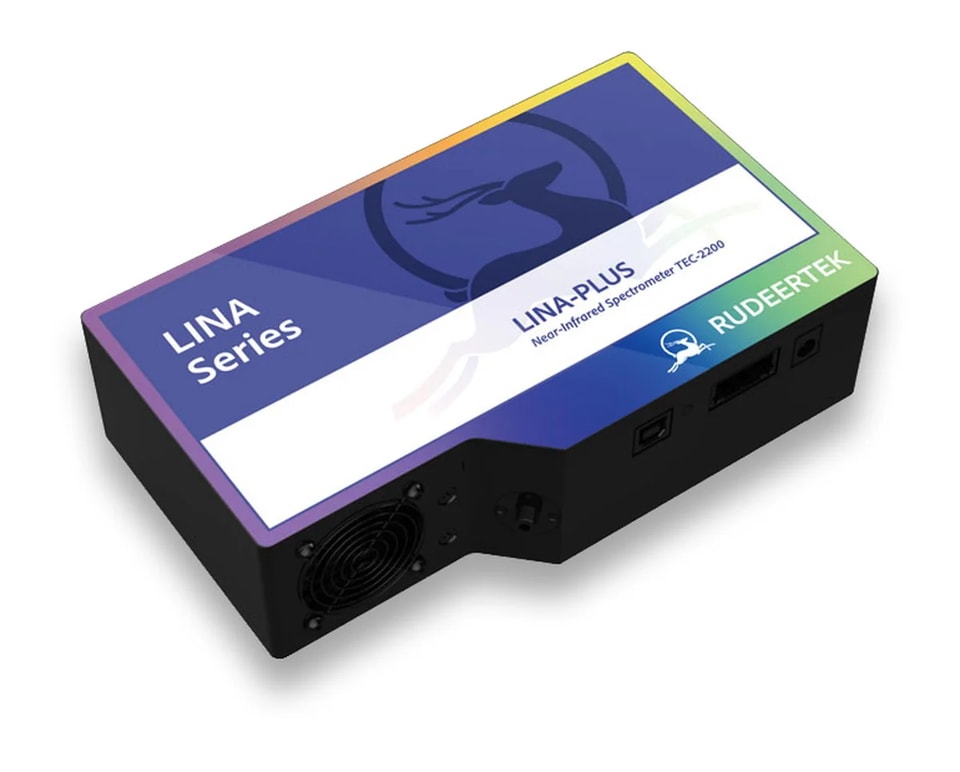
LINA-PLUS 2200 nm NIR Spectrometer
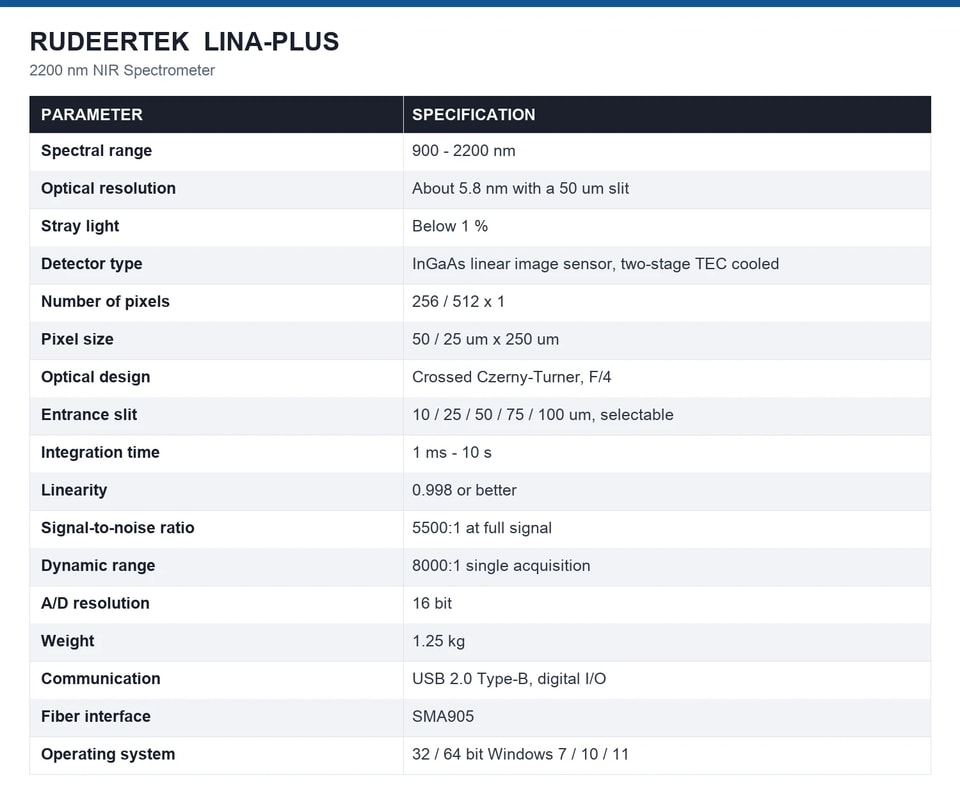
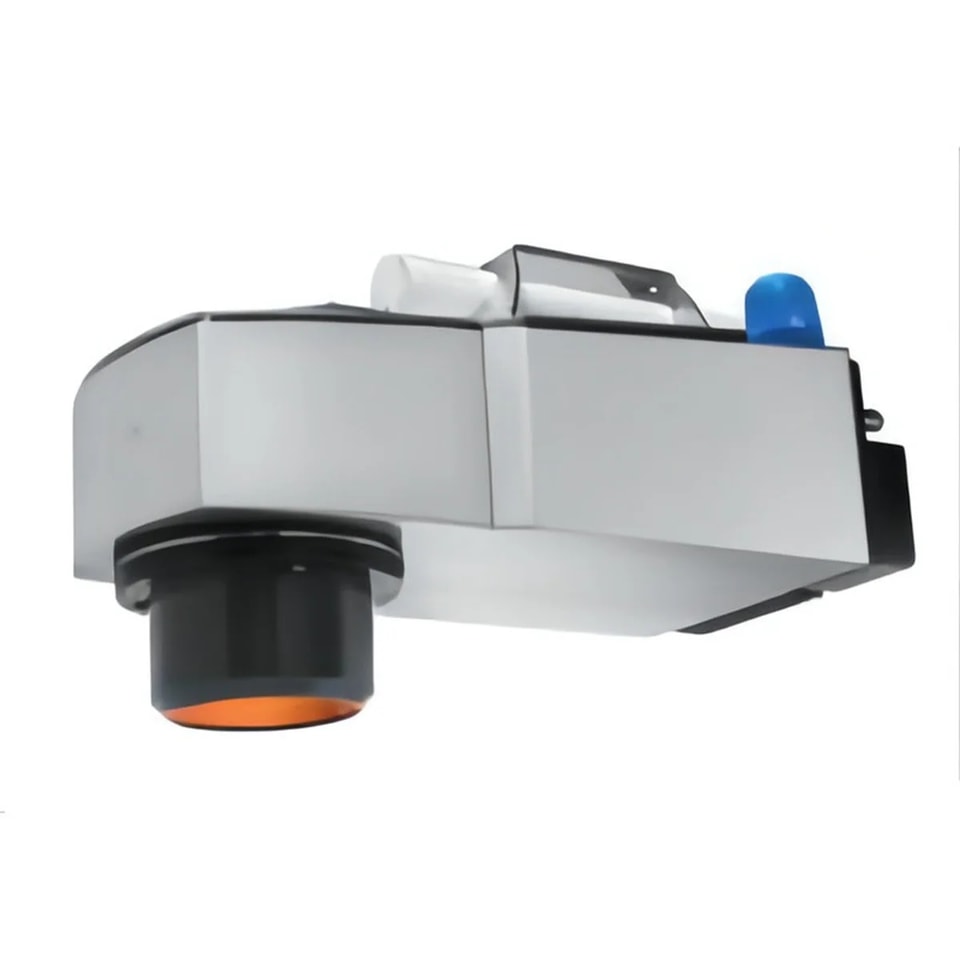
The LINA-PLUS pushes the LINA range out to 2200 nm. That extension is not cosmetic: between 1900 and 2200 nm sit the combination bands of C-H, N-H and O-H that carry the information for hydrocarbon type, polymer identification, alcohol and water in solvents, and the cellulose and lignin signature of biomass. The detector is a two-stage TEC cooled InGaAs array of 256 or 512 pixels with 50 x 250 um geometry, the bench is the same F/4 crossed Czerny-Turner design, and the optical resolution is about 5.8 nm at a 50 um slit, slightly coarser than the 1900 nm models because the same array now spans 1300 nm instead of 1000 nm. Signal-to-noise ratio is 5500:1 at full signal, dynamic range 8000:1 in a single acquisition, stray light below 1 %, the A/D is 16 bit, and the 1.25 kg housing takes an SMA905 fiber with USB 2.0.
· 900 to 2200 nm coverage reaches the C-H, N-H and O-H combination bands that identify polymers and hydrocarbons.
· Two-stage TEC cooled InGaAs array with 5500:1 signal-to-noise ratio and 8000:1 dynamic range in one acquisition.
· 256 or 512 pixel array with 50 x 250 um geometry, about 5.8 nm resolution at a 50 um slit.
· Stray light below 1 % and a 16-bit A/D, so a weak combination band next to a strong one still resolves.
· Integration time from 1 ms to 10 s, for both a bright transmission cell and a dim reflectance probe.
· 1.25 kg housing with SMA905 input, USB 2.0 Type-B and digital I/O, running on Windows 7, 10 or 11.
The LINA-PLUS is used for polymer and plastics identification and for measuring additives and moisture in pellets, for hydrocarbon analysis in fuels, lubricants and petrochemical streams, for alcohol and water in solvents, for biomass and pulp characterisation, and for pharmaceutical raw-material identification. It is also used in process analysers where the 1900 to 2200 nm region carries the discriminating bands that a 1700 nm instrument cannot see.
What is in the 1900 to 2200 nm region that I cannot see at 1700 nm?
The combination bands of C-H, N-H and O-H bonds and the higher overtones that separate chemical families: aromatic versus aliphatic hydrocarbons, different polymer backbones, alcohol-water mixtures and the cellulose-lignin signature of biomass. That is why a 2200 nm instrument identifies materials that a 1700 nm one can only quantify roughly.
Why is the resolution 5.8 nm instead of 4.3 nm?
The same 256 or 512 pixel array now covers 1300 nm instead of 1000 nm, so each pixel spans a wider wavelength interval. It is the physics of a fixed array, not a loss of optical quality.
Does the detector response fall at 2200 nm?
Yes, InGaAs response decreases towards the long-wavelength cut-off, which is why the two-stage cooler and a higher-power source matter at that end. For weak signals beyond 2100 nm, plan a longer integration time or a brighter source.
What light source should I use?
A tungsten halogen source, which still has useful output at 2200 nm, with a higher-power version such as the GY-HL20 for transmission through a thick sample. A deuterium lamp is not needed here because the range starts at 900 nm.
Can it distinguish similar polymers?
It resolves the C-H combination region well enough for identification of common families such as PE, PP, PS, PET and PVC, especially with a derivative pre-treatment. For a definitive grade call, pair the spectrum with a library and a reference set of your own materials.
Solutions & Support
We go the extra mile to thoroughly analyze each project and deliver tailored business solutions that meet your specific requirements.
Contact US
×