

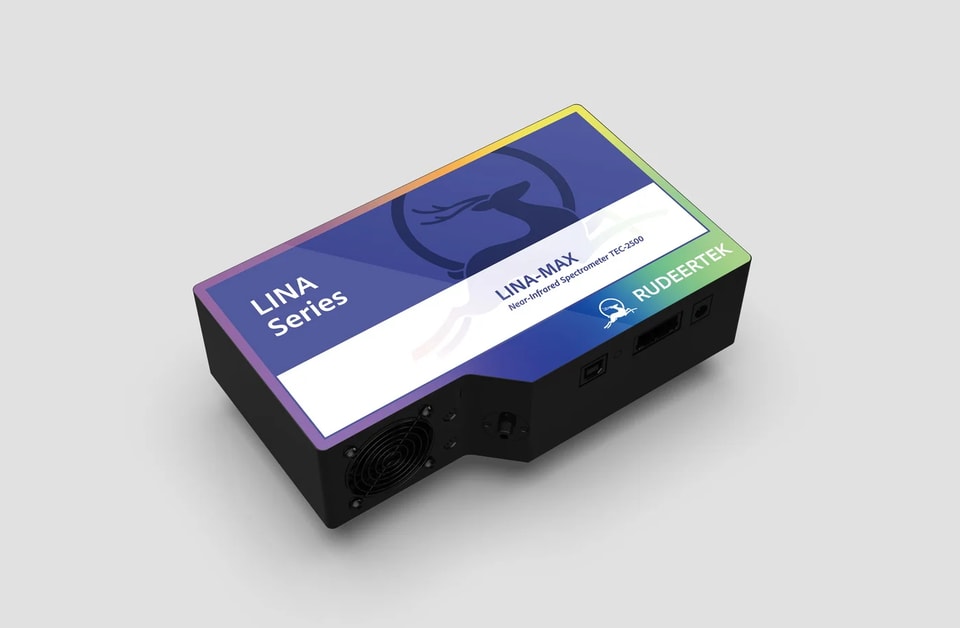
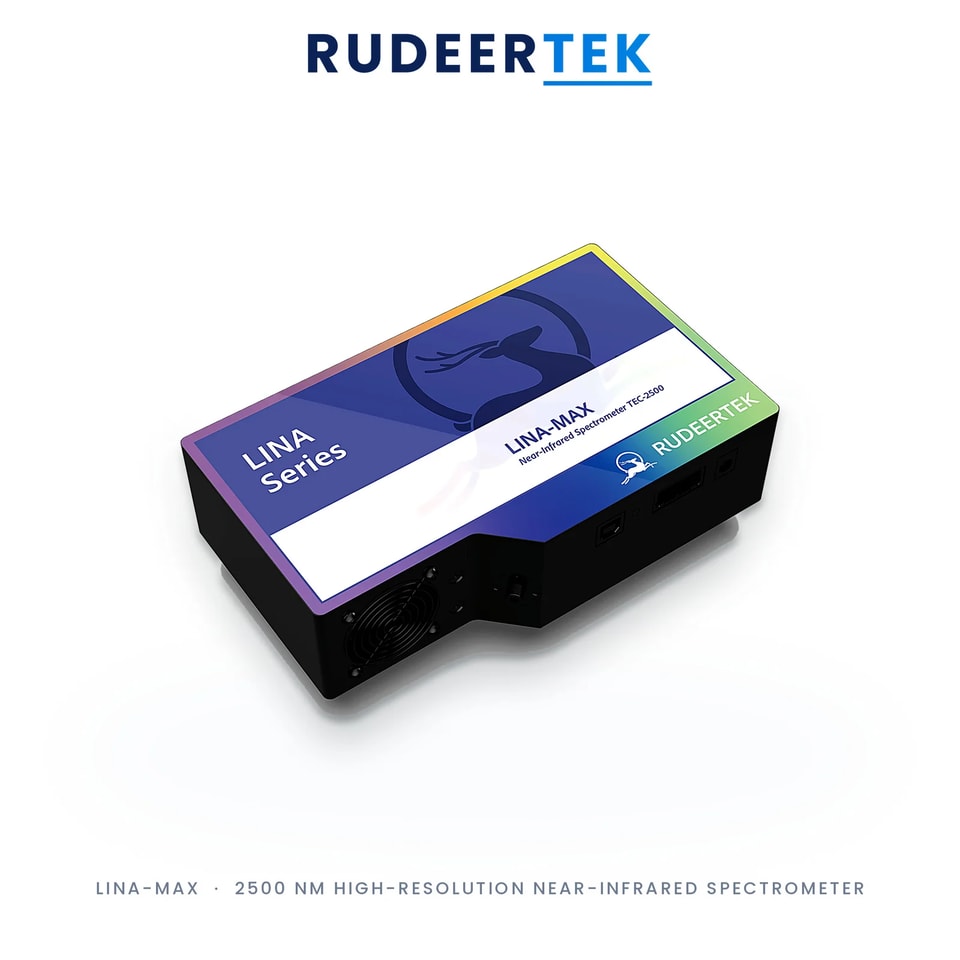
LINA-MAX 2500 nm High-Resolution NIR Spectrometer
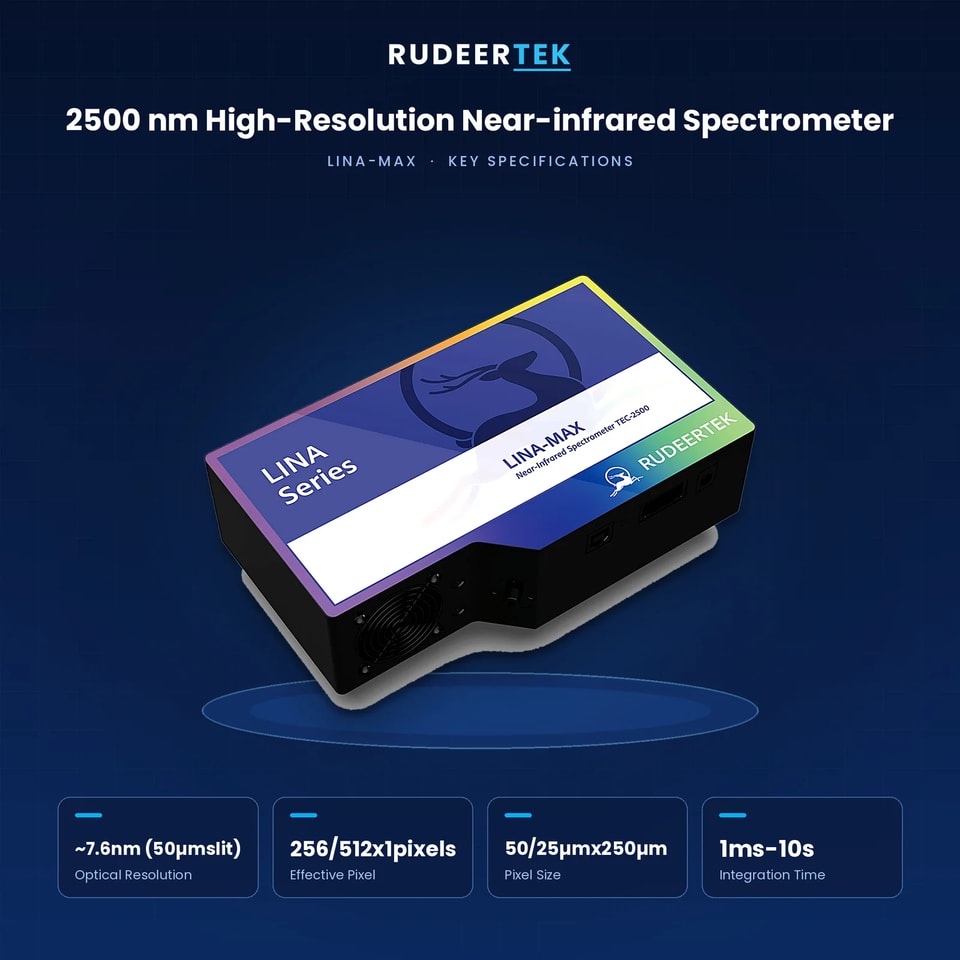
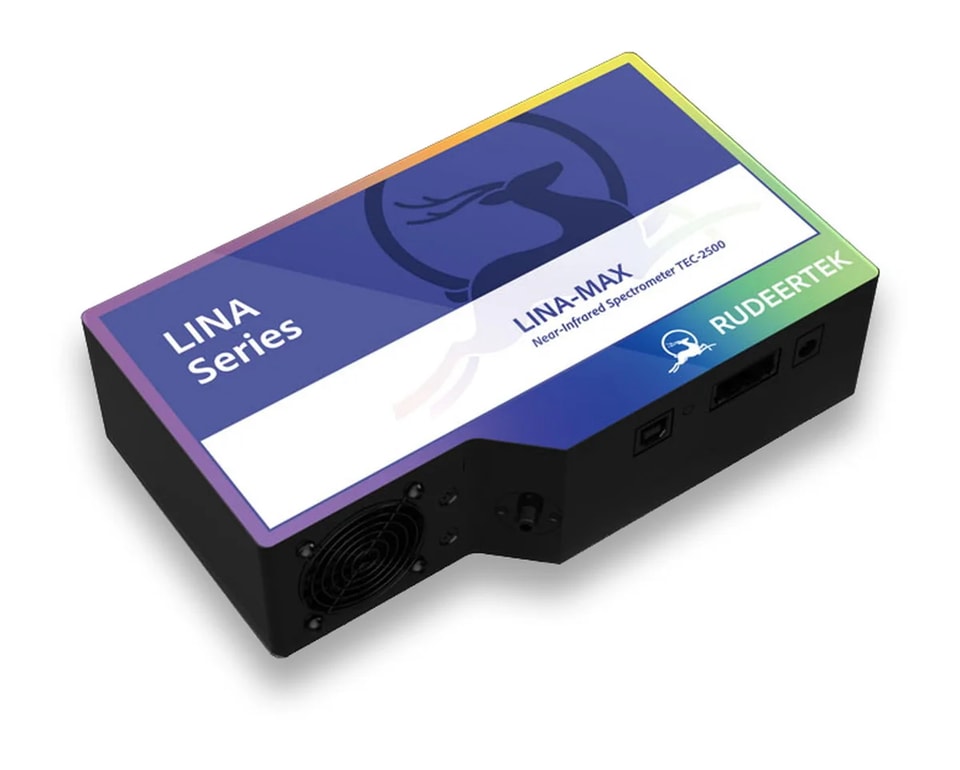
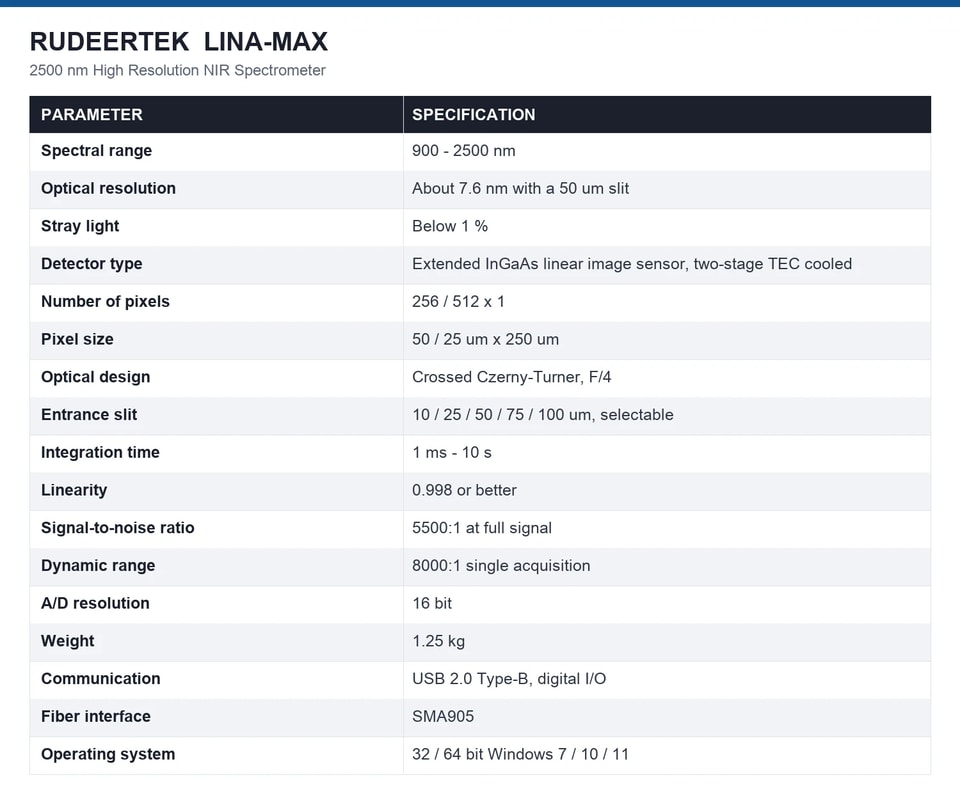
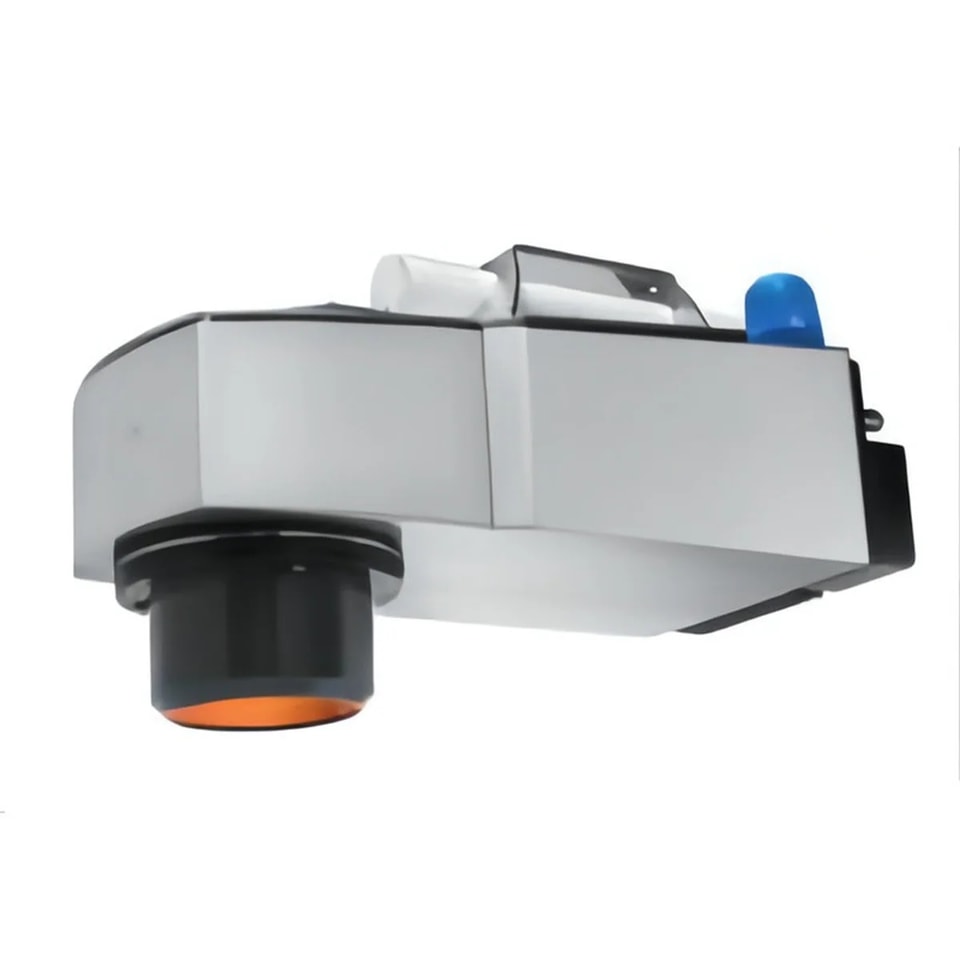
The LINA-MAX is the longest-wavelength instrument in the LINA family, reaching 2500 nm with an extended InGaAs array of 256 or 512 pixels. That range covers the full combination-band region used by mineral, clay and biomass spectroscopy, and the C-H, N-H and O-H bands that identify polymers, hydrocarbons and pharmaceutical raw materials with more specificity than the shorter instruments can offer. The detector is two-stage TEC cooled, which is essential at this wavelength because extended InGaAs dark current rises steeply towards the cut-off; cooling is what keeps the 5500:1 signal-to-noise ratio and the 8000:1 dynamic range usable at 2400 nm. The bench is the same F/4 crossed Czerny-Turner design, resolution is about 7.6 nm at a 50 um slit because the array now spans 1600 nm, stray light stays below 1 %, the A/D is 16 bit, and the 1.25 kg housing takes an SMA905 fiber with USB 2.0.
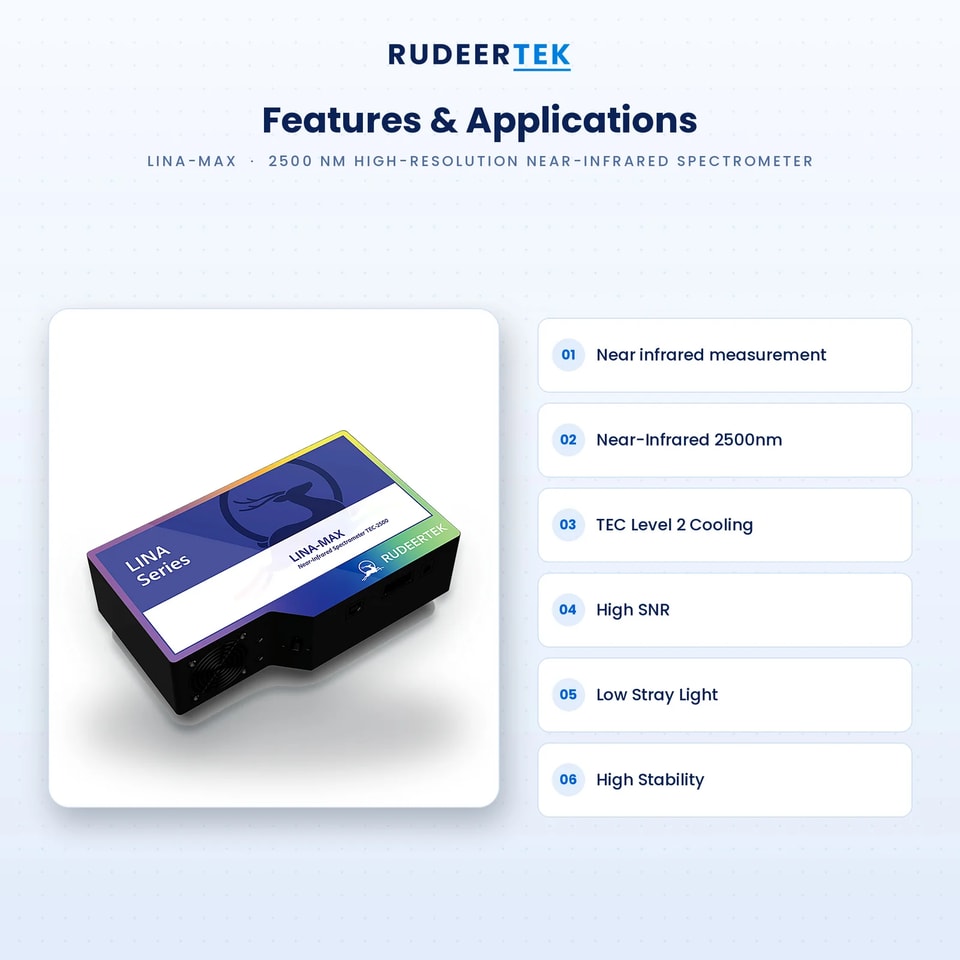
· 900 to 2500 nm coverage reaches the full combination-band region used for minerals, clays and biomass.
· Extended InGaAs array with two-stage TEC cooling, which is what keeps the noise floor usable at 2400 nm.
· 5500:1 signal-to-noise ratio at full signal and 8000:1 dynamic range in a single acquisition.
· About 7.6 nm resolution at a 50 um slit, with stray light below 1 % and a 16-bit A/D.
· 256 or 512 pixel array with 50 x 250 um geometry, so the slit image matches the fiber input.
· 1.25 kg housing with SMA905 input, USB 2.0 Type-B and digital I/O, running on Windows 7, 10 or 11.
The LINA-MAX is used for mineral and clay identification, soil and agricultural analysis, biomass and pulp characterisation, polymer and additive identification, hydrocarbon and lubricant analysis, and pharmaceutical raw-material identification where the discriminating bands sit between 2200 and 2500 nm. It is also used in geological and mining laboratories, and in process analysers for products whose spectrum is only informative at the long-wavelength end.
What does 2200 to 2500 nm add?
The metal-OH and carbonate combination bands that identify clays and minerals, and the higher C-H and N-H combinations that separate polymers and pharmaceutical forms more definitively. For soil, clay, mineral and biomass work, the 2500 nm end is where the diagnostic bands are.
Why is cooling essential at 2500 nm?
Extended InGaAs dark current rises steeply as the cut-off is approached, so an uncooled array at 2400 nm would be dominated by dark noise at any useful integration time. Two-stage cooling is what makes the long-wavelength end usable for quantitative work.
Does it need a special source?
A tungsten halogen source is still the right choice, but the output at 2500 nm is much lower than at 1000 nm, so a higher-power source and, for reflectance, an efficient collection geometry are needed. Plan the optical budget before choosing the slit.
Is 7.6 nm enough for mineral identification?
Yes for the broad combination bands used in clay and mineral identification, which are tens of nanometres wide. For sharp features such as rare-earth lines, a different instrument with higher resolution is needed.
What about fiber losses at 2500 nm?
Standard silica fiber attenuates strongly beyond about 2200 nm, so a low-OH or fluoride fiber is needed for the far end of the range. This is the accessory that most often limits a 2500 nm measurement.
Solutions & Support
We go the extra mile to thoroughly analyze each project and deliver tailored business solutions that meet your specific requirements.
Contact US
×