

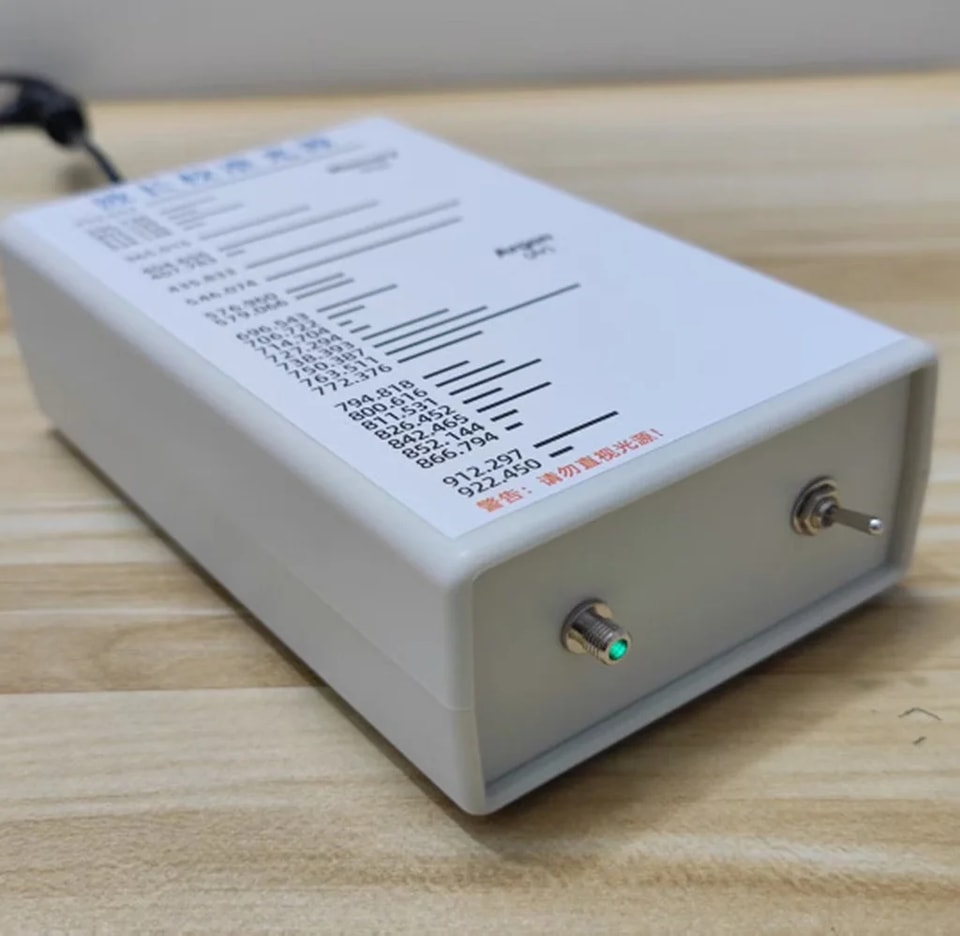
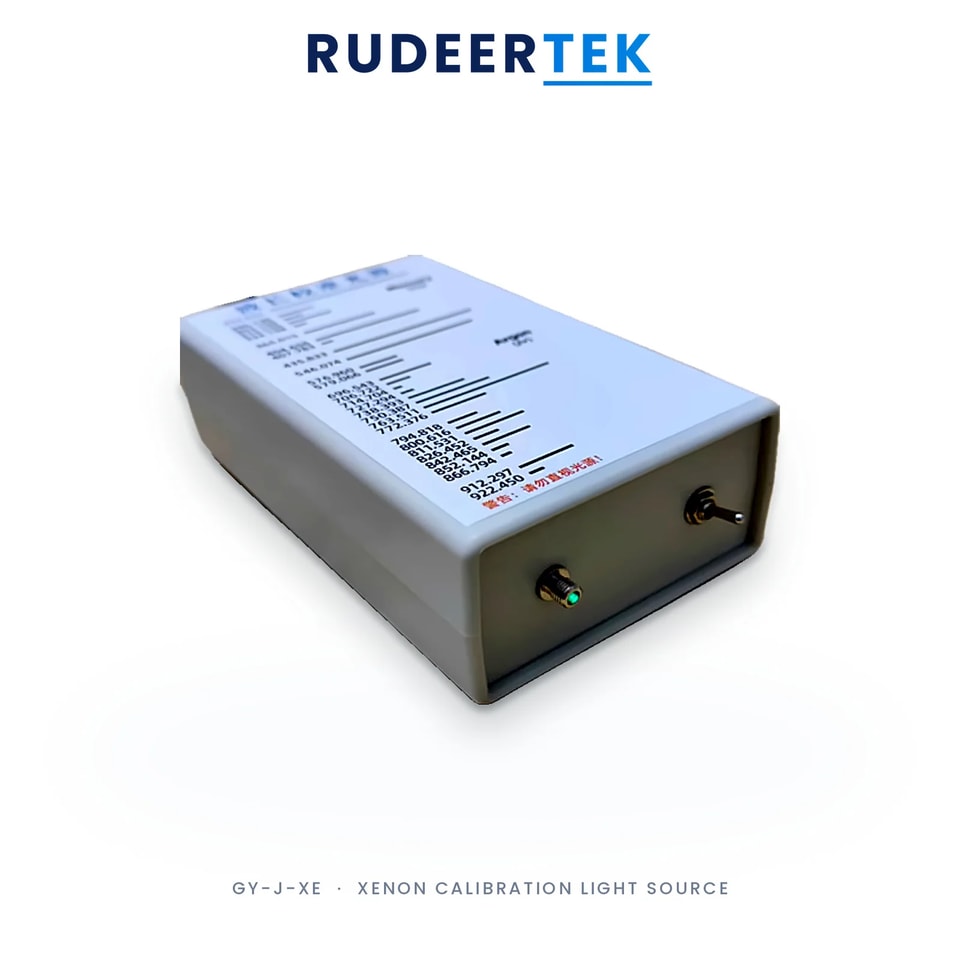
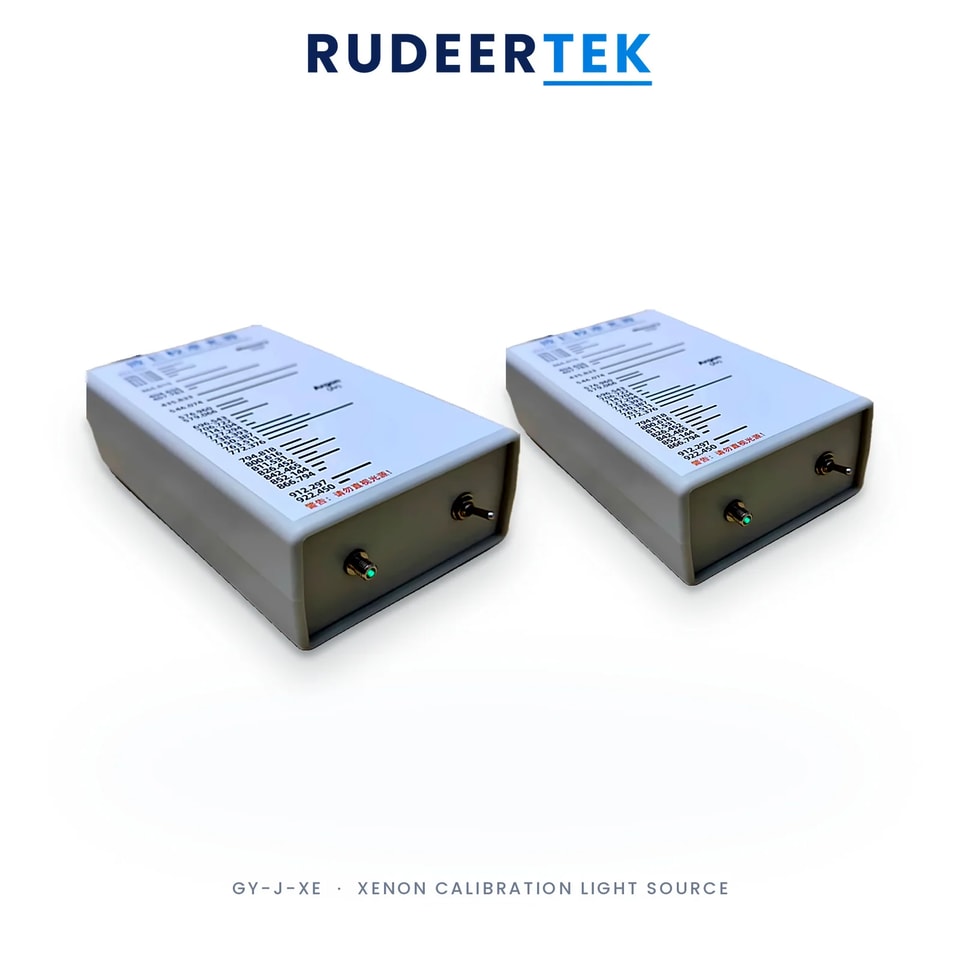
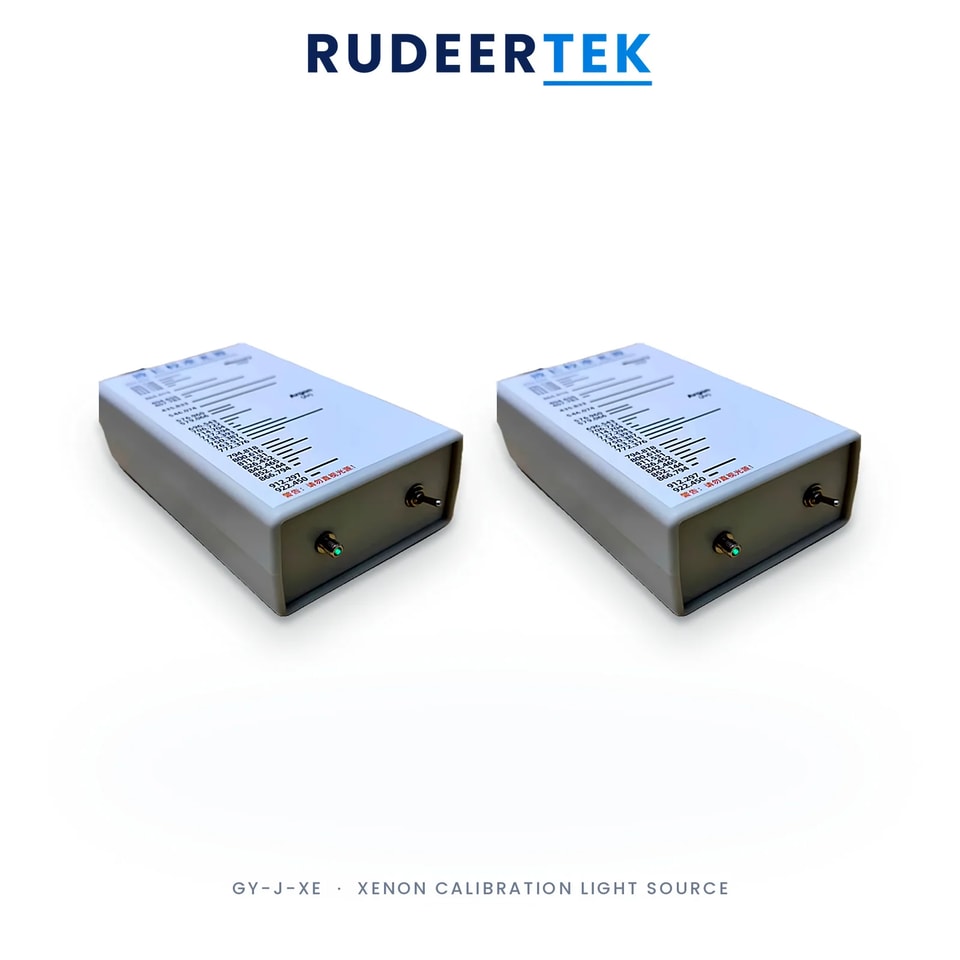
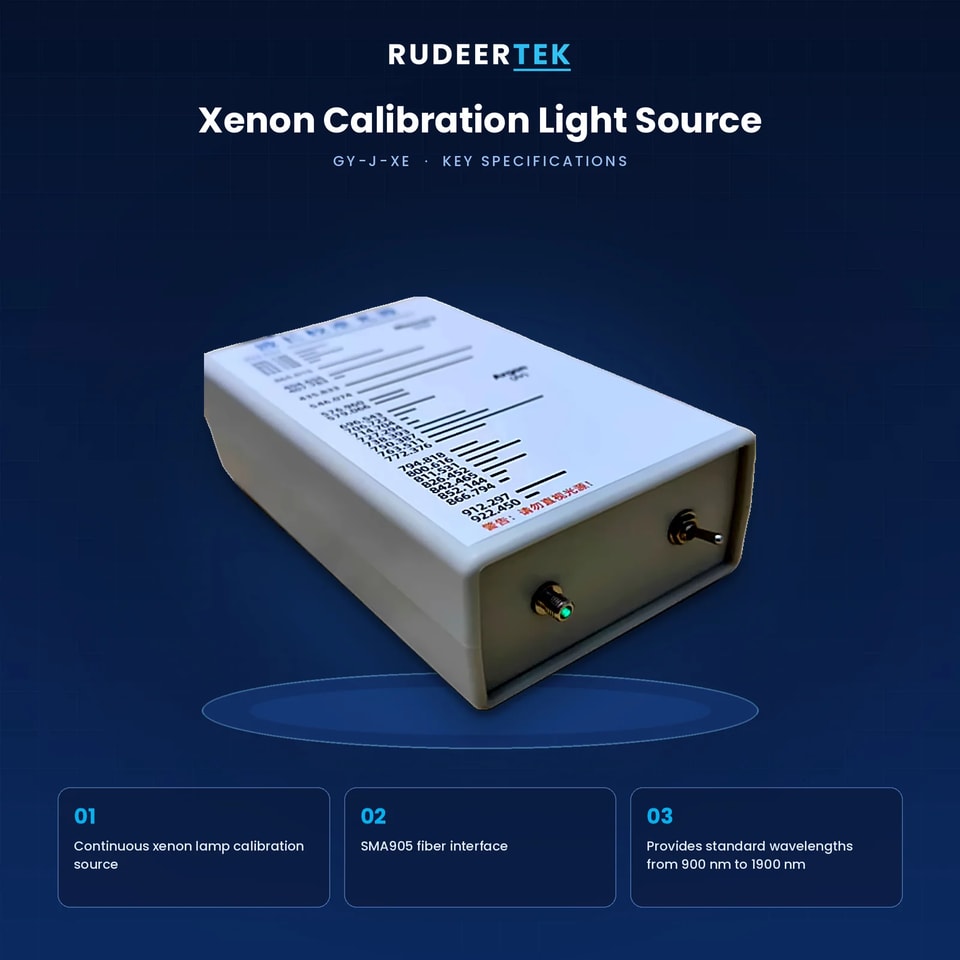
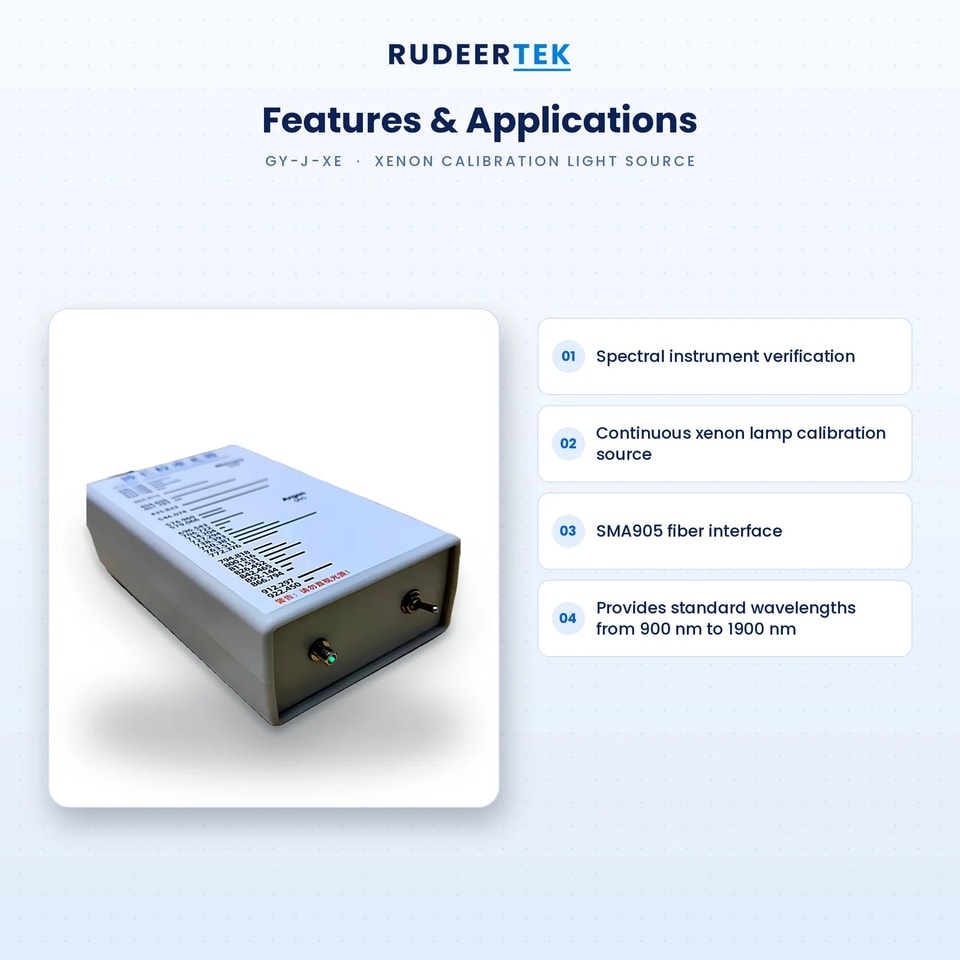

GY-J-Xe Xenon Calibration Light Source
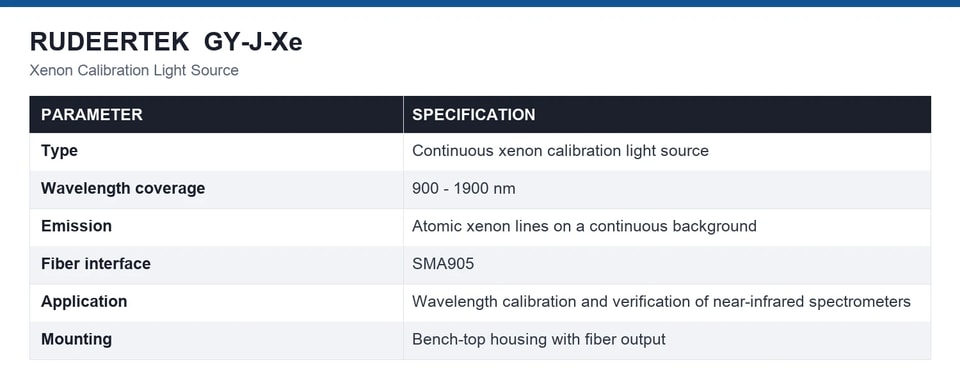
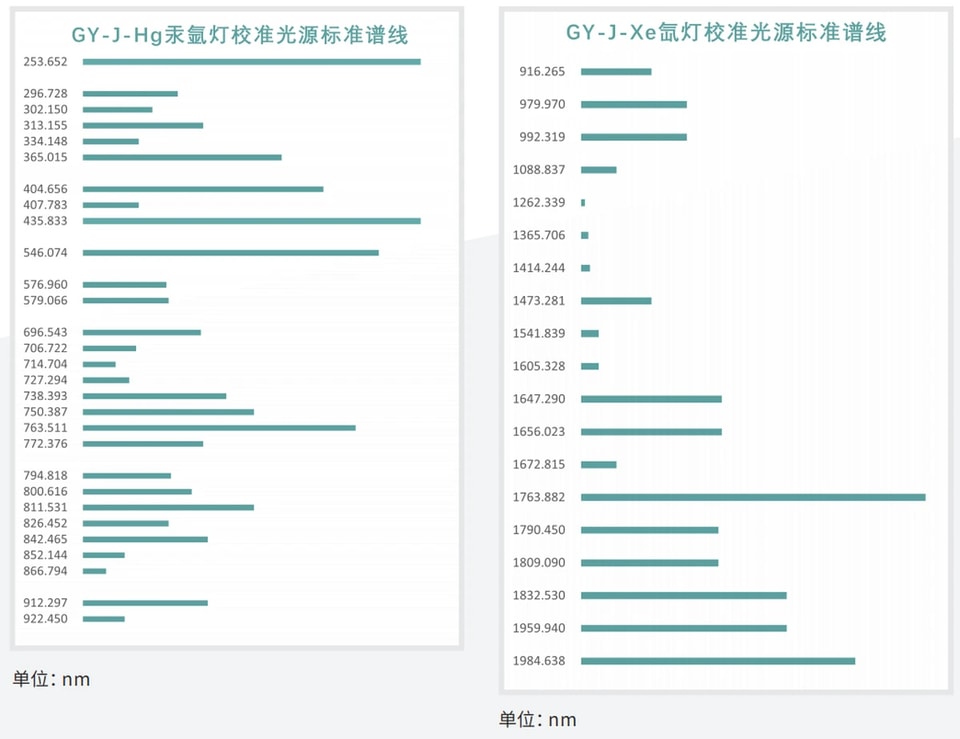
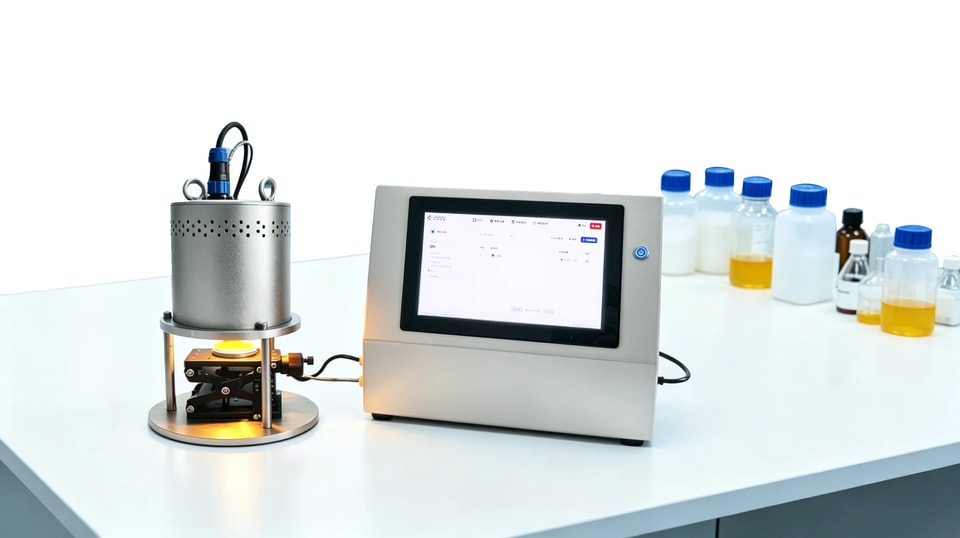
The GY-J-Xe is a continuous xenon calibration light source for near-infrared spectrometers, covering 900 to 1900 nm through an SMA905 fiber interface. Xenon emits a set of sharp atomic lines superimposed on a continuum in the near infrared, and those lines are fixed by the physics of the discharge rather than by the lamp's age, so they give an absolute reference for the wavelength axis of an InGaAs spectrometer whose own range sits between 900 and 1900 nm. That is the calibration problem the LINA family faces: a 256 or 512 pixel array has to be mapped onto a wavelength axis with 4 nm steps, and an atomic line source is what makes that mapping independent of the instrument's own optics. The lamp is a continuous discharge, so it also gives enough continuum between the lines to check the instrument function and the detector response across the band.
· Atomic xenon lines in the near infrared give an absolute wavelength reference for an InGaAs spectrometer.
· Covers 900 to 1900 nm, which is the working band of the LINA near-infrared series.
· Continuous discharge, so the continuum between the lines also shows the detector response across the band.
· SMA905 fiber interface connects directly to the fiber input of a miniature NIR spectrometer.
· Line positions are fixed by the discharge and do not drift with lamp age, unlike a continuum source.
· Compact bench housing that can stay connected to the instrument between calibration runs.
The GY-J-Xe is used for wavelength calibration of near-infrared spectrometers, for verification of an NIR instrument before a measurement campaign, for checking the wavelength axis after a detector or fiber change, and for comparing several NIR instruments in a laboratory or a plant so that their calibrations agree. It pairs naturally with the LINA series and with any InGaAs array spectrometer used for moisture, protein, polymer or hydrocarbon measurement.
Why a xenon lamp for the near infrared?
Because xenon has strong atomic lines in the 900 to 1900 nm region, and because its continuum fills the gaps between them. That gives both an absolute wavelength reference and a way to see the detector response across the whole band in one measurement.
Can I use the mercury-argon lamp instead?
No. The mercury-argon lines are concentrated in the UV and visible, below 1100 nm, so they say nothing about the axis of a 900 to 1900 nm InGaAs instrument. The xenon lamp exists precisely for that band.
How do I calibrate with it?
Couple it into the spectrometer, acquire a spectrum with a slit and integration time that keep the lines from saturating, identify the xenon lines, and fit the pixel-to-wavelength relation through them. Save the coefficients and apply them to the sample spectra.
Does it also verify resolution?
Yes. The measured width of a narrow xenon line is the instrument function, so the same measurement that calibrates the axis also shows whether the resolution has changed after a fiber or slit change.
What about the visible range?
The lamp emits in the visible as well, but the 900 to 1900 nm specification is what it is intended for. For a UV-visible instrument, the mercury-argon source gives a denser set of lines in that range.
Solutions & Support
We go the extra mile to thoroughly analyze each project and deliver tailored business solutions that meet your specific requirements.
Contact US
×