

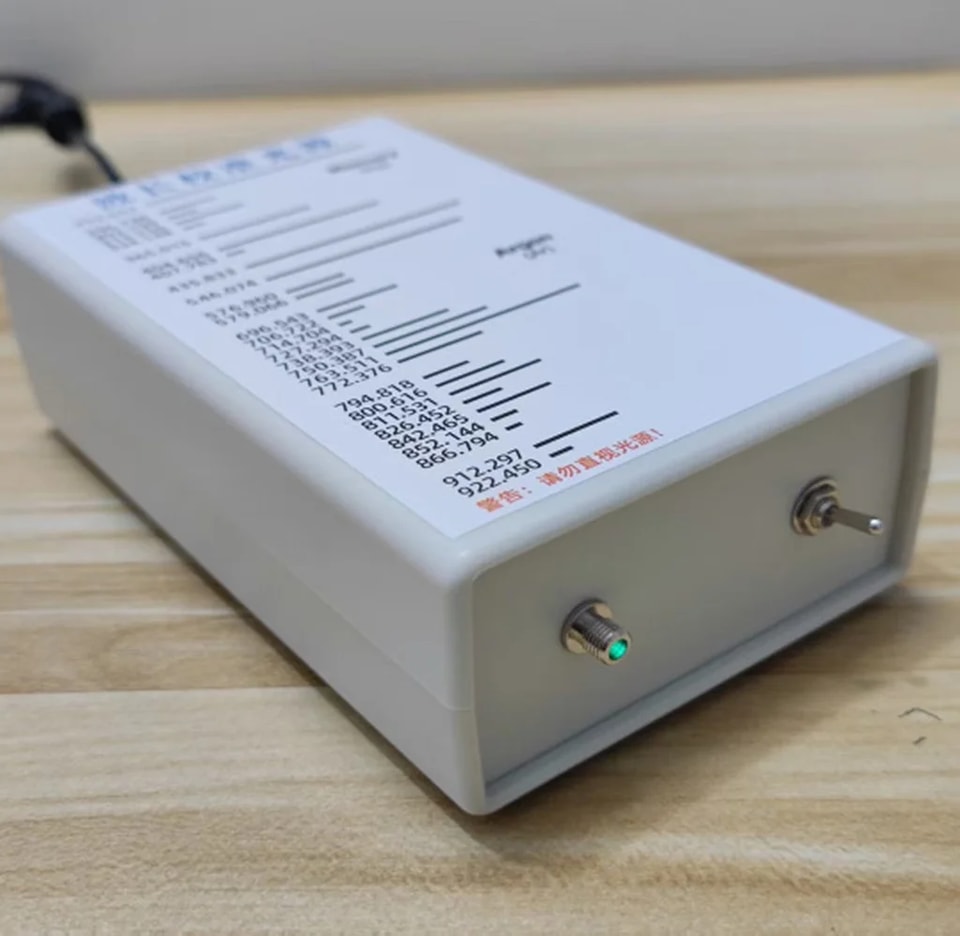
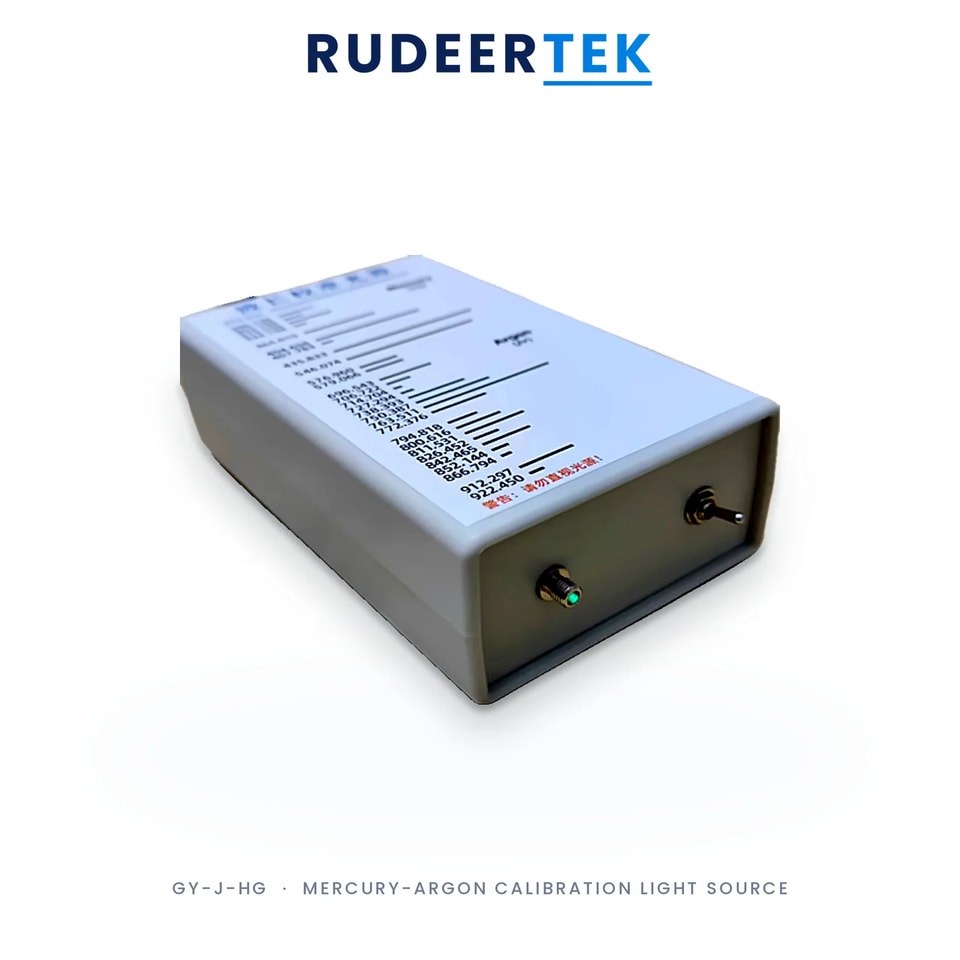
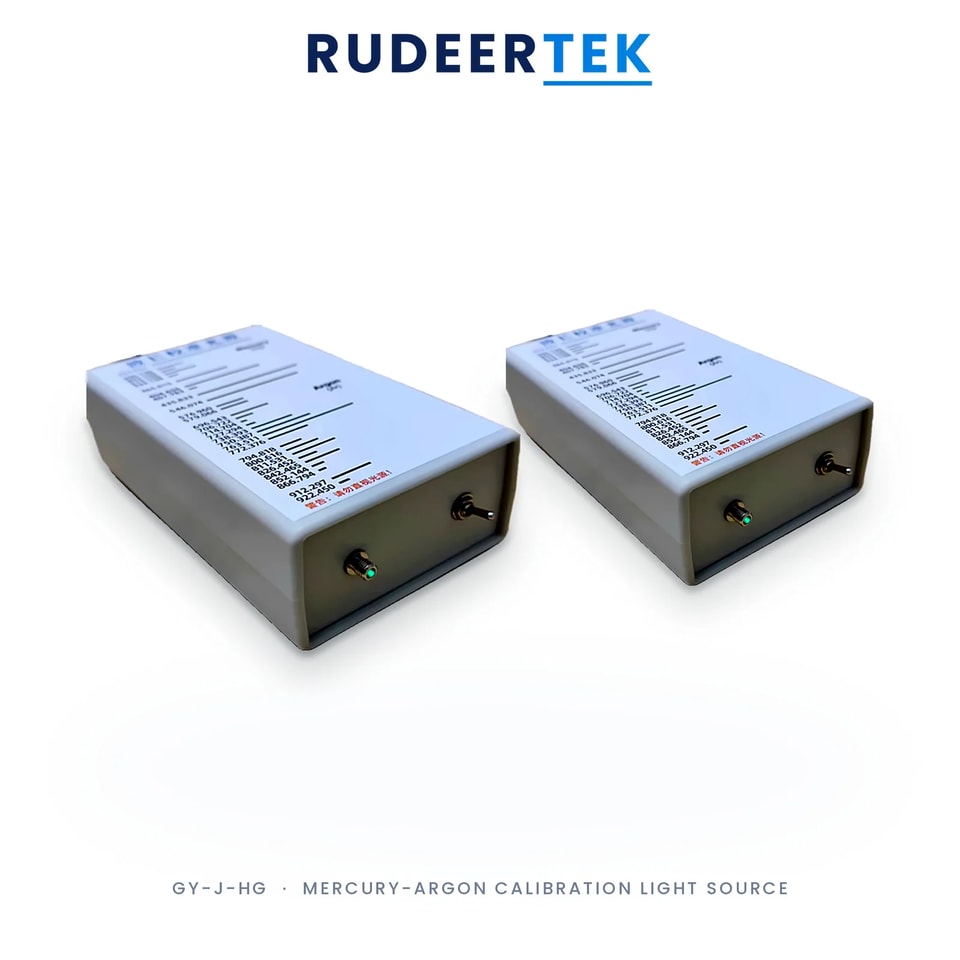
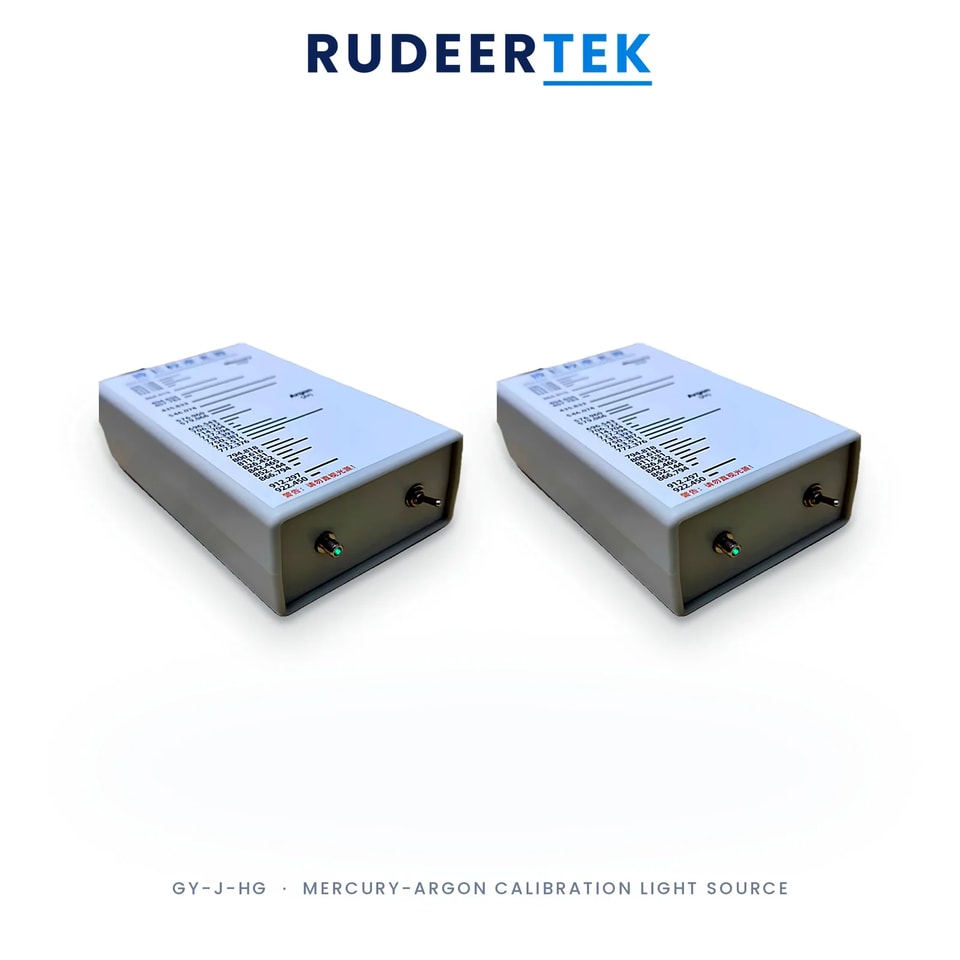
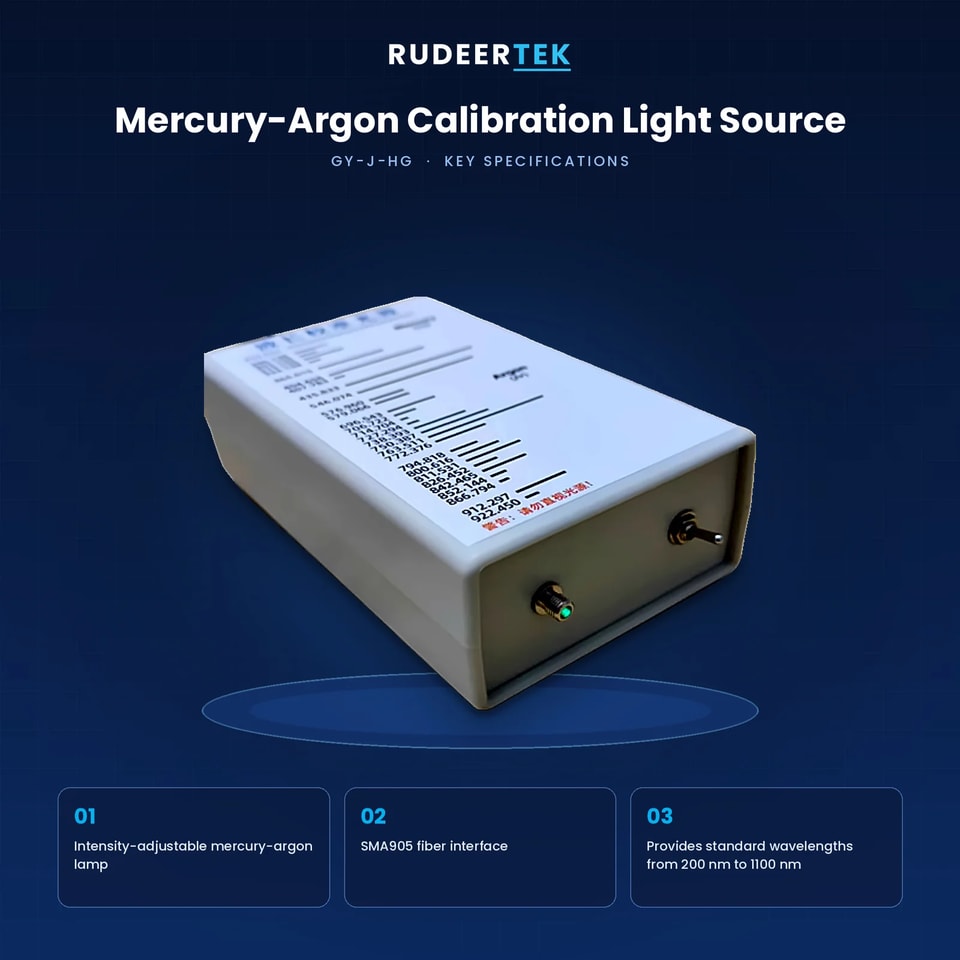
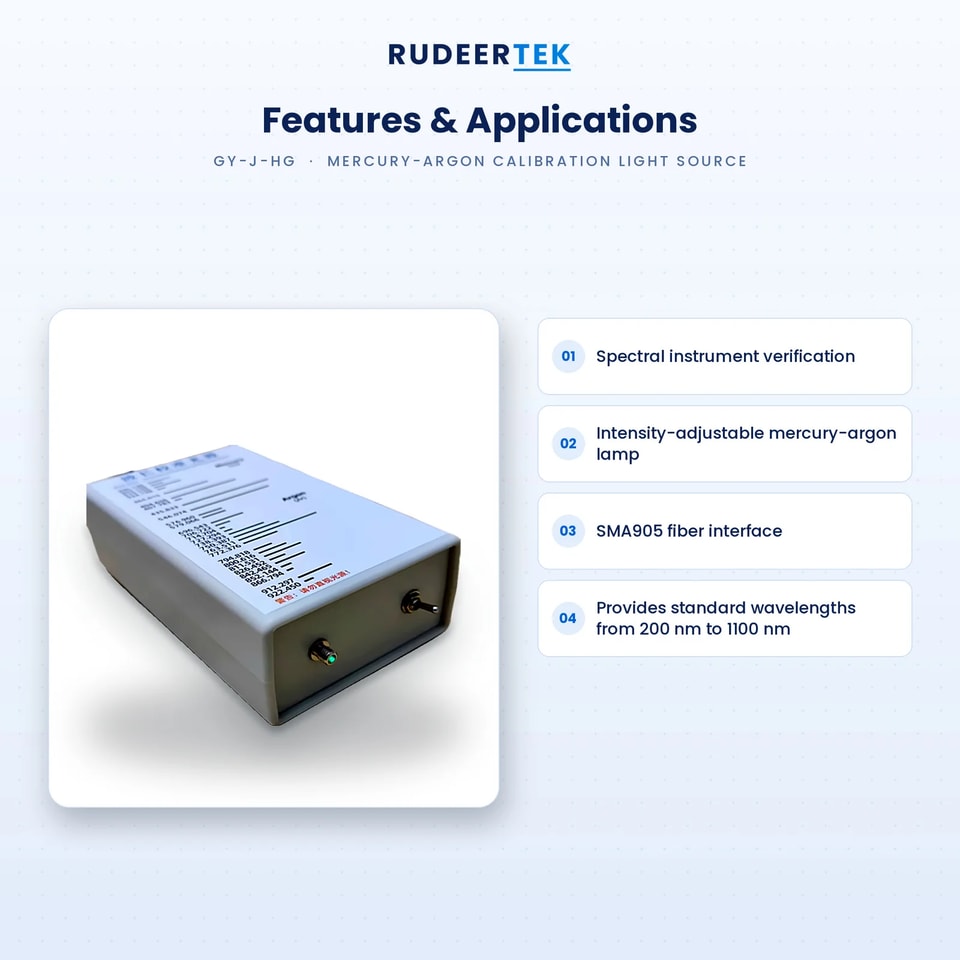
GY-J-Hg Mercury-Argon Calibration Light Source
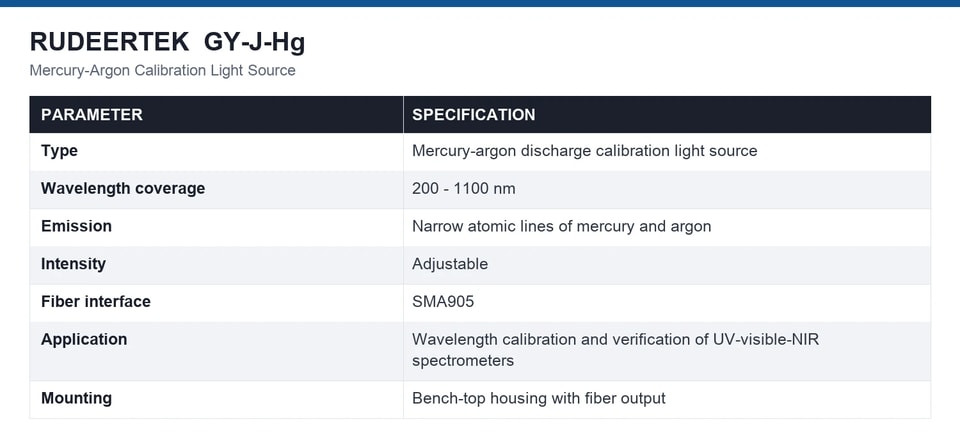
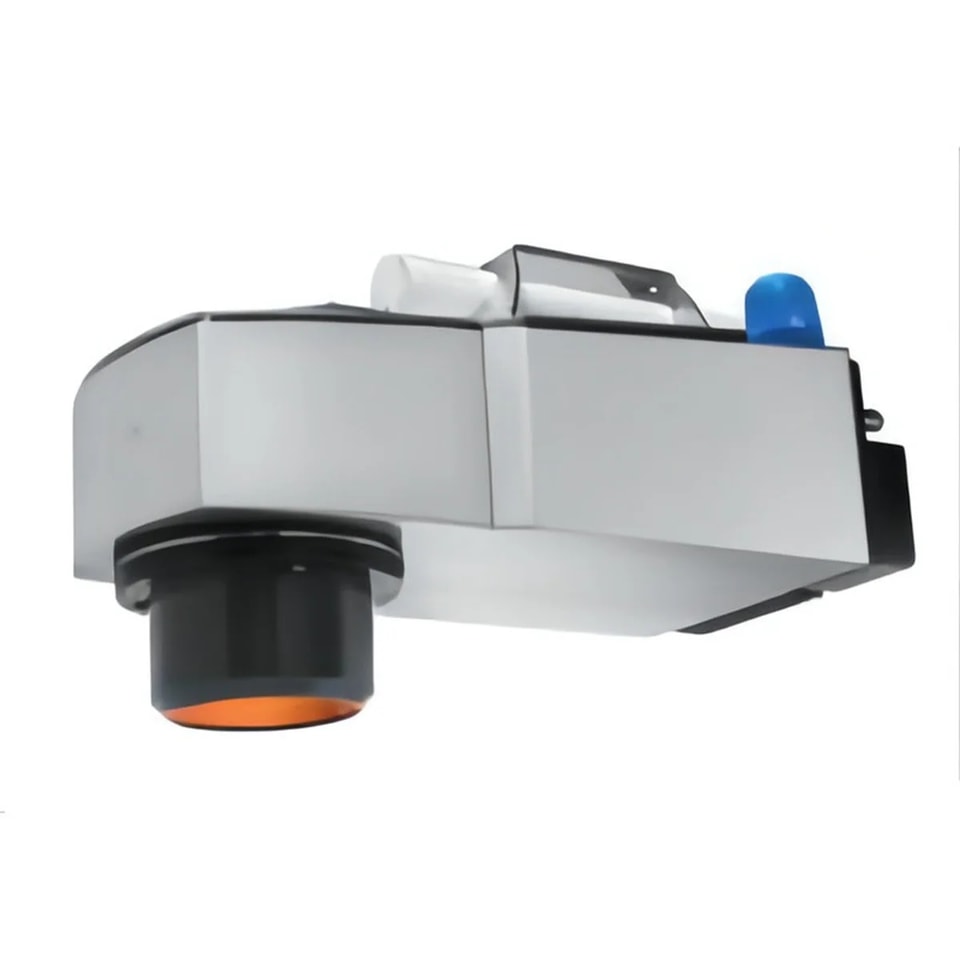
The GY-J-Hg is a mercury-argon calibration light source for spectrometers. A low-pressure mercury-argon discharge emits a set of narrow, physically fixed emission lines whose wavelengths are known to better than a nanometre, and because they are atomic lines they do not drift with lamp age or with the electronics. Coupled through an SMA905 fiber into a spectrometer, they give the wavelength axis an absolute reference across 200 to 1100 nm, which is what turns a spectrum into a calibrated measurement: peak positions can be assigned, the instrument function measured, and a shift in the axis detected before it spoils a library match. The intensity is adjustable, so the same source can be used with a narrow slit and a short integration time or with a wide slit and a long one, and the compact housing with the fiber connector makes it a bench accessory that stays connected to the instrument.
· Atomic mercury and argon emission lines give an absolute wavelength reference that does not drift with lamp age.
· Covers 200 to 1100 nm, the full range of a CCD or CMOS UV-visible spectrometer.
· Adjustable intensity, so the same source suits a narrow slit with a short exposure and a wide slit with a long one.
· SMA905 fiber interface, which connects directly to the fiber input of a miniature spectrometer.
· Compact bench housing that can stay connected to the instrument between calibration runs.
· Used for wavelength calibration and for verification of wavelength accuracy and resolution after service.
The GY-J-Hg is used for wavelength calibration of UV-visible-NIR spectrometers, for verification of a spectrometer's wavelength accuracy before a measurement campaign, for checking the instrument function and the resolution after a repair or a fiber change, and for teaching the relationship between pixel number and wavelength. It is also used as a reference in a laboratory that runs several spectrometers and needs them to agree with each other.
Why use an atomic lamp rather than a broadband source?
Because the wavelength of an atomic emission line is a property of the atom, not of the lamp. A tungsten or deuterium continuum has to be calibrated against something else; a mercury-argon lamp carries its own reference lines, so the wavelength axis can be assigned absolutely.
Which lines are useful?
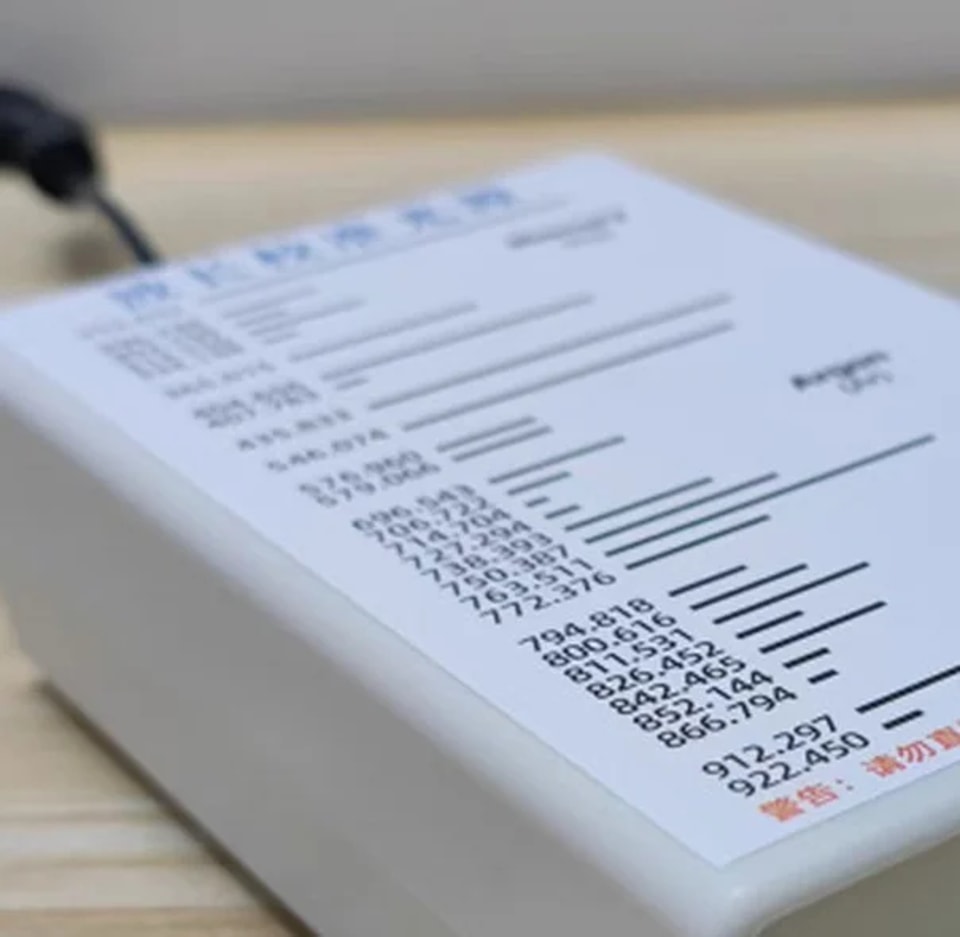
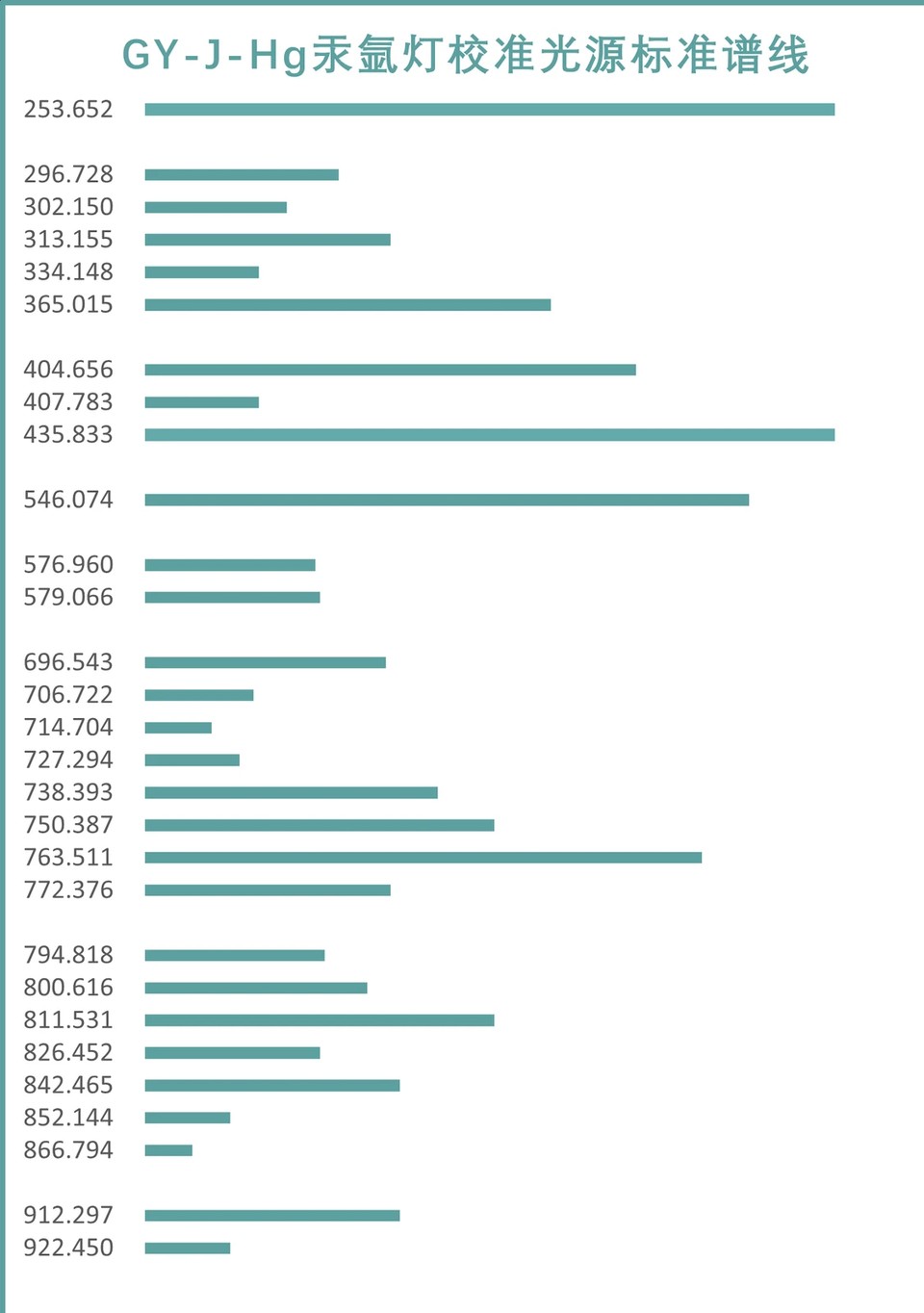
The mercury lines in the UV and visible and the argon lines that fill the gaps between them give a set of reference points across 200 to 1100 nm. Use the ones that fall inside your instrument's range and that are strong enough at your slit width, and fit the pixel-to-wavelength relation through them.
How often should I calibrate?
After any change to the optical path, after a repair, and on a fixed schedule for a laboratory that reports results. Between those points, a single check line is enough to confirm that nothing has moved.
Can I use it to check resolution?
Yes. The width of a narrow atomic line as measured by the instrument is the instrument function, so the same lamp that calibrates the axis also verifies the resolution and shows whether a fiber or a slit change has degraded it.
Does it need a warm-up?
A discharge lamp needs a few minutes to reach a stable output, and the intensity adjustment should be set after that. Once stable, the line positions do not change, only the intensity does.

Solutions & Support
We go the extra mile to thoroughly analyze each project and deliver tailored business solutions that meet your specific requirements.
Contact US
×