

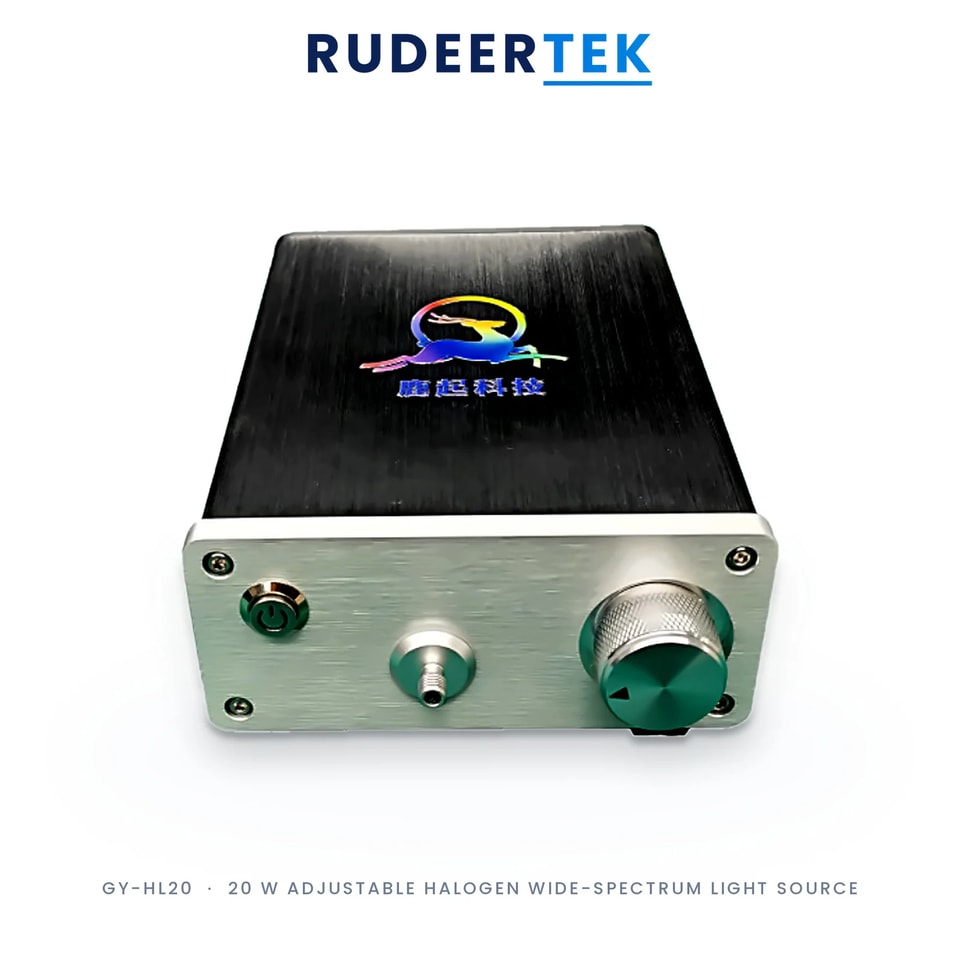
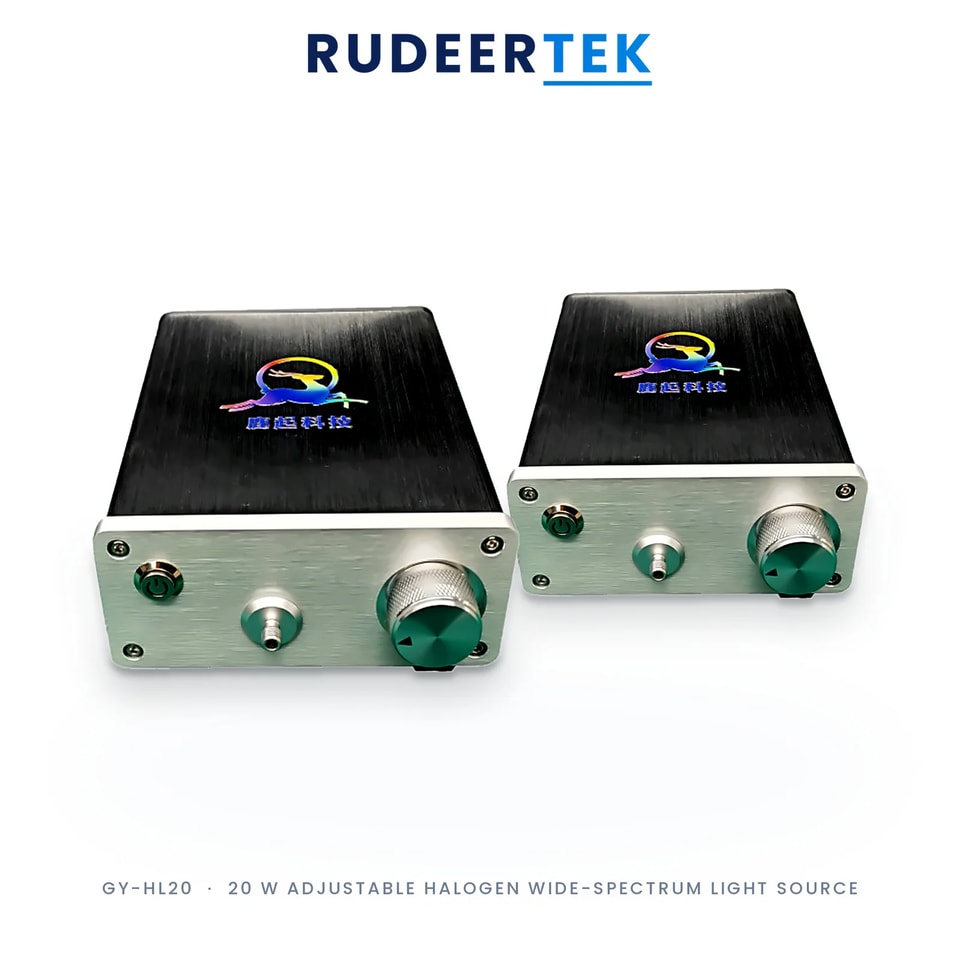
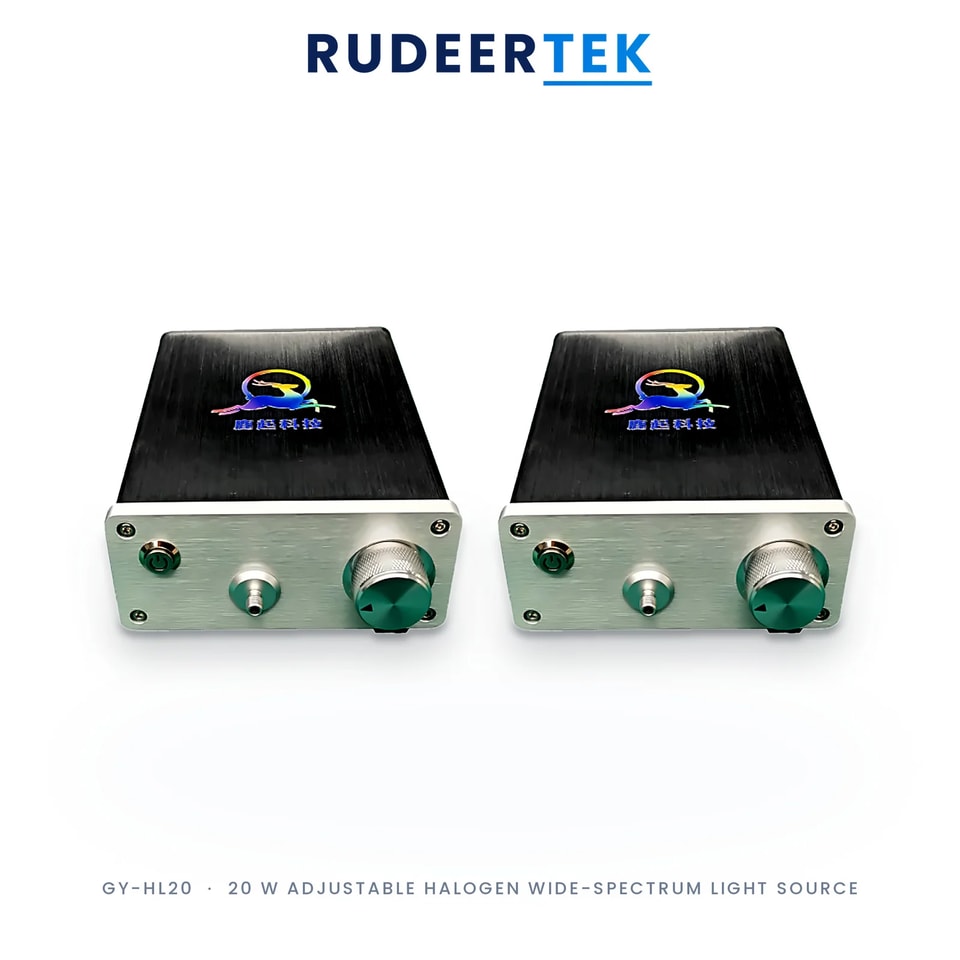
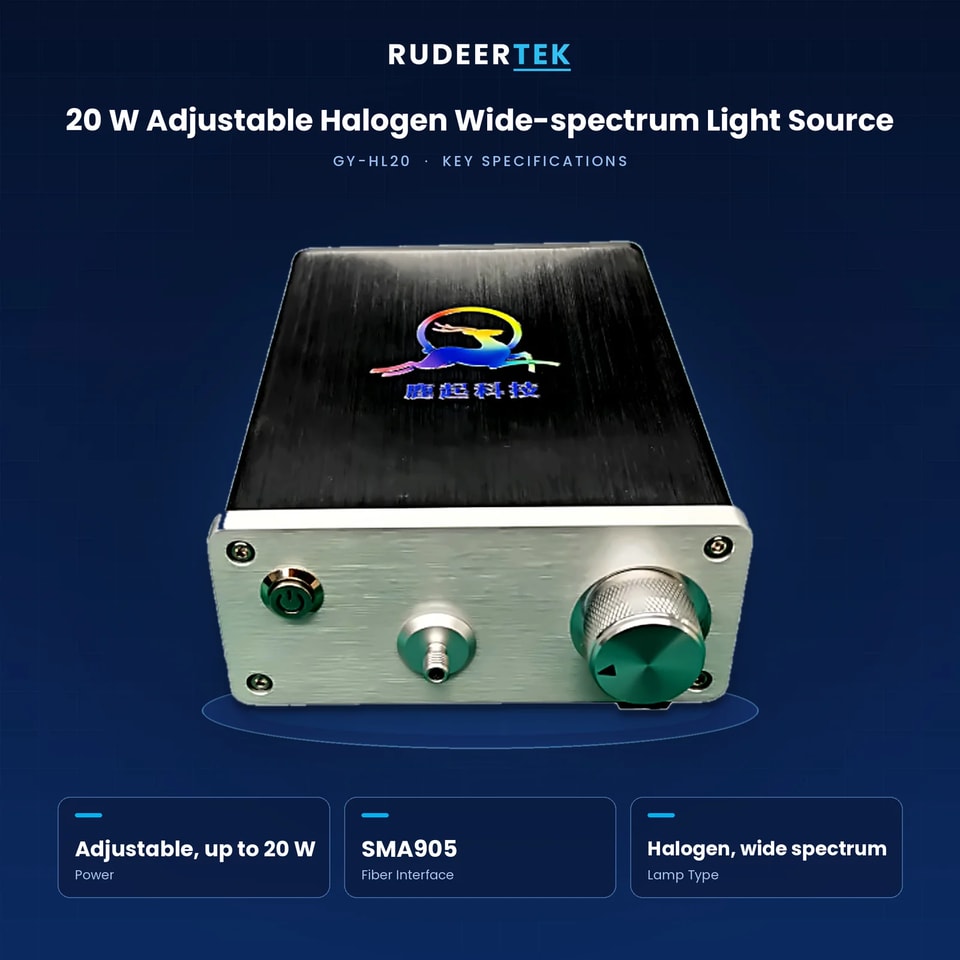
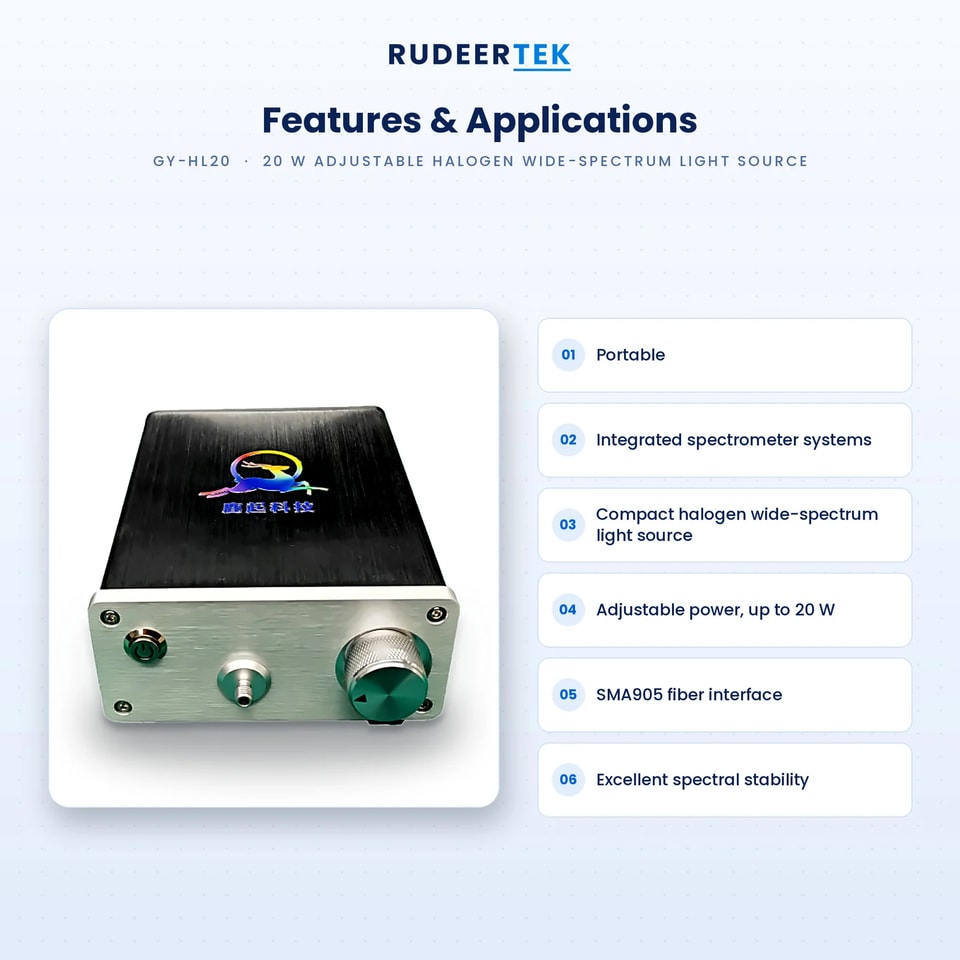
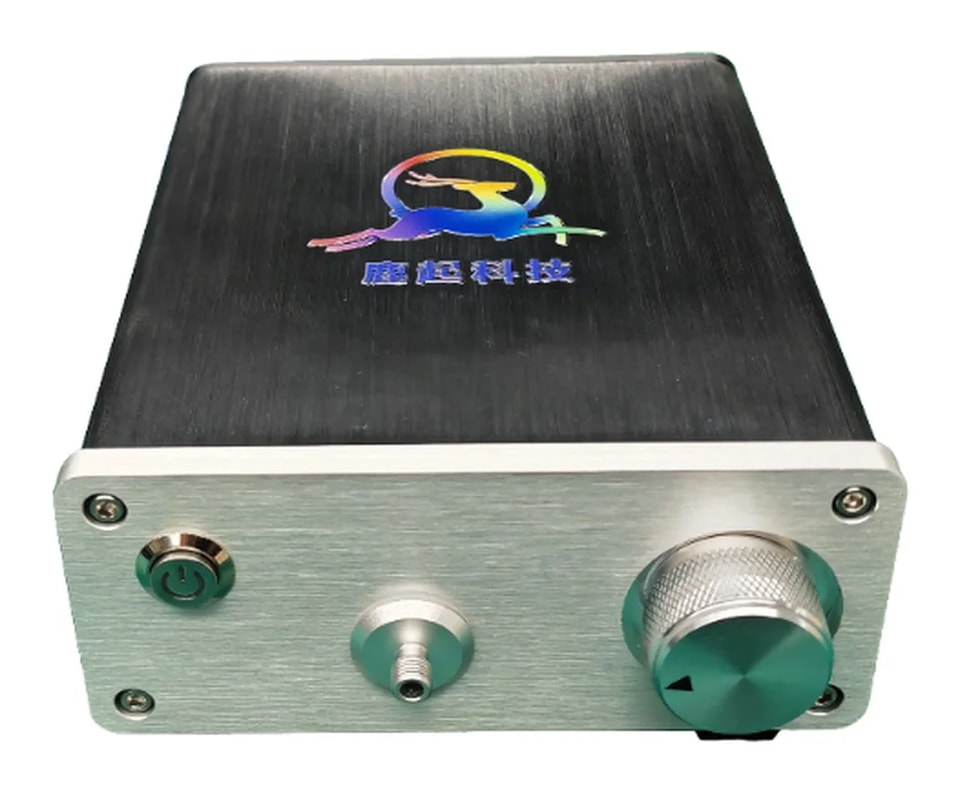
GY-HL20 20 W Adjustable Halogen Broadband Light Source
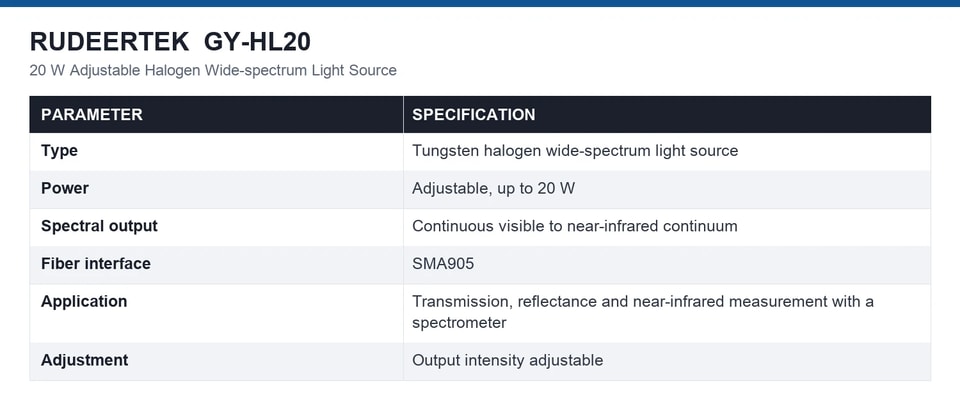
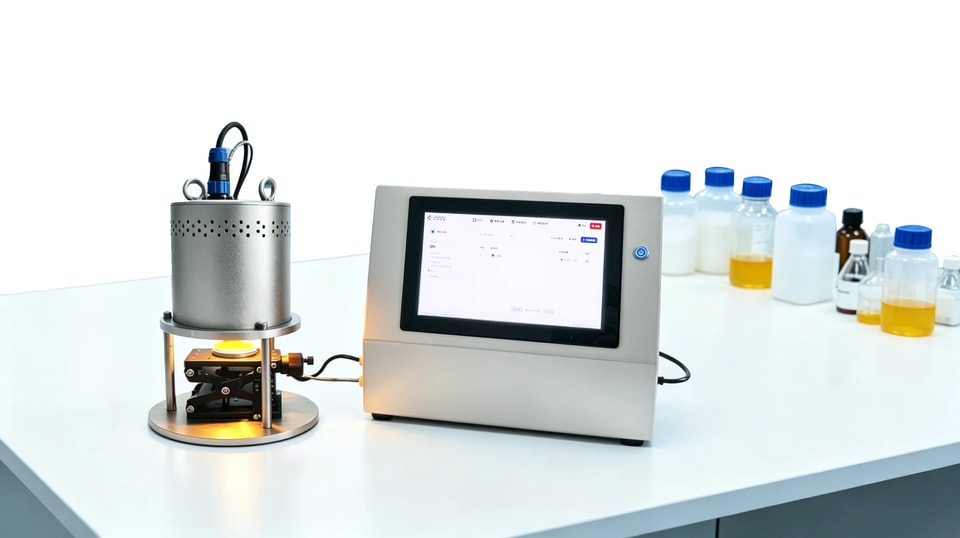
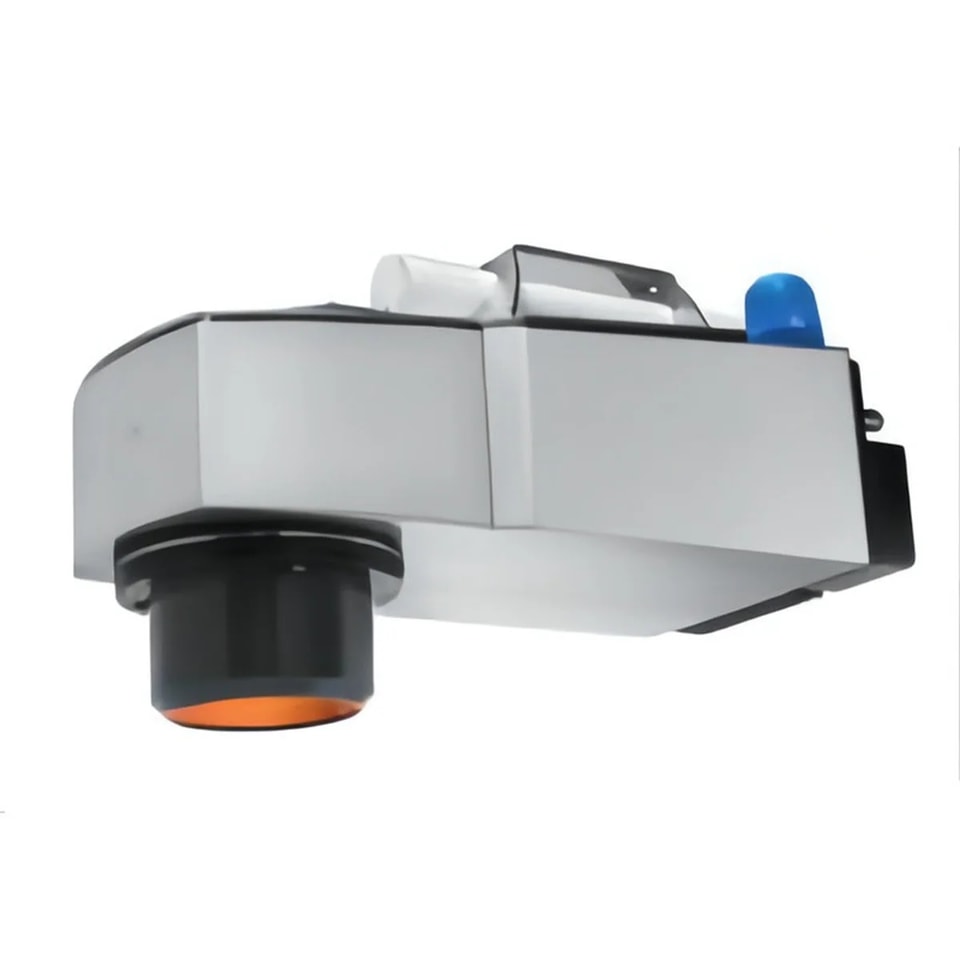
The GY-HL20 is the higher-power member of the halogen source pair: 20 W instead of 5 W, with an adjustable output, through the same SMA905 fiber interface. The extra power matters when the optical path is long or lossy: a thick or turbid sample in transmission, a thin fiber, a reflectance probe with a small collection angle, or a near-infrared measurement at 1700 to 1900 nm where the fiber and the sample both attenuate. Adjusting the output lets the same source be matched to a sensitive sample and to a dark one without changing the integration time, which keeps a method stable. The continuum is the same black-body output as the 5 W version, with no lines and no gaps, so it serves absorbance, transmission and reflectance measurement across the visible and near infrared.
· 20 W output with adjustable intensity, for a long or lossy optical path where a 5 W lamp runs out of light.
· Smooth black-body continuum with no lines and no gaps, which absorbance and reflectance measurement requires.
· Adjustable power lets the same source serve a sensitive sample and a dark one without changing the integration time.
· SMA905 fiber interface, so the source, the sample interface and the spectrometer form one optical unit.
· Useful into the near infrared, where it pairs with an InGaAs spectrometer for moisture and polymer measurement.
· Compact housing with no moving parts, stable once the filament reaches thermal equilibrium.
The GY-HL20 is used for transmission measurement through thick or turbid samples, for reflectance with a probe at a distance, for near-infrared measurement with an InGaAs spectrometer, for colour measurement of dark surfaces, and as the source inside integrated spectrometer systems that need more light than a 5 W lamp can give. It is the usual partner of the LINA series when the sample attenuates the beam.
When do I need 20 W instead of 5 W?
When the light has to travel: a thick or turbid sample, a long fiber, a probe at a working distance, or a measurement at 1700 to 1900 nm where both the fiber and the sample attenuate. If the 5 W lamp forces you into a long integration time, the 20 W version is the fix.
Does more power heat the sample?
It can. A 20 W filament focused into a fiber delivers more energy to a small spot, so for a heat-sensitive sample use the adjustment to reduce the output rather than the full power, and keep the sample moving or the exposure short.
Is the spectrum the same as the 5 W version?
Yes. Both are tungsten halogen black-body radiators, so the shape is the same; the 20 W version simply puts more light through the same band, and the adjustment lets you scale it.
Can it be used for near-infrared work?
Yes, and that is one of its main uses: at 1700 to 1900 nm the fiber and the sample both lose light, so the extra power of the 20 W lamp is what makes a LINA measurement comfortable.
Does the intensity adjustment change the colour temperature?
Dimming a filament lowers its temperature, which shifts the spectrum towards the red. For quantitative work, set the adjustment once and keep it fixed, and take the reference scan at the same setting.
Solutions & Support
We go the extra mile to thoroughly analyze each project and deliver tailored business solutions that meet your specific requirements.
Contact US
×